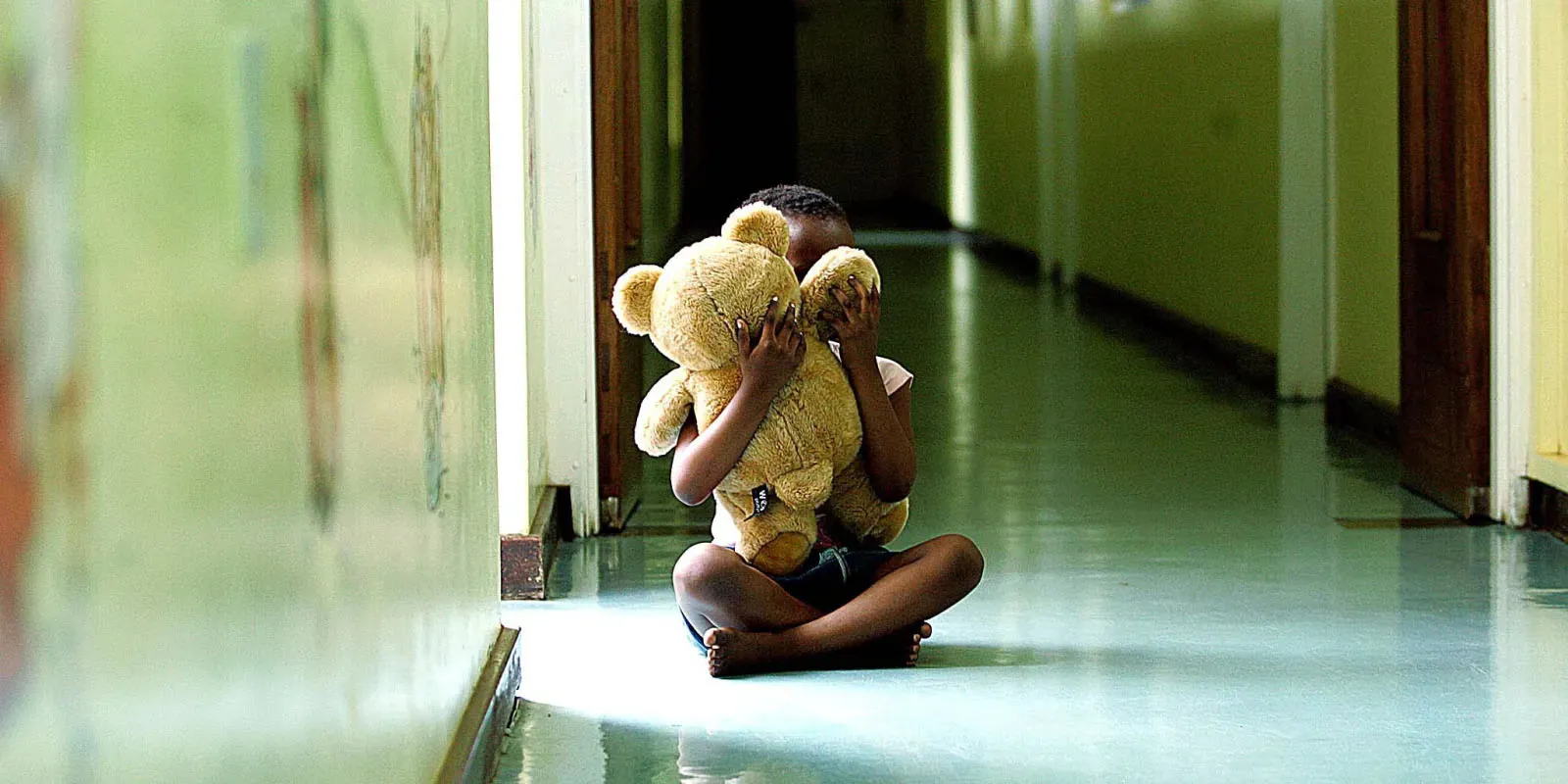
Ahead of the launch of the MNET documentary, School Ties, SAfm’s The Meeting Point explores the prevalence of sexual abuse in schools, specifically the use of grooming and gaslighting to abuse boys at elite schools and what can be done to keep children safer.
SAfm’s Meeting Point with Koketso Sachane
PARENTING: Sexual violation in schools exposed in “School Ties” documentary GUEST: Robyn Wolfson Vorster – Child protection Activist and Journalist (she contributed to the series)
Tomorrow will see the launch of a four-part documentary series in which leading South African experts unpack sexual abuse red flags. Titled ‘School Ties’, the harrowing docuseries is about the grooming and sexual abuse of learners at some of South Africa’s most prestigious boys’ schools. The docuseries, which airs on Thursday May 16, uncovers the truth behind grooming and abuse in schools across the country, the aftermath and what government, schools and society are doing to stop abuse in its tracks. Exploring how this worrying phenomenon has unexpectedly found its way into some of the country’s prominent boys schools and what the lifelong effects are in the series is a team of experts in children’s rights, child protection and other legal, psychological and law enforcement areas.
ABOUT ROBYN WOLFSON VORSTER – Child Protection Activist and Journalist For the Voiceless is a registered non-profit company and public benefit organization dedicated to advocating for vulnerable children by amplifying their voices and driving legislative and policy changes. Founded by Robyn Wolfson Vorster, a passionate child protection activist and journalist, the organization is committed to promoting the rights and well-being of children in need. For the Voiceless conducts in-depth research on children’s issues and collaborates with various stakeholders, including children’s rights organizations, academics, legal experts, and caregivers, to assess existing strategies and advocate for necessary reforms. Through lobbying efforts and storytelling, the organization aims to ensure that abused, abandoned, orphaned, neglected, and vulnerable children receive the care and support they deserve. Driven by a mission to challenge authorities and effect positive change, For the Voiceless serves as a powerful advocate for the most marginalized children, striving to create a safer and more just world for all.
Sexting, shared nudes and sextortion are part of a worrying trend among many South African and overseas kids and teens, despite big tech’s promises that it’s taking steps to protect children online. Peer pressure, bullying and even voluntary participation is on the rise. But parents can do something about it.
In 2022, an audit of websites containing sexual photos or videos of children found that 92% included content that children had created themselves. Almost 60% of self-generated sexual abuse images were of children aged between 11 and 13, and more than a third were of children aged seven to 10. The youngest victim was only three.
Children euphemistically call them “nudes”. They are naked photos or videos that children take and share of themselves. Sexting ranges in severity from images taken of their naked bodies, to those involving penetrative sexual activity, including sadism and bestiality.
They have become a pervasive part of our children’s lives.
In the documentary Childhood 2.0, American teens describe how many relationships now begin with the sharing of nudes. Chatting, holding hands, going on a date, hugs and kisses, and other courtship rituals are preceded by the exchange of naked photos.
And, like a job interview, the image becomes a gateway into the relationship, or the barrier to entry.
Teens interviewed for the documentary describe how girls who share nudes are called sluts and those who don’t, prudes. Boys, who often initiate contact by sending a “dick pick”, trade the nudes they receive like baseball cards.
While the perpetrators are often criminal syndicates, one of South Africa’s most notorious sextorters was a middle-aged Afrikaans housewife who preyed on boys in her community.
A study by ECPAT, a global network of civil society organisations dedicated to ending child sexual exploitation, included this testimony from a 17-year-old girl:
“I’ve been sent hundreds of dick pics I haven’t asked for. When I was younger, I chatted with dozens of paedophiles, I told them my age (11–13) and they wanted nudes… or [to] meet in real life to have sex.”
The report noted that “nude photographs of girls are viewed as a form of capital that gives status to the recipient”. This increases the pressure placed on girls “to share naked photos” and on boys “to share them if and when they receive them”.
For many of these boys, admission into peer groups is now predicated on sharing a nude or adding it to an online folder of images. These are then accessible to other boys who’ve gone through a similar rite of passage.
Peer pressure school practices
At an upmarket high school in Pretoria, Grade 10 boys formed a WhatsApp group, which boys were only allowed to join if they shared a naked photo of a girl. Girls describe being pressurised to share naked photos with their boyfriends so the boys could be accepted into the group. And at a prestigious boy’s school in Johannesburg, a Grade 8 boarder spent his school holidays trying to “collect nudes” to be included in a closed group of his new peers.
During a campaign called “Because you asked”, run by Jelly Beanz, who provide help for abused children, 12-and 13-year-old children shared their experience of sexting.
Weeks later, Nathan learnt that more than 50 Grade 9 boys at his school had been sextorted by the syndicate. Ashamed, humiliated, and unable to tell his parents, one boy had been hospitalised after attempting suicide.
One Grade 7 girl described how an older boy at school bullied, manipulated and threatened her, protesting that if she loved him, she’d share nudes. When she eventually capitulated, he told the whole grade, adding that she sleeps around. She felt judged and mortified, but afraid that if she sought help from adults, it would change their opinion of her and they would take away her phone.
Two Grade 6 girls reported sexting with “boys” on Snapchat and TikTok, who complimented them on their bodies, but turned out to be masturbating middle-aged men.
Another 12-year-old “met” a boy on Instagram who seemed cute and her age. He asked for her number, requested selfies to “see her beautiful face”, then asked for nudes. When she declined, he used Facebook and Instagram to add and message her friends and family members, instructing them to make the girl obey him, and asking her friends for naked pics. One, aged nine, complied.
Desperate, the 12-year-old thought if she sent him a picture of herself in her swimming costume, he’d stop harassing her. Instead, he posted the pic and her phone number on a pornographic site, then sent her a screenshot. After three calls from men asking to meet up, she finally sought help from her mother.
Albeit regretful that her child hadn’t spoken up sooner, her mother comforted her and reported the abuser to the police who helped them remove the post and block the perpetrator from the child’s social media. But he was let off with a warning.
As this child experienced, once shared, many images and videos end up on sites containing child sexual abuse material.
Previously called “child pornography”, child sexual abuse material (CSAM) includes any images or videos which depict children under 18 engaged in sexually explicit acts.
Global internet watchdog
Global internet safety watchdog Internet Watch Foundation reports that 10 years ago there was no self-generated content on sites containing CSAM. But in 2022, it found 275,655 websites containing CSAM, 92% of which included photos or videos that children had generated themselves. Almost 60% of reported images were taken by children aged 11-13, more than a third were seven to 10-year-olds, and 4% of images were taken by three to six-year-olds.
The charity’s CEO explains: “That’s children in their bedrooms, where they’ve been tricked, coerced or encouraged into engaging in sexual activity, which is then recorded and shared by child sexual abuse websites.”
Reporting an image on a social media platform is often ineffectual, leading to ongoing revictimisation. A National Centre for Missing and Exploited Children (NCMEC) study found that one image was shared 490,000 times after it had been reported.
Experts explain that self-generated child abuse images can be shared intentionally, accidentally, through coercion, maliciously, or a combination of these factors.
Already common among girls, extortion of boys for images or money is becoming increasingly widespread.
The NCMEC describes sextortion as a form of child sexual exploitation in which children are blackmailed using nude or sexual images of themselves, in exchange for more illicit material, sexual acts or financial gain. The US Department of Justice reported that in 2022, more than 3,000 minors, primarily boys, had been targeted globally using financial sextortion, a sharp increase from previous years. More than a dozen victims had died by suicide.
In a 2023 study by Snap Inc, more than two thirds of the 6,000 Gen Z children and young adults surveyed across six countries said that they had been sextorted. In Canada, 92% of sextortion cases in 2023 involved boys or men. In the UK, sextortion cases reported to the police increased by 390% in two years. Experts believe that approximately 100 UK children a day are falling victim.
While the perpetrators are often criminal syndicates, one of South Africa’s most notorious sextorters was a middle-aged Afrikaans housewife who preyed on boys in her community.
And, in a worrying new trend, criminals are recruiting and paying children to sextort other children.
Britain’s National Crime Agency confirms how enticing sextortion scams are and that predators now use AI to make their conversations more convincing.
One affected boy is Nathan*, a Grade 9 learner, who was surprised when he was friended by an attractive unknown teenage girl on Instagram, who said she was new to the province and was given his details by a mutual friend.
Nathan, who’d never had a girlfriend, was delighted, and they chatted about school, family and friends every day, initially on Instagram, and then, after she told him her mom had restricted her Instagram screen-time, on WhatsApp. Before long, they were exchanging pictures of their daily activities. Then she asked if he’d like to see her in her bikini. A week after they “met”, in a flirty conversation, she asked if they could exchange nudes.
He only hesitated for a moment.
She responded with a heart, but minutes later texted that if he didn’t pay R2,000 within 24 hours “she’d” be sharing his picture on Instagram, and with his friends and family. Horrified, and under time pressure, he emptied his meagre bank account and begged to have the photo deleted.
Instead, follow-up messages instructed him to pay more or send pics of himself in specific sexual poses. After sharing a photo of himself masturbating, he contemplated taking his own life, before reluctantly choosing to tell his mom.
Despite her initial shock, she immediately sought professional help. Internet safety experts coached Nathan about how to respond to his extorter and how to block and report “her” to the specialised police cybercrimes unit.
Weeks later, Nathan learnt that more than 50 Grade 9 boys at his school had been sextorted by the syndicate. Ashamed, humiliated, and unable to tell his parents, one boy had been hospitalised after attempting suicide.
Not all children survive though. Ronan, 17, from Northern Ireland, committed suicide after being targeted on Facebook. Told to send the perpetrators £3,400 in cybercurrency, he protested that he was only a child, and begged for mercy. They responded: “Foolishness has a price. And you’ll pay. You have 48 hours. Time is running out.”
Tragically, Ronan saw no way out.
Sextorters routinely encourage suicide and threaten violence. One 16-year-old boy reported: “I’ve received death threats a couple of times, and they’ve also threatened to kill my family if I don’t send photographs.”
Nevertheless, not all children think sharing nudes is risky.
Nudes = in love
Unlike Nathan, Sindi*, 13, wasn’t tricked or manipulated into sexting. For her, exchanging “nudes” was a normal expression of being in love.
While only 5% of children surveyed in the South African Disrupting Harm study confessed to sexting in the previous year (compared to 50% of the children in the Scandinavian study, so there is probably under-reporting), half said they shared nudes because they were in love, or flirting and having fun.
Confirming the Scandinavian findings, these children deemed sexting unproblematic. They saw it as a positive experience, part of a healthy relationship, good for their self-esteem, and a way of “gaining affirmation and creating intimacy with people they like”.
To quote one 16-year-old girl, “it’s happened a hundred times… usually just flirting online and then you take more and more daring photographs until the guy asks for a nude and I’m like yeah, no big deal, if we’re both fine with it.”
Children who willingly share nudes aren’t immune from harm thereafter though.
Sindi and her boyfriend exchanged nudes for six months, using Snapchat to ensure that their parents didn’t find out. But she was unaware that her boyfriend had made screenshots of every image and shared her photos with his friends.
Then, after the relationship ended, his jealous new girlfriend found Sindi’s photos, shared them with Sindi’s parents and posted them onto a grade WhatsApp group. Before they could be deleted, they’d already been reshared and saved by many other children in the grade.
Devastated, Sindi was forced to leave the school.
As the lines between intentionality, accidental sharing, and malicious sexting blur, experts have identified another growing trend where children are filming other children having consensual sex, and then forwarding those videos.
Children also document and share the sexual assault and rape of other children, with devastating impact, as seen in the documentary Audrie and Daisy. The girls’ sexual assaults were filmed, and images circulated. It resulted in tragedy, first Audrie’s death by suicide, and then Daisy and her mother taking their own lives after the documentary aired.
While most children unwittingly share their images publicly, Tami*, discovered at age 12 that she could make money through TikTok videos of herself dancing naked.
US tech Senate hearings
Despite the CEO of TikTok testifying before the US Senate hearings that children under 13 are protected on the app, under sixteens automatically have privacy settings restricting their sharing to friends only, and under eighteens cannot live-stream or receive remuneration, Tami easily circumvented these restrictions.
Tami received thousands of likes from strangers for her publicly posted videos. Many asked if they could see more of her. As she slowly got braver, taking off pieces of clothing and making sexual moves, viewers began to tip her.
By age 15, she was paying for transport, groceries, airtime and new outfits with the proceeds of her videos.
In 2021, a Unicef SA and Department of Social Development commissioned survey by Unisa’s Bureau of Market Research found that one-third of SA children were at risk of online violence, exploitation and abuse, and 70% of children surveyed used the internet without parental consent.
Preventing or minimising the harm is therefore critical. Experts, who caution parents to avoid panic policing or believing that it’s “not my kid”, emphasise that it takes a team effort to keep children safe.
Denial, they say, is particularly damaging. Your child’s developing brain, unsupported, pitted against criminal syndicates, perpetrators, manipulation, and the multibillion-dollar pornography industry, isn’t a fair fight.
Dr Marita Rademeyer, a clinical psychologist who has worked with children and families affected by abuse for 30 years, says that given the exploding numbers of under thirteens sexting, parents should try to delay giving their child a smartphone and allowing access to social media, instead opting for an old-school handset for communication.
Rademeyer recommends that if children already have smartphones, parents limit their screen time.
In addition, experts advise parents to manage when their children are online, preventing use of devices late at night, and behind closed doors in bedrooms and bathrooms.
Internet safety tools can assist with managing use, content and contact. Tech giants Instagram, Facebook, Google, TikTok, Snapchat and Discord also have parent-partnering centres where parents can manage in-app screen time, which topics their child can access, who can view their posts, and friend requests.
Wired to push boundaries
Rademeyer stresses however that while parents often rely on fear and control to police sexting, the adolescent brain is wired to push boundaries. So, although restrictions and protective apps are effective for very young children, control is often unsuccessful for older children.
A relationship is critical for protecting children, and restrictions without relationship can drive the behaviour underground.
She explains that the problem isn’t just the naked pics, nor is it helpful to instruct children to simply avoid taking or sharing pics. Instead, she says, “it is the sexualisation of children online which desensitises them to the potential impact of sharing images of themselves.”
Rademeyer advises parents to begin speaking to their children early and often about sex and sexuality, starting as young as age five, and to chase the “why” behind their child’s behaviours.
Explaining that children often share nudes because they have a need for acceptance and belonging and because they are looking for affirmation that they aren’t getting elsewhere, she confirms that the need can easily outweigh even the strongest and most sustained safety messaging. By contrast, addressing that need can help minimise risky behaviours.
The tweens who participated in the ‘Because you asked’ study cautioned children to be careful about what they post online and who they follow and friend, to prepare for “bad things”, and to confide in a trusted adult.
But only 6% of children do tell caregivers about online child sexual exploitation and abuse. Many tell peers, but most tell no one for fear of humiliation, or their devices being confiscated.
Caregivers should therefore avoid warning, shaming and blaming, and banning phones or the child’s access to their online world, which results in secrecy and children concealing harm.
How to deal with disclosure
If your child discloses that they’ve been targeted, try to stay calm and remember that your child is the victim, not the villain.
Carefully document the interactions, tell the perpetrator you will be contacting the authorities, then block and report the account. If your child’s images and videos have already been posted online, use IWF’s “Report remove” site, or Take it Down to get the content flagged and removed from the internet.
Both services are focussed on children, but if you want an explicit image taken when you were over 18 deleted, get help at stopncii.org.
Lasting change will require legislation and litigation-driven accountability by big tech for the safety of its billions of users. Like the UK, a slew of legislation is in process in the US to keep tech companies accountable and allow them to be sued or fined if their users, especially children, are harmed.
But progress is proving slow, and in South Africa, it isn’t even on our legislative radar (proposed law reforms haven’t been actioned two years after drafting).
Millions of local children cannot wait for legislators to catch up, or for curriculum changes to educate them about inherent dangers of online use (which sometimes outweigh the positives). What’s urgently needed is a community, school, family and child partnership to keep them safe.
The time for looking away is over — if sexting is our children’s new normal, and adults remain in denial, they’ll reap the whirlwind and ultimately, so will we.
It’s Christmas time, a time of joy, celebration and family. But in a country with tens of thousands of forgotten children in institutional care, what do an 11-year-old, abandoned at his school in Grade one, a 7-year-old living in a child and youth care centre while the only parents he has ever known fight a desperate legal battle to adopt him, and an 18-year-old made homeless when she finished her final matric exam have to celebrate this Christmas?
James*, Sky* and Ezekiel*, three children from different provinces, of different ages, genders and races, whose stories show that even the best institutions can never replace family care.
The preamble of the Hague Convention to which South Africa has acceded prioritises permanent family solutions over any other form of care.
It states that “for the full and harmonious development of [their] personality”, every child “should grow up in a family environment, in an atmosphere of happiness, love and understanding”.
It further states that “national adoption or other permanent family care is generally preferable, but if there is a lack of suitable national adoptive families or carers, it is…not preferable to keep children waiting in institutions when the possibility exists of a suitable permanent family placement abroad. Institutionalisation as an option for permanent care, while appropriate in special circumstances, is not…in the best interests of the child.”
But despite our signature on the document, South Africa seems very far from prioritising permanent family care. Department of Social Development (DSD) practice guidelines have recently been declared unconstitutional in court and the department was sanctioned for elevating them over the Children’s Act, the Hague Convention and the best interests of the child, which in the case of adoption should be “paramount”.
CASE 1
James — the authority also forgot about the boy forgotten at school
Starting Grade 1 was exciting for little James. He loved the kind teachers, the school meals and the excitement of learning to read, write and do maths. He was clever and quick to grasp new concepts. But while other children looked forward to the weekends, he dreaded them. His mother was never home, and his granny, who had been forced into caring for James and his little sister Sarah*, was increasingly frustrated and angry.
Nothing prepared him for that rainy Friday in May during his second term at primary school though.
When the bell rang for the end of the day, James watched as his friends were collected. But there was no one there to fetch him. As the afternoon wore on and extra murals finished, still no one came. By the time the principal found him when he did his rounds of the school before heading home for the weekend, James was all alone in the rain, huddled in a corner clutching his school bag, eyes focused on the gate so he didn’t miss his lift when it came.
Alarmed, the principal called his family. When he finally got through, he was told that no one would be fetching James, his family no longer wanted him. They’d left the 7-year-old at school to “figure out his life”.
Shocked and heartbroken, the principal began trying to find a social worker, but no one was available on a late Friday afternoon. Eventually, he contacted Isiaiah 54 Children’s Sanctuary who offered to look after James until social workers could make a permanent plan for his care.
At a loss about what else to do, James’ principal raided the lost property storeroom for a clean uniform for the little boy to wear to school on Monday, then went to collect James’ meagre belongings before driving him to the sanctuary in the pouring rain.
Visibly moved, he delivered James, sodden and devastated, still clutching his school bag and an empty lunch box. Along with a black dustbin bag with old clothes and shoes, it was all this tiny boy had left of the first seven years of his life.
After his principal left, Youandi Gilain from the sanctuary said James came to her and said, “thank you auntie for keeping me, I don’t belong anywhere”.
James spent the weekend at Isiaiah 54 and then on Monday, social workers began looking for a permanent solution for him. His family was adamant that they didn’t want him back, but rather than finding a foster care placement for him, he was inexplicably placed in a Child and Youth Care Centre (CYCC). Despite its caring assistants, with 80 children and dormitory accommodation, the CYCC they chose for him could not have been further from a family environment.
Then it seems that those in authority also forgot about the boy who was abandonned at school.
That was in 2019.
Youandi didn’t forget James though. She says she thought about him often and wondered how he was doing. Then in 2022, while doing a series of talks to boys in institutional care about puberty and manhood, she recognised James. 10 at the time, James told her how lonely he was and that no one ever visited. Despite only having spent a week at the sanctuary, he told her that he missed them and his time there.
Heartbreakingly, he begged her to let him “come home” and “promised to be a good boy if he could just go home with her”. Explaining that she couldn’t take him was one of the hardest things that Youandi has ever had to do.
She didn’t see him again that year. Then in October 2023, his social worker contacted her to say that despite excelling at school, James was not doing well emotionally. Confirming how lonely he was, she said that when the other children in the CYCC went home for holidays and weekends, he was left on his own. He was desperate for her and Glynnis, the head of Isiaiah 54, to visit. The following month when they went to see him, taking along some treat sweets and cooldrink, he was overjoyed. They also invited him for Christmas. So have the family fostering his younger sister Sarah. They didn’t want James, but were happy for him to spend Christmas with Sarah. James’ social worker told him he has to choose.
This Christmas, the lonely little boy has the prospect of being with one of the few people who love him. But, four and a half years since that fateful Friday, and there is still no permanent plan for his life. Barring a family coming forward to look after him, he will languish in care for the remaining seven years of his childhood.
CASE 2
Sky – being punished for her ‘unlucky behaviour’
That was Sky’s fate. Like James, she entered a CYCC when she was in foundation phase at school. She turned 18 this year and was given notice that as soon as her matric exams were finished, she had to move out, to a shelter if necessary. There would be no exit strategy for her.
Now an adult, Sky’s story is her own to tell. But, CYCCs have a legislative and moral prerogative to develop an aftercare programme for all children exiting the home to avoid them becoming one of the horror statistics of previously institutionalised young adults left homeless, addicted, pregnant, living in poverty or making a living through prostitution after exiting a CYCC. So, the reason for the CYCC’s lack of aftercare is noteworthy.
It seems that Sky is being punished for her “unlucky behaviour”.
Veteran child protection activist Luke Lamprecht explains that children respond to trauma in different ways. Many children respond through sadness, tears, depression and by becoming more dependent on adult care and support. Lamprecht describes how adults tend to feel sympathetic and caring towards those children. But others respond to trauma with anger, substance abuse, self-harm, promiscuity and disrespect of authority. Not surprisingly, Lamprecht says that adults don’t feel quite as sympathetic towards children who spit in their faces, scream, throw rocks at their cars or flagrantly disobey rules.
Extensive research shows that these children have been overwhelmed by their circumstances beyond their ability to cope, and their nervous system takes over with one of the well-known “f” responses: “fight, flight, fawn, freeze or flop.” Psychologist Dr Stephen Porges says that when a child’s nervous system has been compromised through trauma, it “replaces patterns of connection with patterns of protection.”
Children with unlucky behaviours typically respond to perceived threats with a fight response. It’s no more conscious than freeze, fawn or flop, but adults, even those trained in childcare, often perceive it as deliberate defiance, rudeness, disrespect and self-destruction.
Those in authority at the CYCC seemed to have little appreciation of the genesis of Sky’s behaviour, despite “unlucky behaviours” being common for institutionalised children (especially those who have spent their teen years in care, and who have been let down by their families and those in authority). If, unlike other children from the same CYCC, there is no exit strategy for Sky, it will be life-defining.
Mercifully, caring adults from her local church have intervened so she won’t end up homeless or without options. But her road will be much harder than it could have been, and she may end up paying for her behaviour for years to come.
CASE 3
Ezekiel — a glimmer of hope that come Christmas 2024, he will finally have a family
Sky isn’t the only child paying for decisions made by adults on her behalf. Not far away from her, little Ezekiel is about to spend his 7th Christmas in institutional care.
Unlike Sky and James, Ezekiel is very happy in the busy CYCC that has been his home since he was two months old. He has lots of friends and loves the care workers. But, given that he was orphaned in 2020, and that there is a family desperate to adopt him, it seems inexplicable that he will be spending another Christmas in care.
Ezekiel’s story isn’t unusual. He was two months old when he was deemed in need of care, and removed from his mom whose mental illness and substance abuse led to her neglecting him. He was placed in a CYCC in December 2016, four days before Christmas. At the time, the home was short-staffed because of the Christmas holidays, so they asked one of their volunteers if she and her family could look after Ezekiel over that period.
The Thomas* family, foreign nationals from Europe who were resident in South Africa at the time, were happy to help. They fell in love with Ezekiel and since his biological father was unknown, none of his mother’s relatives stepped forward to assist while his mother was working on her health. The family hosted Ezekiel over weekends and holidays and helped with the costs of his schooling, clothes and medical needs. As foreign nationals without permanent residency, they were not permitted to foster him, but they were nonetheless screened and deemed a safe place for Ezekiel to spend extended periods of time.
They also helped Ezekiel’s mom visit her son. She was hopeful that she would be reunited with her Ezekiel, but was happy for him to spend time with the Thomases because she knew that they loved him.
Then in January 2020, the Thomas family’s work commitments ended, and they left South Africa. They visited again shortly thereafter and while in the country, they discussed if it would be best for Ezekiel to be adopted. His mother, still certain that she would be reunited with her son, denied the request.
But a month later, she contacted the Thomas family asking them if, when they returned to South Africa, they could “take” Ezekiel. She wanted him to be in their care.
Sadly, less than a month after the message, Ezekiel’s mother passed away.
Things weren’t so simple though. Despite Ezekiel’s mother’s wish for her three-year-old son to be raised by the couple and their desire to adopt him, they were blocked by authorities who told them that adopting him wasn’t possible.
In the interim, the Thomases proceeded with adoption screening in their home country, completing their requirements. Their local Central Authority then communicated with its South African counterpart which stated that Ezekiel was not adoptable and there was no working agreement with the country. They thus rejected all possible cooperation.
On a local level, the DSD also excluded the option of the Thomases adopting Ezekiel. It argued that according to DSD practice guidelines, the “subsidiarity principle” applied, and that an impermanent foster care placement in Ezekiel’s extended family or even placement with a stranger in his home country would always be preferable to permanent placement in another country.
In addition, frustratingly for the Thomases, their relationship with Ezekiel and the years of love and care with no intention of adopting Ezekiel precluded them from consideration. Authorities stated that their prior relationship with him amounted to “pre-identification” of a child, pre-selecting a child from a CYCC for the purpose of adoption, which is labelled “baby shopping”.
The matter dragged on for two years and finally in 2022, after the Thomases’ attorneys wrote to the various authorities, including the Children’s Court, authorities finally acted. Intent on placing Ezekiel in foster care with his mother’s aunt, he was taken to visit her several times.
However, the potential placement was opposed by two uncles of Ezekiel’s mother who had supported her when she was alive. Their view was that the aunt had rejected Ezekiel’s mother when she gave birth to him, and had absolutely no interest in the child. They believed that she wanted to foster Ezekiel because of the foster care grant.
Inexplicably, despite the extended family’s reservations, the DSD advised the social worker that she was to proceed with the placement, and that they would flag the matter with social workers in the aunt’s location in case things went wrong: “They suggested that we continue with the transfer and inform the new social worker about the allegations so that we can follow up on them.”
Litigation and legal proceedings
Concerned for Ezekiel, the Thomases took the matter to court to overcome the bureaucratic hurdles preventing them from even applying to adopt him.
In the judgement which was handed down on Ezekiel’s 7th birthday, the judge explained South Africa’s dilemma regarding intercountry adoptions.
The UN Convention on the Rights of the Child (UNCRC) and African Charter (AC) to which South Africa is a signatory prioritise national forms of care including foster care and institutionalisation over intercountry adoptions. These values are also reflected in the DSD practice guidelines for adoption.
As she pointed out, however, according to the Hague Convention, subsidiarity doesn’t mean that intercountry adoption is a “last resort”. Instead, while “due consideration” should be given to adoption in the state of origin, “national solutions for children such as remaining permanently in an institution, or having many temporary foster homes, cannot…be considered as preferred solutions ahead of intercountry adoption. Finding a home for a child in the country of origin is a positive step, but a temporary home in the country of origin in most cases is not preferable to a permanent home elsewhere.”
It further states that “permanent care by an extended family member may be preferable, but not if the carers are wrongly motivated, unsuitable, or unable to meet the needs (including the medical needs) of the particular child.”
Where there is variance between treaties, the Hague Convention takes precedence because, as the judge noted, the Children’s Act was enacted to give effect to the Hague Convention and section 256(2) of the Act states that “where there is conflict between the ordinary law of the Republic and the Convention, the Convention prevails”.
She concluded that the Convention accepts that “ensuring that a child grows up in a loving, permanent home is the ultimate form of care a country can bestow upon a child, even if that result is achieved through an intercountry adoption. It follows that children’s need for a permanent home and family can in certain circumstances be greater than their need to remain in the country of their birth.”
Citing a constitutional court ruling, she explained that in insisting on its interpretation of the subsidiarity principle, the DSD had: “failed to heed the constitutional imperative of the best interests of the child”, and “ignored the child-centred, case-by-case approach the Constitutional Court has prescribed should be adopted in considering international adoptions.”
For this reason, “the subsidiarity principle itself must be seen as subsidiary to the paramountcy principle. This means that each child must be looked at as an individual, not as an abstraction.”
The judge also stated that throughout the adoption provisions in the law, preference is given to those with a prior relationship with the child because it is clearly in the child’s best interests. The exception is intercountry adoption where DSD’s Guidelines state that “prospective adoptive parents who have ‘pre-identified’ a child will be precluded from adopting that child. These Guidelines are applied in all circumstances, irrespective of whether the prior relationship between the foreign prospective adoptive parents and the child makes them eminently best suited to adopt the child as it would be in the best interests of the child to be placed in their care.”
The judge said that “the DSD explained in its answering affidavit that these rules were designed to prevent child trafficking and ‘baby shopping’.” However, she stated, “they make absolutely no sense in the present context where there can be no question at all that the applicants will traffic [Ezekiel] and their prior relationship can never be regarded as their having pre-identified him as a suitable baby to adopt as it arose at a time when they had no intention at all of adopting [him]”.
Explaining that the Children’s Act gives preference to family members who want to adopt a child, but doesn’t specify that a child must always be placed with biological family, the judge stated that foster care would have made sense when Ezekiel’s mother was alive and reunification possible. But, after she died, adoption, which “offers permanent care and creates lifelong bonds between the adopted child and his adoptive family, carrying with it the duty of support and the benefit of possible succession… must in virtually all circumstances be preferable to foster care.”
Critically, the judge affirmed that there is nothing in Chapter 16, the intercountry adoption chapter of the Act, “that stipulates that where a local placement is available for a child, that child may not be declared ‘adoptable’ for the purpose of an intercountry adoption or would prohibit prospective adoptive parents who have had prior contact with an adoptable child from adopting that child.”
The DSD practice guidelines however specify that intercountry adoption is a last resort, and precluded if there is a prior non-biological relationship with the child. They also specify that for a child’s best interests, “priority must be given to adoption by the family of origin” or where this is not an option, to adoption within the child’s community or own culture before another culture or race can be considered. It further states that “adoption of a child outside his own family shall be considered only if no appropriate placement or adoption within the extended family is possible,” and that “as a priority, a child shall be adopted within his own community and State of origin”.
The National Guidelines further state that “language, culture, race and religion should always be respected and taken into consideration in the matching and placement of the child.” The judge expounded that the national adoption policy of the DSD, already ruled unconstitutional by Dippenaar J in the TT judgement, but still used in practice, reflects an aversion to cross-cultural adoptions, irrespective of the best interests of the child.
The judge ordered that bureaucratic hurdles be removed, allowing the Thomases to apply to the Children’s Court for Ezekiel’s adoption. This included the DSD appointing an intercountry adoption agency to work with the Thomases in their home country to consider the adoption. She further ordered that the Thomases appoint a local social worker to decide if Ezekiel is adoptable, and that neither pre-association nor local placement options should prevent his adoption. The Children’s Court must consider what is in Ezekiel’s best interests on an expedited basis, and in the interim, the Thomases can maintain contact and Ezekiel may not be removed from the CYCC without a court order.
Ezekiel will spend another Christmas in the CYCC which has been his home for seven years. Unlike James and Sky though, he has the promise of a visit from the Thomases and a glimmer of hope that next Christmas he will finally have a family.
But until the DSD sets its rigid, authoritarian stance on adoption aside, and regards the best interests of each child as paramount, those tasked with the well-being of SA’s most vulnerable children will continue to be the “grinch that stole Christmas”.
More than half of the nine- to 17-year-olds in South Africa have seen sexual images on a phone or online device in the past year – 8% took naked photos or videos of themselves and two-thirds of those children shared them. Some experts report up to 15 cases of sextortion a day involving children. With earliest exposure to pornography happening at preschool, why is legislation designed to protect children gathering dust in the Department of Justice’s filing cabinets?
It has been two and a half years since the South African Law Reform Commission published its report recommending amendments to key pieces of legislation related to children and pornography.
The report contains its proposals to protect children from access to pornography, to manage sexting and sextortion, to criminalise all child sexual abuse material (previously known as child pornography) along with all aspects of live displays of child sexual abuse material, to clarify that sexual grooming can occur online as well as offline, and to make the policing of grooming easier.
The report also recommends that all crimes listed in the Sexual Offences Act include criminal acts committed through the internet, webcams, mobile phones, and technology yet to be developed, and extends the obligation to report sexual abuse to online abuse.
At the time of the report’s finalisation, South Africa was already struggling to manage a tidal wave of child exposure to pornography, of sexting and sextortion, online grooming and child sexual abuse material. But according to Dr Joan van Niekerk, who is part of the commission and sees daily the calamitous impact of delays on children, despite the extreme urgency to implement these recommendations, the Department of Justice is yet to introduce any of them to Parliament.
And given the long lead times between legislation’s introduction and its promulgation and application, the delay is likely to extend well into the term of the seventh Parliament.
That is, if it is introduced. At present, even that seems unlikely.
Negative online experiences
The 2022 Disrupting Harm survey reports that most children (95.3%) in South Africa have access to the internet via a mobile device, and 58% of children aged between nine and 17 access the internet every day. There was no use difference based on gender or whether the children were from urban or rural areas. The overwhelming majority (97%) use smartphones to access the internet.
The report found that not only had 53% of those children seen sexual images online in the year before the study, but also that more than two-thirds (67%) of child participants who had seen sexual images were exposed to them on an online device.
Pornography is highly addictive, and that accidental exposure often leads to purposeful searching and can become compulsive in a short time.
South African children were found to engage in risky online behaviour and have negative online experiences, which increases their online vulnerability to exploitation and abuse. Children who participated in the survey reported that during the year preceding the survey, 40.1% of them had experienced unwanted exposure to sexual experiences and materials, while 20.4% experienced unwanted online sexual advances. Between 7% and 9% of children had been subjected to online child sexual abuse and exploitation such as having their sexual images shared without permission, being blackmailed or coerced to engage in sexual activity.
Marita Rademeyer, a clinical psychologist from Jelly Beanz, which is dedicated to helping children affected by online and in-person sexual abuse, sees these children daily. “Tannie Marita”, as she is affectionately known, works with children from primary school upwards. But her youngest client with a dependency on watching pornography was a five-year-old who had first seen pornography on her dad’s phone.
A 2021/22 digital well-being survey targeting pupils in grades 4 to 11, conducted by Be in Touch Digital Marketing and peer reviewed by the Bureau of Market Research’s (BMR) Youth Research Unit, found that 60% of the children surveyed had first viewed pornography by age 10, 56% had first seen it at home and 34% had first seen it at a friend.
Even more telling are stats about intentionality. Most of the children included in a 2016 BMR survey reported that they had first viewed pornography accidentally, 49.5% while they were surfing the internet for entertainment and 39% while researching content for schools.
Rademeyer confirms how easily it can happen through a misspelt word, or Google misunderstanding the request. For example, a child may search for something innocent such as “Californian newt” (a kind of reptile). Google then corrects it to Californian nude and suddenly the child is inundated with inappropriate images. She says it’s also common for children to be exposed to pornography when their parents stream movies for them while they work, and a child accidentally clicks on a pop-up, which are plentiful.
One of the Jelly Beanz clients, Josh*, now an adult, says he was first exposed to pornography at the age of seven through a boy of 12. He describes watching pornography as “like eating sushi”. He says that, “at first you don’t like it, and then you crave it”. Even at the age of seven he remembers that it “produced big feelings”.
The impact of pornography viewing on children is disturbing. Citing important studies on children’s exposure to pornography, Rademeyer explains that pornography is highly addictive, and that accidental exposure often leads to purposeful searching and can become compulsive in a short time. She says that studies show that early introduction to pornography (ages seven to 11) results in significantly more depression and less satisfaction in adulthood than those exposed later or not at all.
Pornography also has a negative impact on children’s thinking. Those who used pornography showed increased impulsiveness, poor decision-making, memory problems and decreased learning ability.
According to Rademeyer, pornography becomes the main source of sex education for many children, and those who view it have more sexual partners, are less likely to use contraception, are more likely to have used alcohol or other substances in their sexual encounters, are more likely to contract sexually transmitted infections or become pregnant, and are more likely to sexually abuse siblings.
Josh confesses that he thought that girls “wanted sex all of the time”. He couldn’t understand why the boys he was watching seemed to “get it right”, but he didn’t. Another former Jelly Beanz client, Simon*, who began watching pornography at the age of 10, said that in his community, viewing pornography was a daily occurrence and that the boys spoke openly about it and about pleasuring themselves while they watched.
98% of frontline workers interviewed for the study identified access and exposure to pornography as the greatest factor making children vulnerable to online sexual abuse and exploitation.
He said that for his peers, kidnapping girls was considered okay and that boys would take what they wanted if girls constantly said “no”. As someone who watched gay pornography, however, he was terrified of anyone finding out. He said pornography also gave his peers negative messages about homosexuality and that it exacerbated the bullying of gay children.
Kate Farina from Be in Touch, which is dedicated to helping families navigate their kids’ online world, says that in a country with such extreme levels of gender-based violence, pornography worryingly normalises violence: “Boys are growing up believing that good sex is violent and painful, while girls are growing up believing they need to be compliant and submissive.”
Farina says that at a private boy’s high school following a recent viewing of the Fight the New Drug documentary Brain, Heart, World, 77% of the boys surveyed agreed that pornography normalises sexual violence.
Moreover, 98% of frontline workers interviewed for the Disrupting Harm study identified access and exposure to pornography as the greatest factor making children vulnerable to online sexual abuse and exploitation.
Jelly Beanz explained that pornography viewing among children is very difficult to police because parents are usually the last to know when their child has a problem. This is because children actively hide their tracks when using pornography and minimise their involvement in it. They also stress that caregivers cannot talk a child out of using pornography, and that punishment doesn’t change the behaviour, it sends it further underground.
It makes prevention of exposure essential.
Legislative reform
It’s one of the chief motivators for the South African Law Reform Commission’s study on pornography and children, and its recommendations to amend legislation to protect children from exposure to pornography which is criminalised in Section 19 of the Sexual Offences Act.
The report explains that the Films and Publications Act already compels internet service providers to register with the Film and Publications Board and to take steps to prevent their services from hosting or distributing child pornography, and to protect children from any crime committed against them (which should include exposure to pornography). Further, these injunctions to shield children from access to pornography are repeated in the South African Cellular Operators Association Code of Good Practice (SA Cellular Code) as well as the Wireless Application Service Providers’ Association Code of Conduct (Waspa Code).
But current legislation has clearly had little impact.
Drawing from international best practice, the commission therefore recommends that through amendments to the Sexual Offences Act, the government develops legislation that comprehensively criminalises the enticement of children to view or to make child sexual abuse material, along with anyone making pornography accessible to children.
The first part is applicable to all persons advertising, providing access to, distributing or enticing a child to view pornography. The amendment would criminalise all acts of exposing children to pornography and unsuitable content.
The second part is applicable to anyone, including the manufacturer or distributor of any technology or device or an electronic communications service provider. The amendment would require a default block to be placed on all devices to prevent children being exposed to pornography. All devices (new and second-hand) would be issued with the block or must be returned to a default setting when they are sold or given to a minor. The block will prevent children accessing inappropriate content, but includes an opt-out possibility on proof that the buyer or user is 18 and older.
It would then be a criminal offence to allow a child to engage with any device, mobile phone or technology with internet access, without ensuring that the default block is activated to prevent children being exposed to pornography or child sexual abuse material. It would also be illegal to uninstall the default block.
The recommendation further criminalises the use of misleading techniques on the internet, specifically the embedding of words or digital images into the source code of a website, an advertisement or domain name, to deceive a child into viewing or being exposed to child sexual abuse material or pornography.
Moreover, it suggests that the Films and Publications Act be amended to provide for a clean-feed regime for material deemed unsuitable for children.
Limiting exposure
The commission is aware that legislative changes are not sufficient to protect children. It also recognised that Disrupting Harm findings confirmed the scarcity of online education for children. The study revealed that less than half (only 41.4%) of the child participants had ever received information on online safety.
The commission therefore recommended that the government “work with internet access and service providers to roll out a national awareness-raising campaign, underpinned by further research, to better inform parents, professionals and the public about what pornography is; young people’s access and exposure to pornography; and responsible safe use of the internet”.
These recommendations were workshopped with key role players in the internet, mobile phone, online safety and child protection space, and the commission recognised some practical concerns about implementation raised by these interested parties.
In response, it proposed a three-pronged strategy for limiting children’s exposure to pornography.
First, using legislation to include a block at the point of the end user. It acknowledged that this may not be fail-safe because, for example, many devices given to children are second-hand and enforcing the reinstatement of the block may be challenging. For this reason, its second strategy would be to persuade the major platforms to put codes in place so that mobile phones cannot link to their platforms without a pornography block when the phone is set up (again, noting that the block can be disabled if you’re an adult). Third, it recommends legislatively placing obligations on electronic communications service providers through the Independent Communication Authority of South Africa, and regulations.
The commission also presented a proposed legislative solution to children being criminally charged for sexting.
Sexting is defined as the sending, receiving or forwarding sexually explicit messages, images or videos via an electronic device. The Disrupting Harm survey found that 84% of children felt that sending sexual content online was very risky and 68% strongly agreed that a person should not take these photos or videos or allow anyone else to do so.
The risks of creating and sharing what children euphemistically call ‘nudes’ are significant… Of these risks, extortion, or sextortion as it is commonly known, is particularly rife.
However, in practice, 8% of children surveyed confessed to having taken nude images or videos of themselves, and 5% said that they had allowed someone else to do so.
In addition, 8% of children surveyed said they had shared naked pictures or videos of themselves online in the past year. When asked why they did it, most children said they were in love, or flirting and having fun. Others said that they trusted the person or that they were worried that they would lose the person if they didn’t share.
A worrying 21% said they did not think there was anything wrong with sharing.
Equally concerning are the children who shared because they were pressured by friends, threatened or offered money or gifts in exchange for the images.
Eight percent of children surveyed confessed to having pressured someone else to share naked videos or images.
The Sexual Offences Act and the Films and Publications Act criminalises the creation, production, procuring and possession of “child pornography” which is defined as “private sexual photographs and films” or “intimate images”.
While there seems to be legal uncertainty about whether children may distribute consensual intimate images and private sexual photographs and films, and about children self-generating content, the Law Reform Commission document states that “legally, the primary consequence for a child who voluntarily generates sexual material of him or herself is that distributing this material or making or possessing material of another child”, even with that child’s consent, “may lead to a charge being brought against the child for any number of child pornography-related offences, including possessing or exposing another child to child pornography”.
This could “result in a conviction for a serious criminal offence, although the child would be dealt with within the remit of the Child Justice Act 75 of 2008”.
In addition, the risks of creating and sharing what children euphemistically call “nudes” are significant. Chief among those identified by the commission are the “unintended circulation” of images, images or videos being used for “bullying, revenge or extortion”, the adverse impact on children’s “well-being, reputation and future prospects”, and complications for law enforcement.
Of these risks, extortion, or sextortion as it is commonly known, is particularly rife.
Tackling ‘sextortion’
According to Farina, sextortion of children, classified as cyber extortion under the South African cyber laws, occurs when predators blackmail children into sending them sexual or nude pictures and videos. Targeting children as young as 10 and usually focused on those in their early teens, often boys, criminals use Snapchat, Tiktok, Instagram and Discord to befriend and then manipulate and coerce children into sending them naked photos or videos.
Farina says that the criminal (it could be an organised syndicate or a common criminal) puts together an account on a platform being used by the child. Typically posing as a teen boy or girl, a bored housewife, modelling or sports agent, they follow the child and then start a chat on direct message (DM), before asking for the child’s WhatsApp details. If the child gives them their phone number, the criminal sends them an explicit image or video before requesting one in return.
Once the child has sent a nude image or video, they are told that unless they pay the criminal or produce more content (the criminal will be specific about positions and props), the images will be released to their friends and family.
Many children do not tell their parents out of embarrassment, shame or fear of disappointing them.
The report recommended that all offences relating to child sexual abuse material and children’s exposure to pornography should be criminalised in the Sexual Offences Act and that wording around grooming be changed to include online grooming.
Nevertheless, in mid-2023 Emma Sadleir from the Digital Law Company reported getting up to 15 calls in a day from parents whose children had been targeted and sought help. These are often the fortunate ones. Others, crippled by shame, don’t turn to a trusted adult and tragically, convinced these is no other recourse, commit suicide.
According to Farina, if sextortion occurs, the child’s family must screenshot the conversations on the social media platforms and on WhatsApp, because this counts as evidence to the police. Then, before blocking the predator, they should send this message: “I have spoken to my parents. They are reporting it to the police for investigation because you are in possession of child pornography.”
She counsels families that when a nude is shared from a child to an adult, it is classified as child pornography, so they need to use the Crimestop number 0860 010 111 to report the matter to the police and ask for a detective from the Serial and Electronic Crime Investigation unit who investigates online child pornography-related matters.
Options to manage sextortion after it occurs are limited, so awareness and prevention are key. Farina’s top tip to stop sextortion is for children to set their account to private, and for parents to help vet followers. But she and other child protection experts emphasise that the best way to stop sextortion completely is to deter children from sharing naked images.
Decriminalise ‘consensual sharing’
While recognising children’s right to self-expression, the Law Reform Commission viewed preventing what it terms “self-generated child sexual abuse material” as an important goal. It further sought to take into account Unicef’s position that “consensual self-generated child pornography by certain children should be decriminalised for personal use between consenting children”; the United Nations Convention on the Rights of the Child’s advisory to decriminalise “consensual sharing” of images between children; as well as expert opinion warning of the “serious but unintended consequences of these images falling into the wrong hands when distributed”.
The commission therefore recommended decriminalising children showing a naked picture of themself to another child within the confines of a “consensual lawful relationship” provided it is their own image.
Children will, however, not be permitted to electronically send images of themselves to anyone, or forward images of any other child.
It further recommended that once the child turns 18, there would be “no defence for the continued possession of the material”, so all naked self-images must be deleted.
It also recommended education to help children understand the impact of taking and sharing naked pictures and videos.
The commission noted children’s vulnerability and the need to protect them from being used for, or exploited through, child pornography (now termed child sexual abuse material). It cited statistics produced by the Internet Watch Foundation which, along with its partners, blocked at least 8.8 million attempts by UK internet users to access videos and images of children suffering sexual abuse in one month alone.
This was confirmed by Europol which noted a significant increase in the demand for child sexual abuse material since the start of the Covid-19 pandemic.
The WeProtect Global Alliance’s 2023 Global Threat Assessment Report revealed an 87% increase in reported child sexual abuse material cases since 2019, with more than 32 million reports globally.
The commission stressed that “internationally the need to define and criminalise this behaviour, using accurate terminology, has become increasingly pressing”.
The report recommended that all offences relating to child sexual abuse material and children’s exposure to pornography should be criminalised in the Sexual Offences Act and that wording around grooming be changed to include online grooming.
Along with self-generated child sexual abuse material, it highlighted content created for aesthetic or creative purposes and images created by parents, particularly in electronic format. It stressed that those creating the content should be “alerted to and educated about the consequence of and possibility of abuse of the images as a result of distributing such material”.
Given the rise of sexual abuse and exploitation online, another crucial development is the proposed legal requirement for electronic communications service providers and financial institutions to report if their facilities are used in an offence involving child sexual abuse material, as is criminalising all aspects of the live sexual abuse displays including live streaming, attendance of the displays, viewing them, or procurement of children to participate.
The commission’s report contains months of planning, researching, drafting, workshopping and consulting with the country’s leading experts on online and in-person child sexual abuse.
But Van Niekerk says that, incomprehensibly, there’s no plan of action to implement any of its legislative or non-legislative recommendations.
While it gathers dust, the lives of many South African children will be defined, destroyed and even ended by exposure to pornography and child sexual abuse material, including self-generated content. As the country ends yet another 16 Days of Activism, it’s clear that even when we have the solutions for ending violence perpetrated against children, there’s no urgency to implement them. DM
Gauteng Social Development’s October ban of baby savers as a place to relinquish babies followed 10 years of advocacy by civil society to prevent unsafe abandonment. Government terms it ‘child protection’, but given the number of children dying or left disabled when babies are abandoned in rubbish dumps, disgusting pit latrines or the open veld, who is this protecting? Instead, baby savers should be considered an essential service.
In October 2023, the Gauteng Department of Social Development (DSD) issued a directive to Child and Youth Care Centres (CYCCs), as well as private temporary safe care homes, declaring all baby savers in the province illegal, ordering them to close with immediate effect, and threatening legal action for those organisations that do not comply.
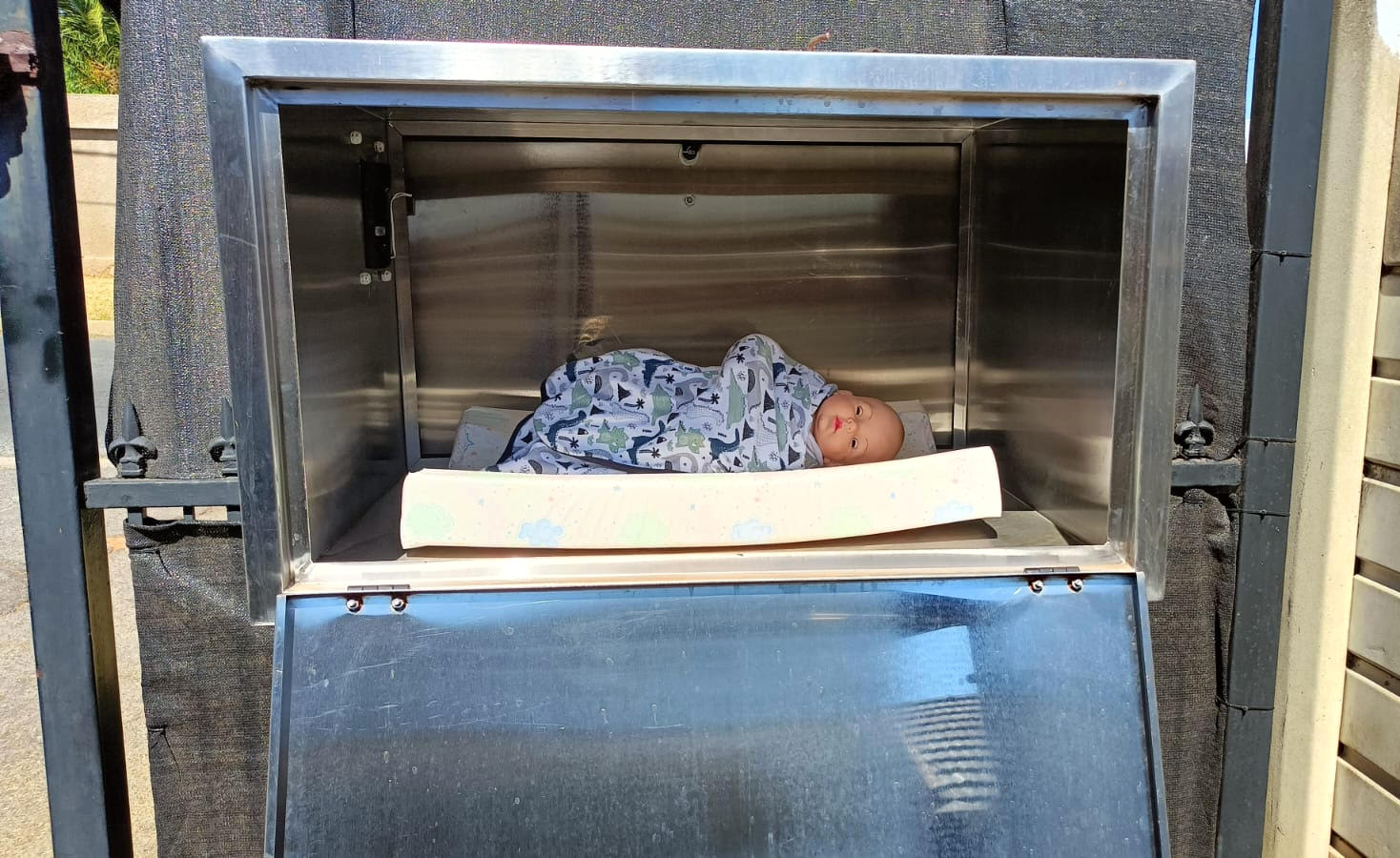
Baby savers are mechanical boxes attached to CYCCs, places of safety or crisis pregnancy centres where a mother who is experiencing a crisis pregnancy, who cannot or will not raise the child and isn’t able to place that child into the child protection system, can safely relinquish the child as an alternative to unsafe abandonment. Based on the ancient practice of foundling wheels, they are designed to provide a last resort safe haven for vulnerable infants.
Dr Yolande van der Hyde, a senior pathologist at the Observatory Forensic Pathology Institute, recreated an autopsy she had just performed on a dead abandoned baby. She said that many abandoned children were not born dead, but took a breath before they died.
South Africa has the distinction of having the first modern baby saver in the world. Situated at the Door of Hope, it’s been operational since 1999. Based in Gauteng, the baby saver, which has rescued 270 infants over the last 24 years, is one of those ordered to close.
No response
At the time of publishing, the DSD had failed to respond to questions posed to it about its motivation for issuing the directive, the extent and impact of abandonment and DSD’s strategy for preventing it. However, its position has been well articulated, both in the directive and interviews given by Yvonne Deonarin, Director Children Protection Services: Gauteng DSD on radio, television and news media since news of the directive broke in mid-October.
In a nutshell, the department’s position is that safe relinquishment through baby savers:
Is a form of abandonment, which is a criminal offence in the Children’s Act.
Encourages abandonment.
Is not in the best interests of a child.
Denies the child’s right to a name, family, social, cultural and religious identity.
“Silences the voice” of the child’s biological father.
Creates a caseload of “abandoned children”.
Is linked to illegal adoption and trafficking.
It further argues that baby savers are unnecessary because babies can be relinquished at the DSD’s offices, at clinics, hospitals and police stations, and that it has no knowledge of the organisations running baby savers.
They are important points, but to date, no one has been able to debate them publicly. Nor has the department veered off script to respond to any of the counter-arguments raised by child protection experts from Baby Savers South Africa (BSSA), the Teddy Bear Clinic, and Women & Men Against Child Abuse. The issues are therefore worth interrogating, particularly because what is missing from the department’s argument is as significant as what is included.
Notably absent is an appreciation of the desperation of abandoning parents, and recognition of the extent and impact of abandonment.
The department has never publicly acknowledged that more abandoned babies die than survive, and that those who survive are often left physically scarred or with trauma-related psychological challenges. In Deonarin’s recent interviews she also downplayed the numbers of babies surviving abandonment. Stating that the Gauteng DSD only had records of 13 babies abandoned in the province between April and September, she said that the department was not aware of the “thousands of babies being abandoned annually”.
Deonarin’s comment insinuates that the numbers are either overstated, or that the abandoned children are being received by baby savers but not placed into the child protection system, but instead trafficked through illegal adoption for financial gain.
However, the department knows the origins of the statistic. It’s derived from Dr Dee Blackie’s 2013 master’s thesis on abandonment. Blackie used figures provided by child protection organisations such as child welfare to calculate that 3,500 babies survived abandonment in 2010.
In the absence of any other formal research on the topic, including by the DSD, Blackie’s statistic has been cited ever since.
Nor is it likely to be inaccurate. In March 2022, in response to a question posed by the Parliamentary Portfolio Committee on Social Development about how many babies had been abandoned in the years since Blackie’s research, national DSD sought to answer the question by conducting informal research across CPOs in each province, rather than referring to Part A of the child protection register, which should include an accurate tally of the number of babies surviving abandonment in the period.
A baby saver, also referred to as a baby box or baby safe, is a structure built into a wall where mothers can leave infants as a safe alternative to baby abandonment. (Photo: Whitney Rosenberg)
Babies that survived abandonment
Numbers provided were incomplete (there was no data from the Northwest Province, and limited information from others such as KwaZulu-Natal). But the combined total of 10,500 babies that survived abandonment over the period is substantial. Moreover, the Minister of Social Development told Parliament that 1,024 babies had been abandoned from April 2019 to March 2021 alone.
There’s no minimising the problem. Deonarin herself admitted in a November 2022 TV interview that “the prevalence of child abandonment is on the increase” and that those abandonments included babies “put into packets or dropped off in a nearby field”.
It’s also been flagged by the UN Committee on the Rights of the Child. In 2022, after the committee received South Africa’s five-yearly report from government, and shadow reports from civil society, it specifically highlighted abandonment and its prevalence on its list of concerns needing more investigation.
In 2023 to date, there were 86 stories written about abandoned babies. Two thirds (57) were found dead, in rubbish bins, pit toilets, in buckets, on train tracks, in plastic bags, the veld, on the street, in an oven, in the mouths of animals, and in one devastating headline, strangled and being eaten by a dog.
But while the number of children who survive abandonment every year is significant, until government recognises how fatal unsafe abandonment can be, it will always understate abandonment figures.
One of the unanswered questions posed to Deonarin for this article was “how many abandoned babies die annually?” Her silence wasn’t unexpected. The number of abandoned babies that die is not formally tracked by the SAPS or through forensic pathology labs.
As a result, these children are completely invisible.
Completely invisible
Child protection activist Luke Lamprecht however says that when he was researching abandonment, one Johannesburg mortuary recorded 20 dead abandoned babies every month for every six found alive. Lamprecht’s figure, amounting to an intake in one mortuary of 240 babies per year dying through unsafe abandonment, infanticide or neonaticide, was confirmed by Dr Jena Stuart, Chief Specialist Forensic Pathologist at Gauteng Department of Health’s Forensic Pathology Services. She says that the problem is “spiralling out of control” and placing the health sector in crisis.
A 2009 child homicide study completed for the Medical Research Council included 454 children under the age of five who died of unnatural causes. Of these children, 233 (53%) died in the first six days of life, prompting the researchers to conclude that in South Africa, children under five were most likely to die of unnatural causes in the first six days of life and that the country has some of the highest rates of neonaticide (murder of children within the first 28 days of life: 19.6 per 100,000 live births) and infanticide (murder of babies under one: 28.4 per every 100,000 live births) in the world. In the study, 85% of the neonates died because they were abandoned in the open veld, rubbish dumps and dustbins, toilets, rivers and dams or were buried in shallow graves.
A recent Carte Blanche feature on dead abandoned babies included an interview with bone specialist Dr Roxanne Thornton, who establishes cause of death in the often decomposed bodies of abandoned babies. She identified illegal abortions, concealment of birth and infanticide as common causes of death for abandoned babies. Tragically, the babies she examines can be as old as nine months. But even then, their deaths are seldom investigated.
In the feature, Dr Yolande van der Hyde, a senior pathologist at the Observatory Forensic Pathology Institute, recreated an autopsy she had just performed on a dead abandoned baby. She said that many abandoned children were not born dead, but took a breath before they died.
But government has removed the word “abandoned” from its crime records and pathology reports. These babies are now all classified as stillborn even when there is evidence that the child was born alive and then died, or where there was blunt or sharp force trauma.
One abandoned baby survives, two die
Following their reclassification, an investigative reporter analysing the number of “stillborns” in pathology reports in Gauteng confirmed Lamprecht’s findings that in the province, for every abandoned baby that survives, two die.
These stats and stories show the deadly impact of unsafe abandonment. But the thousands that survive seldom escape unscathed either. Instead, they suffer debilitating physical and psychological injuries. It’s hardly surprising, many of the 29 children whose abandonment and survival was documented in the media in 2023 were found in drains, in municipal rubbish bins, in pit latrines and in plastic bags, including a baby rescued in Gauteng’s Sedibeng municipality during the 16 days of activism for no violence against women and children, after being sealed in a plastic bag and thrown into a river.
CYCCs and Places of Safety report that many abandoned babies have physical or psychological disabilities. These include brain injuries due to oxygen deprivation, cerebral palsy, autism, ADHD, cognitive delays, limbs and other extremities missing due to rat bites, damage to lungs due to exposure after a child was abandoned outside in winter or at night, from near drowning or breathing in faecal matter when abandoned in pit latrines, tremors due to being abandoned at the side of a highway or children plagued with night terrors because they were left in dark drains for extended periods of time, or even buried alive.
Not surprisingly, the department doesn’t acknowledge these cases. If it recognised the risk of children’s death or disability following unsafe abandonment and did not act to prevent it, it would be acting negligently at best, and potentially, even criminally.
Nonetheless, the DSD is on the same page as child protection activists about many things related to unsafe abandonment. Everyone agrees that first prize is for children to be raised in their nuclear or extended families, that it’s not optimal for children to be robbed of their cultural identities, heritage or relationship with their biological fathers. They even agree that abandonment is rife and that if societal factors such as poverty, unemployment, sexual violence, teen pregnancies and the breakdown of extended family exist, so will abandonment.
Where they disagree is about if unsafe abandonment should be prevented at all costs, whether government’s efforts to stop crisis pregnancies and assist women to place their children into the child protection system are working, and if women can relinquish their babies at all DSD offices, clinics, hospitals and police stations. Activists further query if baby savers rob fathers of rights because women who abandon typically report that they’ve been sexually assaulted or abandoned by the biological father. Most importantly, civil society disagrees that abandonment is an “easy option” or that abandoning parents would abandon if they had alternatives.
Underestimating desperation is as dangerous as ignoring the extent and impact of abandonment.
Pervasive factors driving abandonment
Frustratingly, despite being aware of the factors driving abandonment – Deonarin listed many in her November 2022 interview – the department seems curiously lacking in empathy about the despair they can cause.
Moreover, government doesn’t understand that no one would deliberately risk arrest, prison, hurting or killing their child, or sacrificing any future relationship with them if they felt they had options.
Recognising that people abandon as a last resort when they cannot or will not raise a child, and when placing the child into the child protection system is either not possible or government fails to assist them, refutes the argument that safe relinquishment is an enabler allowing parents to avoid parental responsibilities. Equally, if abandonment is a certainty, it’s inevitable that the child will be separated from the extended family, from culture and from its origins.
People who use savers see abandonment as their only choice, making assertions that baby savers promote abandonment spurious. They’re instead a last resort to stop death.
Armed with that knowledge, government should recognise that banning baby savers to stop abandonment is akin to government banning lifeguards to stop people drowning.
Even when it recognises desperation, the DSD still deems savers unnecessary, arguing that parents can relinquish at DSD offices, hospitals, clinics and police stations instead. Worryingly though, some women report being “chased away” when they have tried.
Deonarin calls these “isolated incidents”. However, the Gauteng DSD was unable to provide standard operating procedures for safe relinquishment at these institutions, and when BSSA asked for them, it was allegedly told that the department was in the process of writing them.
‘Go home and parent’
In the interim, incidents of women seeking help being told to “go home and parent” abound. As recently as November, there were two separate incidents in Gauteng on the same day.
In the East Rand of Johannesburg, a desperate mother tried to relinquish her baby at a police station because she had not received help from the department. When the SAPS took the baby to the local DSD offices to get it placed into the child protection system, the department ordered the police to arrest the mother because, despite the DSD’s directive, the police were told that she wasn’t allowed to relinquish her child to them.
On the same day, in the West Rand of Johannesburg, a care worker from a place of safety escorted a mother to her local DSD offices because she wanted to place her four-month-old baby into care. The social workers apparently told her “she didn’t look poor” and sent her away. Even after a senior DSD manager intervened, the mother was told she couldn’t put her baby into the place of safety she had chosen. She left the offices with the baby. The child has since been placed into care, but without intervention, she might have abandoned her baby.
The DSD’s concerns about the potential illegality of baby savers based on the Children’s Act and the risk of trafficking through baby savers are however valid. It’s why advocacy groups have been working for years to amend the Children’s Act to allow for safe relinquishment. In March 2022, Dr Whitney Rosenberg from BSSA, whose PhD is focused on safe relinquishment, presented to the Social Development Parliamentary Portfolio Committee and explained children’s constitutional right to life and the importance of acting in their best interests. She showed how abandonment statistics necessitate a solution to end unsafe abandonment, and the impact on children of government’s failure to act.
She then presented potential amendments to the wording of the Children’s Act to be incorporated into the Children’s Amendment Bill (CAB). These would legalise safe relinquishment through baby savers while ensuring that unsafe abandonment remains a criminal offence.
But the amendments were not made in 2022. The committee’s priority was instead to pass the bill in time to meet the November 2022 deadline imposed by the North Gauteng High Court. The order compelled the DSD to provide a comprehensive legal solution to the foster care crisis, thus preventing the Minister of Social Development from being deemed to have acted unconstitutionally. The committee therefore decided to only pass the 12 foster-care related clauses, rejecting the remaining 126 clauses of the bill and effectively removing the option for new provisions in the Act to legalise baby savers.
Despite this, the department still missed its deadline, and the order had to be extended for another 12 months.
The committees’ plan was to include the remaining 126 CAB clauses in a committee bill to ensure that extensive work done on them through national and provincial public consultations wasn’t in vain. But calamitously, it discovered in May 2023 that it had been given inaccurate advice by the parliamentary law advisor who told parliamentarians that if the committee rejected the remaining clauses in the bill, they could still work on them as a committee bill.
Advocate Charmaine van der Merwe, the Senior Parliamentary Legal Advisor in the Legislative Drafting Unit, clarified that the committee should have divided the bill into two, and then passed the clauses related to foster care. This would have allowed it to deliberate on the other clauses thereafter.
Instead, when the committee rejected the 126 clauses, they were taken “off parliament’s radar”.
While the number of children who survive abandonment every year is significant, until government recognises how fatal unsafe abandonment can be, it will always understate abandonment figures. (Photo: City Press / Media 24 / Gallo)
Upshot: restart baby saver legislation
The upshot is that work on the remaining clauses and suggested provisions related to baby savers must be restarted from scratch. Moreover, if the committee revives the process now but doesn’t have time to introduce the bill in the sixth Parliament, it cannot be carried over until the seventh Parliament. The result is that the bill, along with proposed new safe relinquishment clauses, has been shelved until a new committee is formed after the 2024 elections.
The state law advisor was so appalled by the advice given that she felt duty-bound to report her colleague, an action opposed by the ANC members of the committee.
Given that the DSD was privy to these discussions and aware of the plans to amend the act (and that its inability to fix foster care led to the delay effecting the changes), it seems disingenuous for the Gauteng department to act now to close baby savers, knowing legislative changes are pending.
Equally disingenuous is its continued assertion that it’s unfamiliar with the organisations running baby savers. BSSA met with a senior director from the Gauteng DSD on 4 October and explained in detail the vision for baby savers, its member organisations, the CPOs working with each saver to ensure that children placed in savers are immediately put into the child protection system, what processes they use when a baby comes through the saver, as well as the plan, also presented to parliament, for BSSA to become a regulatory body for savers.
Acknowledging the risk of trafficking through unregulated savers, BSSA’s proposal is to register all savers who work with accredited CPOs and follow the processes dictated by the Children’s Act. This would ensure that every child placed in a saver is put into the child protection system. Equally, any saver not following the procedures would be flagged and suspended, pending compliance, or closed.
At the meeting’s end, the DSD and BSSA agreed to pursue ways of working together. But, on the same day, the DSD issued the directive to ban baby savers and make their activities illegal.
Since most baby savers are run by places of safety or CYCCs, if they defy the directive, they risk legal action, loss of funding and having their accreditation removed. But if they close, unsafe abandonment, which will continue unabated, will result in even more babies dying or being maimed. If savers are driven underground, the risk of trafficking, minimal when savers are regulated, could also become real.
Banning savers to prevent trafficking may ironically result in trafficking increasing.
Going upstream to stop abandonment at its source: addressing gender-based violence and prevention of crisis pregnancies should minimise abandonment numbers. As should options counselling and, when they are finally drafted, the implementation of safe relinquishment standard operating procedures for clinics, hospitals, police stations and DSD offices, especially if the DSD accompanies them with training, and includes the number of children relinquished into care as a performance indicator for DSD social workers.
But, government prevention and intervention programmes lack urgency and effectiveness, as attested by abandonment stats. And societal circumstances in our country and resultant desperation mean there is no end to abandonment in sight.
It’s therefore time to deal with the reality of abandonment rather than pretending that the savers are the genesis of the problem and that if abandonment numbers aren’t tracked and managed, abandonment isn’t happening.
Ignoring this scourge won’t allow government to escape the consequences if it fails to end it.
Baby savers an ‘essential service’
To quote Dr Sheheda Omar from the Teddy Bear Clinic, when you acknowledge that women who abandon feel that they have no other option, and that most abandoned babies die, it makes baby savers an “essential service”. Reinforcing that the right to life always trumps the right to identity, Omar explains that if you accept that the children placed in baby savers were going to be abandoned, not raised or placed in the child protection system, avoiding death, disability or psychological damage will always be in the child’s best interests.
It’s also in the best interests of government. Now that the UNCRC has flagged abandonment as a reporting issue, government will be required in terms of the country’s treaty obligations to track abandonments (including those that result in death) and to show progress in minimising unsafe abandonments. Moreover, if the department deliberately denies children their inalienable rights to life and dignity, they could be deemed to have acted unconstitutionally.
Government therefore needs to withdraw its directive and work with baby savers across the country to ensure that all savers are registered with BSSA and that the processes outlined in the act for placing a child into the child protection system are followed by those running savers. Further, it should expedite amendments to the Children’s Act to make safe relinquishment legal.
In the interim though, DSD intransigence is costing many of our most vulnerable their lives. It seems incomprehensible that government must be compelled to save the lives of infants, but until it ends this perpetration of violence against those with no voices to protest, the 16 days of activism for no violence against women and children is a farce. DM