
by Robyn Wolfson Vorster | Nov 16, 2023 | Child Abuse
When it comes to sexual abuse, grooming and physical brutality, what happens in school doesn’t always stay in school. For many boys, the trauma they experience in their elite schools indelibly changes their lives and can lead to their eventual death.
Listen to this article
In 2008, the 13,915 reasons for equity in sexual offences legislation study reported that 44% (two in every five) of the school-going boys included in the study had been sexually abused before the age of 18. Of those boys, 20% were abused by teachers. One in every 20 schoolboys in the study reported being asked to have sex by a teacher.
These shocking statistics were supported by the 2016 Optimus study which found that 36.3% of boys had been sexually abused before the age of 16.
US-based advocacy group, Darkness to Light, says that “child sexual abuse is likely the most prevalent health problem with the most serious array of consequences that children face.”
Research indicates that “sexual abuse and, to a lesser extent, physical abuse in childhood”, are consistently associated with suicidal behaviour and that “those reporting any traumatic experience in childhood show a two to five-fold higher risk of being suicide attempters compared to those who do not”.
This statistic was confirmed by 68 studies by psychologists from the University of Manchester and the University of South Wales which found that suicide attempts were:
- Three times more likely for people who experienced sexual abuse as a child.
- Two and a half times more likely for people who experienced physical abuse as a child.
Other significant contributing factors to suicidality are dissociation from the abuse, how severe and physically painful the abuse is, how long the abuse continues and the age at which it occurs: “Earlier onset of the sexual abuse and duration of the abuse were associated with more lifetime suicide attempts.”
The abuse allegedly perpetrated against Julio Mordoh, whose story is told in part one of this series, began when he was 10 and lasted for three years – to cope with the trauma, his brain disassociated from it. Small wonder he felt he could never recover.
Like Julio’s parents, Ben’s* family chose his elite school, Parktown Boys’ High School, because they wanted him to have the best possible opportunities in life. But before he had finished high school, they found themselves helpless onlookers as he hung from a bridge over the highway, threatening to let go.
To understand why he was on that bridge, his family points to the impact on Ben of his school’s devastating failure to safeguard its pupils from the outset, beginning with the Grade 8 initiation camp when he and the other boys were forcefully initiated into the “Parktown way”.
They were taught that weakness was frowned upon and that “snitches get stitches”. They were also taught that “what happens on tour, stays on tour.”
The outcome was that Ben and his classmates were well-schooled in secrets and boundary violations by the time their new water polo coach and junior hostel master, Collan Rex, arrived at the end of his Grade 8 year.
Rex then began to groom and sexually abuse the boys in his care.
In an interview with Ben, now 23, he described Rex as an overgrown schoolboy, charming with the parents but an instigator of trouble in the hostel, and able to overpower the boys physically and introduce illicit behaviours.
Like many other predators, Rex followed these stages when grooming Ben and at least 22 other boys in the boarding house and water polo team:
- Identifying and targeting the child.
- Gaining the child’s trust and access to the child often through needs or vulnerabilities.
- Playing a role in the child’s life and filling a need for the child.
- Creating a “special secret relationship” with the child while isolating the child.
- Sexualising the relationship through the process of desensitisation.
- Maintaining control of the relationship with the child.
Ben explains that Rex began working his way through the hostel and water polo boys carefully and slowly. Weeding out those who resisted, he then deliberately lured the other boys in, normalising pulling off their towels when they were changing, grabbing their genitals, wrestling them into submission, dry humping and team showering.
Rex used the hostel, which was off limits to parents and largely unpoliced by other teachers, as well as school tours, bus trips and time in the water polo pool and change rooms to take advantage of the boys.
Ben says that the behaviour became so commonplace that they began doing it to each other and the younger boys, and that Rex used the boys’ inappropriate actions towards each other, as well as contraband, to reinforce the secret.
The impact of Rex’s short tenure at the school has been well documented, culminating in him admitting to the content of 144 counts of sexual assault, 57 of which were for crimes committed against Ben, and 12 counts of common assault.
Rex did not plead guilty, instead arguing that what he did was part of the culture of water polo, which had also happened to him while he was a pupil at Parktown Boys. Nonetheless, he was found guilty and sentenced to 23 years in jail.
Less well publicised, though, is what happened to the boys, especially Ben, who had been his victims, and who still had two or three years of school left when Rex was arrested.
Ben’s family describe him as fearless; one who would never back down from a challenge, a clown, but also a natural leader who didn’t like to see anyone else in pain, either physically or emotionally. He was also the one willing to take the fall or be a target to protect those weaker than himself.
It was those leadership qualities which appear to have made him a special target for Rex, but also made him the whistle-blower who exposed his erstwhile coach.
Ben explains that his now famous “missing water polo caps” ruse, which he says was designed to “stop [Rex’s] s#!%”, occurred after three major incidents, mostly on tour, where he and other boys were victimised in ways that were clearly no longer a “game”, as Rex made it out to be.
Strongly empathetic, Ben began to recognise that he and Rex’s other victims were starting to interact with younger boys in the same way that Rex did, and, seeing through those children’s eyes, he realised this was far from “normal” behaviour.
Ben says his goal was to get Rex fired, not send him to prison. But when he was arrested, it was Ben who helped other boys to come forward. After the arrest, authorities were struggling to get the boys to break the code of silence. It was Ben who explained to them that they had been groomed by Rex into believing that what happened to them was “not so bad”. He also counselled them that they weren’t “snitching” if they told their stories.
For the boys, the question that changed everything was, “If you were a parent, would you be okay with this happening to your son?”
Ben’s family wonder if things would have turned out differently for him if the victims had been supported at the school rather than just by the hostel master and matron. The school also did little to protect the victims’ identities, and Ben’s role in Rex’s arrest quickly became common knowledge.
Ben was even confronted by a former Parktown Boys teacher at a water polo game, who told him he knew Ben was the one who “snitched”.
At the school, teachers and fellow pupils defended Rex. Unwilling to believe that he was an abuser, they expressed anger at the victims, leaving them isolated and vilified.
Luke Lamprecht, head of advocacy at Women and Men Against Child Abuse, describes how perpetrators use three strategies to avoid detection and prosecution: denial of facts, denial of responsibility and denial of impact on the victim, thus obfuscating the extent of the harm caused by their actions.
The unfortunate result is that schools and peers are often manipulated by that narrative and don’t believe the child.
Although the victims of Collan Rex were finally vindicated when he was found guilty, many had matriculated by that point. Their final years at Parktown Boys were therefore defined by their having exposed Rex and the resultant accusations that they had hurt their peers by “bringing the school into disrepute”.
A report by the Harris Nupen Molebatsi (HNM) law firm, which has still not been released to the public, even in redacted form, is known to have documented in painful detail how these abuse survivors were isolated by teachers and fellow students, victimised, verbally abused, intimidated and even physically abused. Only one of these incidents led to the teacher resigning when faced with a disciplinary hearing.
It was particularly bad for the boys who were seen to have “snitched”.
In a well-publicised racist and victim-shaming rant that the boys recorded, the school’s former art teacher labelled the boys who had alerted authorities to Rex’s abuse as “snitches” and “evil”. He also crudely referenced what had happened in “room 13” behind closed doors in the hostel, before threatening to blow the hostel up.
Survivors had their leadership roles challenged and one of the boys left the school after being violently whipped in a water polo first team initiation and was then threatened and spat on because he broke the “code of silence” about the initiation.
After the lashing, Ben was appointed as captain of the water polo team in place of the boy who carried out the beating. Despite this, when Ben and his dad visited the school earlier this year, they discovered that Ben’s name had been removed from the board honouring past captains.
By the time the HNM report was finalised, three victims were in long-term counselling and six more were on suicide watch.
After a year of providing support for the other victims, Ben began struggling with trauma-induced depression, compounded by his ongoing experience of isolation.
Rex’s grooming was so effective that Ben was in turmoil about turning him in. Ben confessed that he still feels sorry for his abuser and guilty about having him arrested, a feeling that was reinforced at school.
Edith Kriel, executive director of Jelly Beanz, a group dedicated to providing mental health services to children affected by sexual abuse and trauma, describes grooming as a process in which the child is psychologically manipulated in a myriad of nuanced and multi-layered ways to be entrapped in the relationship with the offender.
In that relationship, the child may be made to feel complicit in sexual acts that ensue, either through affection, gratitude or fear of the perpetrator. The sexual acts may further be minimised or normalised so the child doesn’t necessarily understand the wrongfulness of the behaviour.
According to Kriel, grooming and its impact is often the part of the sexual abuse which is most confusing to the child. She says it causes enormous emotional damage and has long-term consequences. She stresses that the betrayal of children’s trust hurts them deeply.
A 2023 Canadian study on externalisation of suffering among male survivors of sexual abuse found three main types of externalised behaviours: aggressive behaviours to express anger, rule-breaking and substance abuse to avoid suffering. Before the end of his time at Parktown, Ben manifested all three behaviours.
Darkness to Light’s research indicates that male survivors of sexual abuse are 2.6 times more likely to experience substance abuse problems than non-victims and more than 70% of male victims seek psychological help for substance abuse, suicidal thoughts and attempted suicide.
Ben began to struggle with destructive anger, which, to his dismay, was often directed at his family. A year after Rex’s arrest, he went from considering substance abuse a weakness that he abhorred, to finding ways to numb the pain of Rex’s abuse and the secondary victimisation he experienced at school.
Then came the fateful day in his matric year when Ben, convinced that he was hurting the ones he loved most, climbed out of his family’s car on a major road, ostensibly to walk back to his girlfriend’s house. He was followed by his twin brother who, seeing that Ben was overwrought, ran after him, worried he would do something desperate.
Ben says the more his twin followed him and fought to keep him safe, the more he ran. He finally broke through the fence that led him to a bridge across the N1 highway in Johannesburg. As his brother pleaded with him to stop, he found himself holding on by one arm, threatening to let go if his brother came any closer.
Ben vividly remembers the moment, while hanging from the side of the bridge, when he heard his brother crying. He kept his eyes on the tattoo on the arm that was still holding onto the bridge – a tattoo with the letters “IDBK” – the initials of his parents and brothers. Ben didn’t let go.

Ben’s* life-saving tattoo. (Photo: Supplied)
If this were fiction, the story may have ended there, with Ben’s life-saving tattoo and a tearful reunion with his twin. But choosing not to die did not make living with the depression, anger or addiction that had become a constant part of Ben’s life post-abuse any easier for him or his family.
Shortly after, he was admitted to a psychiatric institution and placed on suicide watch. He was there for 56 days on 26 tablets a day. He wrote his matric finals in the facility.
The boy who had once dreamed of being an architect went from a top sportsman who excelled in maths to barely passing; from hating drugs to self-medicating to cope with the abuse and its aftermath.
And like the Mordohs, who are still struggling with the cost of Julio’s psychiatric care and rehab a year after his death, Ben’s family have had to sell a house and a car to give their son the support he needs.
Ben says that if it weren’t for his family, and now his commitment to his baby and fiancé, he might have succumbed to the pain years ago.
But even now that Ben has a new family and so much to live for, the emotional anguish of the abuse and the years that followed still occasionally drive him to desperation and back to high places.
As recently as July, after a prolonged bout of psychosis, a fear of letting his family down led him to the edge of a mountain. Once again, he didn’t jump.
The themes of abuse – including sexual abuse, victimisation and suicide – are tragically common to many stories from those who were once proud pupils of Parktown Boys.
As with sexual abuse, there is a strong causal link between traumatic physical abuse and suicide. And, unlike Ben, not all boys survive.
When Pene Kimber’s son was violently beaten by Grade 12s in a 2009 hostel initiation where boys had to run the gauntlet of matrics wielding cricket bats, hockey sticks and golf clubs, and were made to rub deep heat on their genitals to earn the privilege of using a kettle, the furore that followed resulted in many families telling their stories of initiation at the school.
In one tragic case, the parents of a teenager opened a case against the school after he was beaten there. They later withdrew it because the boy was being victimised. Their son went on to take his life.
In another story, a mother told of how her son had been relentlessly bullied at the school. She said he showed her damage caused by “wedgies”, where his underpants were ripped, causing bruising and splitting of the peri-anal area. Her son was frequently humiliated and told he was a “loser”.
When she threatened to go to the school, her son told her: “Mum, if you intervene, life will be far worse for me!”
She says that in hindsight, she realises a lot was hidden from her.
When she finally spoke to the then-headmaster, she says he told her that mothers tend to be over-protective and that she should understand this was a rite of passage for young men. She was told not to worry about it.
Struggling with depression and anger, her son took his life shortly after finishing school. His psychologist said that he had never recovered from the helplessness he felt at school.
Bradley Skipper is another of those boys whose life was dramatically changed when he was at Parktown Boys.
Bradley, whose mom described him as a sensitive soul with a strong sense of fairness, was brutally beaten during a prefect’s assembly in October 2006 when he was in Grade 9.
The incoming prefects gave him punitive “PT” which involved smothering him in blazers, kicking his hands out from under him while he did push-ups, beating him in the back despite him telling them that he had scoliosis of the spine, forcing him to hold a bin full of bricks upright while they punched him in the ribs, and filling his mouth with cigarette stumps.
Despite his mother’s best efforts, only two of the boys involved were sanctioned by having their prefect’s badges removed for two weeks. But the teacher who was allegedly present at the time, and who at first denied that the assault occurred, wasn’t sanctioned. Nor was the seemingly endorsed violence addressed.
Instead, the master who investigated the incident warned Bradley’s mother that her son was now open to victimisation because he had “snitched”.
Bradley’s mom removed him from the school immediately and tried, through the headmaster, the South African Council of Educators, the provincial department of education, the Human Rights Commission and even the Minister of Education, to get justice for her son and end the culture of initiation and secrecy at the school. Her efforts were in vain.
Three years later, when Pene Kimber’s son was assaulted at the school, Bradley spoke to the media on condition of anonymity. In an article aptly sub-titled, “Fit in or F..k off”, he explained that he was terrified for his life:
“I am too scared to reveal myself. Parktown Boys has an extensive old boys’ network and I could be killed anytime I set foot in a club or a mall. When I left the school, the deputy headmaster told me I had better watch my back because he can’t do it for me.”
After 11 years of living with the fear and trauma of that day, Bradley died by suicide at the end of 2017.
In a written comment received from the school governing body (SGB) of Parktown Boys for this article, the school acknowledged that what “some of our boys went through in the past can never be diminished or forgotten.”
It said that, since 2019, the school had been implementing the recommendations of the HNM report and receiving expert input from both Luke Lamprecht and Rees Mann from Male Survivors of Sexual Abuse.
The SGB further affirmed that “the school is determined that these tragic events will never be repeated” and that “there continues to be an unrelenting and shared focus on the process of healing, learning and advancing transformation that we have embarked upon to forever change our culture.”
In 2020, Bradley was memorialised at Parktown Boys in a plaque that was laid outside the hostel on the same day that the school safety bell was installed. It was meant to be a commitment by the school and its pupils to put an end to violent initiations and abuse.
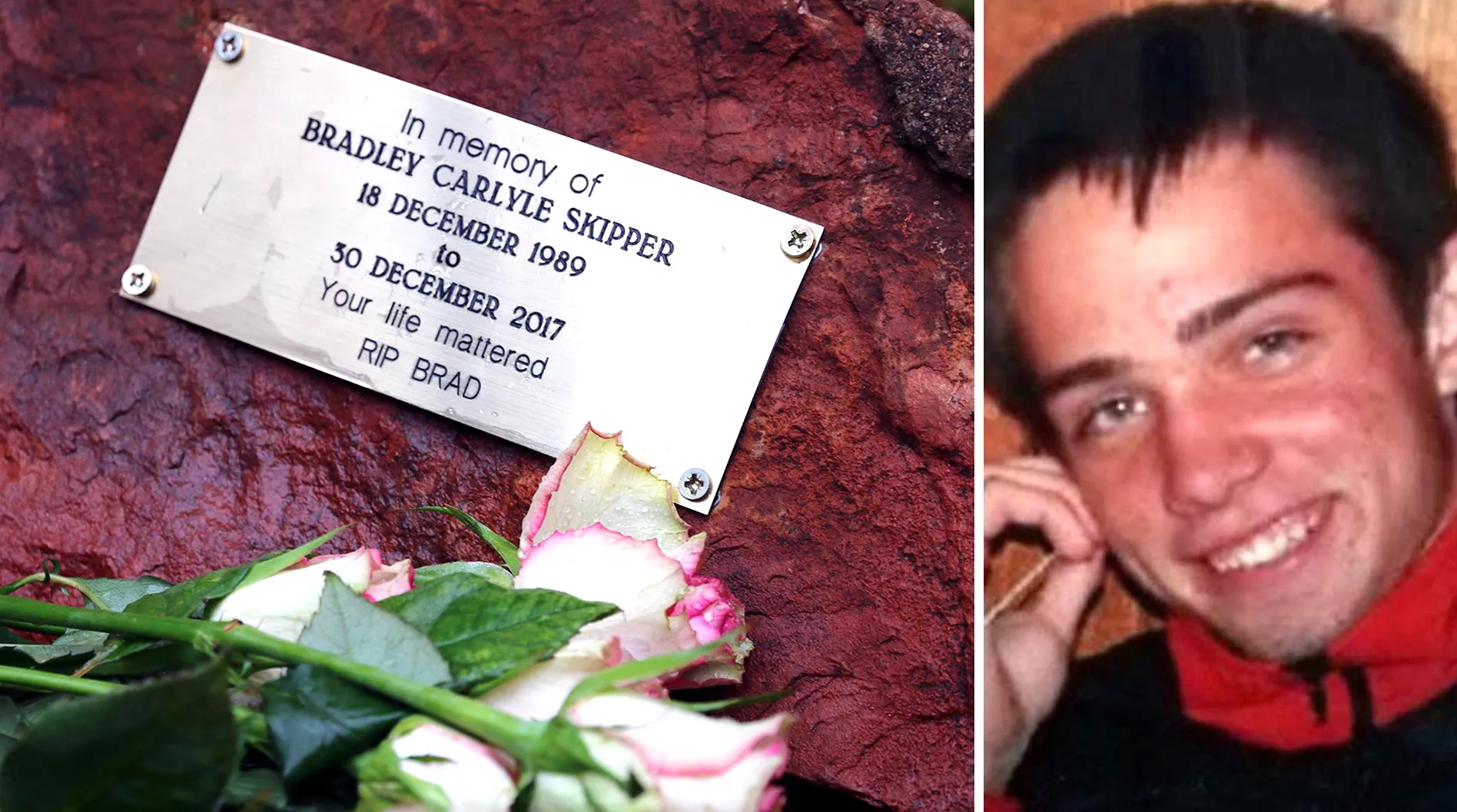
Bradley Skipper’s memorial stone: October 2020. (Photo: Robyn Wolfson Vorster) / Bradley Skipper, Grade 9 Parktown Boys High School. (Photo: Supplied)
Both the bell and plaque were removed by their donors when the heads of hostel, Chris and Mariolette Bossert, left the school.
The plaque dedicated to Bradley has since been placed at the Fight with Insight programme in the Children’s Memorial Institute as a reminder that abuse can drive vulnerable children to desperation, and also as a challenge to adults to never stop fighting for the protection, safeguarding and care of their children.
In the final article in this series, we tell the story of Thomas Kruger and ask why, on the 5th anniversary of his tragic death – despite an explosive podcast, an independent review, a change in leadership at the school and criminal and legal investigations – authorities seem no closer to delivering justice or even providing answers to his grieving family about why he died. DM
If a child you know has been affected by sexual or physical abuse or is at risk for suicide, please contact Childline’s Helpline 24X7 on 116 (free from all networks) or visit their Online Counselling chatrooms. Alternatively, email reportsafely@STOPS.co.za to report abuse.
These articles were written in loving memory of:
Julio Mordoh: 08.01.2002–05.11.2022
Thomas Kruger: 20.03.2002–18.11.2018
Bradley Skipper: 18.12.1989–30.12.2017
*Name changed to protect the identity of the victim.
First published in the Daily Maverick: 08:12:2023

by Robyn Wolfson Vorster | Nov 10, 2023 | Child Abuse
About two in five boys in South Africa are sexually abused before the age of 18. Of those boys, 20% are abused by teachers. Those reporting traumatic childhood experiences such as sexual and physical abuse are 2-5 times more likely to attempt suicide, with early onset of trauma an even stronger predictor. Given those statistics, we should not be asking why Julio Mordoh died, but rather how his abuse occurred at the elite boys’ school tasked with safeguarding him.
Listen to this article
On 5 November 2022, Teresa Mordoh received a phone call that’s every parent’s worst nightmare. She was told that her son, Julio, had attempted suicide.
She and her family were en route to see him, bringing a cake to celebrate his father Marcio’s birthday, when the heart-stopping call came.
During the frantic trip across town, Teresa tried to cling to hope – it wasn’t the first time Julio had tried to take his life.
Desperate for news, she called again, only to be told that paramedics were unable to resuscitate him and that Julio had been pronounced dead.
In a Facebook post paying tribute to her son, Teresa described how she wished they could have “flown over the traffic on Saturday to get there just a few mins earlier to save you and tell you again how much we love you”.
She explained how, when they finally arrived, her son’s body was lying lifeless on the floor. He was still warm when she hugged and kissed him goodbye.
While they couldn’t intervene on the day Julio’s life ended, the family had done everything possible to support and save him.
When Julio Mordoh died just two months before his 21st birthday, he had been assessed by six psychiatrists, treated by eight psychologists, spent over 12 months in treatment as an inpatient, and been hospitalised 12 times for mental health-related conditions, including complex post-traumatic stress disorder and suicidality.
On the day he hanged himself with his belt, he was in a secure, private psychiatric facility where he’d been admitted as a high-risk patient to keep him from self-harming.
Teresa remembers little of the terrible moments following her son’s death, but she does recall every decision that brought them to that day.
Describing Julio as a calm and loving baby with huge brown eyes, she says that while he was diminutive in stature, like his parents, it was obvious from the time that he was in pre-school how talented and clever he was. He competed in gymnastics at the highest level from a very young age.
A deep thinker, he was obsessed with finding out how things worked, and designing and inventing everything from water rockets to a go-kart, and then building them with his dad.
It was his intelligence that made the family choose to send him to the best school they could afford. With its excellent academic record, St John’s College in Houghton, Johannesburg, seemed the best fit. They even bought a house within a stone’s throw of the school.
As Teresa and I sat drinking tea on her veranda, surveying the family’s wild and beautiful garden complete with tree houses and homemade forts, we could hear the St John’s school bell chiming 10.
Although we can’t see the clock tower Julio allegedly climbed while in prep school, for the Mordoh family, the melodic chiming is a haunting hourly reminder of the suffering he endured.
St John’s formed a significant part of Julio’s life. He was there for pre-prep and prep school, and then, after the family spent his high school years in France and Dubai, he chose to return home to complete his A-levels at the school.
His experiences in pre-prep and 6th Form were positive ones, but Teresa says that he felt very differently about the prep school. She describes how in the year that he died they visited the school together, which gave Julio the opportunity to show his mother some of his favourite places, including the science lab and 6th Form lounge.
She says she was struck, however, by how his demeanour and body language changed and how he withdrew into himself when he walked into the prep school.
By then, she knew why.
***
According to Teresa, the catalyst for a major change in Julio’s life was St John’s requirement for all boys to participate in school sporting activities.
By the time Julio was in prep school, he was already competing in gymnastics (a sport not offered by the school) at national and then international level. In his second year at prep school, he received a special dispensation excusing him from school sports and even school recognition for his achievements.
But his exclusion left him isolated from his peers. That, along with his size and intellect, made him a target for bullying.
After a bullying incident that Julio downplayed because he didn’t want to be a snitch or singled out, his headmaster suggested that Julio have weekly hour-long counselling sessions with the prep’s head of pastoral care.
According to Teresa, the head of pastoral care was a friendly, caring and approachable man. He seemed to take a keen interest in Julio and his well-being and kept in WhatsApp contact with her about Julio’s progress and emotional stability.
In addition to counselling sessions, the head of pastoral care, who was also in charge of rock climbing at St John’s, presented climbing as a solution to both Julio’s isolation and the ongoing bullying.
Julio’s upper body strength and agility made him a perfect candidate for climbing, at the time an emerging sport at the school. Although boys were not allowed to climb until they were 12 years old, the teacher offered him the opportunity to start training in 2013 when he was only 11.
Unbeknownst to the family, he invited Julio to go bouldering in the school “cave” during break. Julio disclosed to a friend that the teacher warned him not to tell anyone, especially his parents, in case they got angry and he wasn’t allowed to climb anymore.
His teacher also permitted him to climb the school climbing wall which was supposed to be off limits until he was in Grade 6. It was another secret, along with his reported climbing of the school’s bell tower.
By the end of that year, Julio’s mother had seen a notable change in his behaviour. He was more withdrawn, sad, private and less willing to connect with his dad or open up to her.
She attributed it to his age, but sought help from the headmaster when Julio began to resist going to school and stopped sleeping well. Teresa says he seemed visibly afraid of school and refused to attend sessions with the school’s male psychologist.
Once again, the school’s proposed solution was counselling with its head of pastoral care.
Despite his distress, Julio continued to excel academically and in gymnastics, and in August 2014, he won the U13 SA National Rock Climbing Championship.
Teresa remembers Julio’s climbing teacher encouraging him to go on weekend trips with the school’s explorers to get climbing experience. But despite his persistence, Teresa wouldn’t let Julio camp unsupervised overnight, citing his weekend gymnastics commitments as an excuse.
However, in November 2014, a few months after his nationals win, she did allow him to go on a day trip to the Magaliesberg with his climbing teacher and some other boys.
Teresa describes her dismay when it got dark and her son had still not returned. When he finally got home at 7pm, he was the only boy in the car.
As Marcio invited the teacher in for coffee, Julio rushed off to shower. But before leaving, the head of pastoral care insisted on giving Julio his engraved Leatherman as a “reminder of the special day”. Julio reluctantly accepted the gift but then hid it away. His mother says he never used it.
It wasn’t long after that the head of pastoral care and climbing teacher, whose name is inscribed on the Leatherman he gave Julio, left the college to take up a deputy head position at another school.
Shortly thereafter, on the cusp of qualifying for the 2015 World Championships, Julio stopped climbing.
***
What happened during Julio’s time in the prep school stayed buried through his teenage years when the Mordohs lived in France and then Dubai, until five years later when the family returned to South Africa.
While Julio was excited to be home and seemingly enjoyed 6th Form at St John’s, his anxiety intensified and his insomnia worsened.
His mother describes how he would come home from school with goosebumps and visibly shaky. After suffering more extreme anxiety and panic attacks, his psychologist diagnosed him with Complex Post Traumatic Stress Disorder.
When the psychologist briefed the family, one of the first questions she asked was if Julio had been sexually abused.
It was a question no one could answer. Despite the diagnosis and help from his psychologist, Julio wasn’t able to access what had caused the trauma, so after completing 6th Form in 2020, he chose to spend his gap year seeking help.
During his long-term treatment, Julio wrote this: “There are one or two things that I haven’t shared with anyone yet… I’ve pushed this to the deepest, darkest corner of my mind and tried hard to delete it from my memory entirely. Saying it out loud makes it real and validates that it actually happened.”
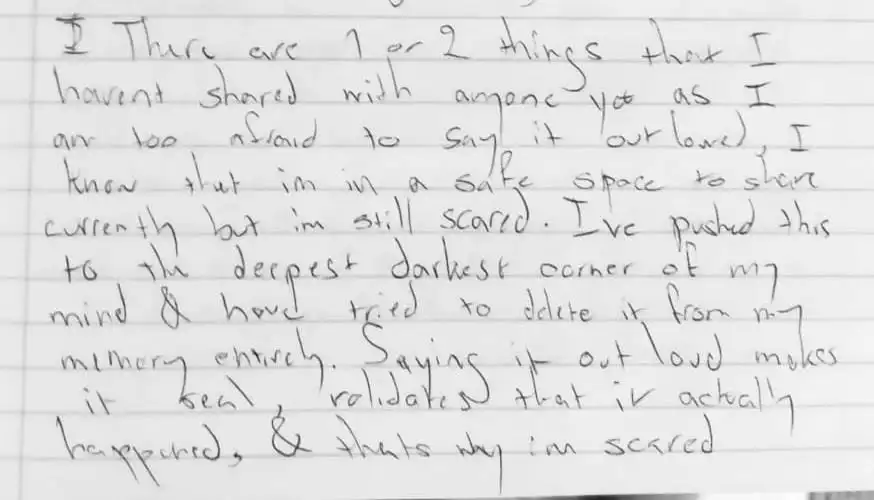
Writing from Julio Mordoh’s diary. (Photo: Supplied)
The diary entry was written shortly before 15 November 2021, when St John’s released a letter notifying the school community that several past pupils had alleged sexual assault by a former teacher who had been employed in the prep school between 2002 and 2014, and that charges had been laid with the Family Violence, Child Protection and Sexual Offences unit and the matter reported to the South African Council of Educators and the Anglican Safe Church Unit.
Teresa remembers how, when Julio’s psychologist read him the letter, his head dropped and his body stiffened. When she had finished reading, all he could say was: “Oh, so there were other boys. I thought I was the only one.”
On hearing his words, Teresa says she felt as if her heart shattered into a million pieces, realising her son had suffered the shame of thinking he was the only victim and therefore somehow to blame.
Julio’s psychologist, who believed that Julio would have benefited from group therapy to deal with those feelings of shame and isolation in a safe space with other survivors, offered to facilitate group therapy for the victims.
But the school declined, confirming that it was providing the victims with psychological support if required, but that everyone was “on a different journey” and cited victims’ requests for privacy.
In a written response to questions for this article, the school’s executive headmaster, Stuart West, stressed that “the need for such a process was not shared by other victims and could not be imposed on them.”
Perhaps for this reason, Julio never disclosed the details of his abuse. However, a close friend said he told her that it went on for a long time and that he felt confused, tormented and irreparably damaged.
He said that “he felt broken and wished his life was over. He didn’t think he’d ever be able to fix himself”.
It was the message that he conveyed to St John’s when he was finally ready to meet with the school in July 2022, three months after allowing his psychologist to disclose to the school that he was also a victim.
In September 2022, two months after he met with the head of human resources at St John’s, the family received a letter from the headmaster expressing alarm over Julio’s suicidality and stating that “without any admission of liability” the school would “sponsor a short-term hospitalisation at an approved mental health facility that specialises in patients that are at risk.”
En route to being admitted, Julio went to a police station where he wrote an affidavit stating that he had been sexually abused by his climbing coach (who he names) while a pupil at St John’s College during the years of 2011 to the end of 2014 when he was aged 10 to 12 years old.
It was his final act of defiance against the abuse that forever altered his life.
***
Shortly thereafter, while in the supposedly secure facility, after begging unsuccessfully to be sedated following intense dreams, flashbacks and extreme agitation, Julio hanged himself.
Although 10 survivors of the abuse at St John’s prep school came forward, the case against Julio’s alleged abuser, which was moved to Rustenburg in November 2021, stalled because there was no active investigation.
Attorney Ian Levitt subsequently became involved, resulting in the case being incorporated into Operation Nemo and Colonel Heila Niemand being appointed as the special investigating officer.
On 9 October 2023, the former head of pastoral care at St John’s prep, who cannot be named until he has pleaded to the charges, finally appeared in court.
The case was postponed to 7 December.
Headmaster West emphasised the importance of duty of care and said the school continues to support the complainants in the case. He also referenced a report by retired Constitutional Court judge Johan Froneman commissioned by the school after the allegations of abuse emerged. It was deemed too confidential for release even in a redacted form, but a summary was sent to the school community.
The report noted that the school had no knowledge of the allegations of abuse prior to 2021. It also noted that during the prep teacher’s tenure, no complaints were made against him by pupils.
The summarised report provides little explanation of how the former head of pastoral care was able to abuse boys undetected throughout his 12-year employment at St John’s, but does note that “two complaints were taken by Prep staff to their Head during the former teacher’s tenure, and these were appropriately dealt with by the Prep Head at the time.”
While the nature of those complaints is not detailed, the report stresses that Froneman “did not uncover improper management of the complaints… given the knowledge available at the time regarding sexual and other abuse”.
Tragically, Julio is one of many pupils who are sexually or physically abused at one of South Africa’s elite boy’s schools.
The second of this two-part series tells the stories of two other boys whose lives ended tragically following abuse at two other schools, and unpacks South Africa’s horror statistics about the sexual abuse of boys and the link between abuse and suicide. DM
If a child you know has been affected by sexual abuse or is at risk for suicide, please contact Childline’s Helpline 24X7 on 116 (free from all networks) or visit their Online Counselling chatrooms.
These articles were written in loving memory of:
Julio Mordoh: 08.01.2002–05.11.2022
Thomas Kruger: 20.03.2002–17.11.2018
Bradley Skipper: 18.12.1989–30.12.2017
First published in the Daily Maverick: 2023.10.10

by Robyn Wolfson Vorster | Jun 6, 2023 | Child Abuse, Child Protection Legislation & Child Rights, Health and Hunger
It’s the end of another Child Protection Week, proof positive of a government without a cohesive funded strategy for child protection, or anything related to children, and one seemingly unaware of the extent of the crisis.
Listen to this article: BeyondWords
If you recognised the name of government’s 2023 Child Protection Week campaign: “Let’s all protect children through Covid-19 and beyond”, it’s because it was the title of the 2022 campaign, and the 2021 one, and the 2020 one. The content on the official government website is also a copy and paste from the last three years.
It’s why when asked in an eNCA interview at the launch of the week if Covid was the most critical challenge for children, the Minister of Social Development, Lindiwe Zulu accurately replied that the campaign was developed while Covid was still a factor.
She did stress however that the “and beyond” allowed room for the week to address all the many ills our children are currently facing.
While that’s apposite, the department could have steered clear of any Covid references, given that government missed many vital opportunities to protect children during the pandemic and that children continue to be affected.
The psycho-social impact of the pandemic is still largely unmanaged. Government has also been slow to acknowledge its role in the mass closure of early childhood development centres and its failure to recognise increases in the numbers of orphans and abandoned children, or respond meaningfully to escalations in teen pregnancies, violence and exploitation, or those suffering from malnutrition and stunting.
Consequently, it might have been opportune for the Department of Social Development (DSD) to revert to its pre-Covid campaign title: “Let’s protect children to move South Africa forwards”, notable because it links the well-being of children to the future of the country.
According to activists and academics, who stress the importance of extending child protection to the prevention of a myriad of adverse childhood experiences such as hunger, poverty, poor housing, inadequate early childhood development and schooling, abandonment, deprivation of family care, violence, homicide, and a lack of opportunity, economic mobility and social capital, the picture is a bleak one.
How big is the problem?
The shadow report submitted to the African Union by the South African National Child Rights Coalition (SANCRC) and statistics and analysis compiled by the Children’s Institute, both drawing from multiple global and local studies, reveal how dire our children’s situation is.
In 2020, 62.1% of South African children lived in multiple deprivation poverty, measured by their access to combined services and support: income support, health, nutrition, water and sanitation, education, and protection.
Historically marginalised children experience much higher deprivations. In 2022, more than a third of children in South Africa lived below the food poverty line of R663 per month. This has been exacerbated by below-inflation increases for the Child Support Grant (CSG), leaving families poorer and children hungrier.
The Pietermaritzburg Economic Justice & Dignity Group found that in May 2023 the CSG (R500) was 25% below the food poverty line (R663) and 45% below the average cost to secure a basic nutritious diet for a child (R901,19).
Of every 1,000 children born in South Africa, 28 die before their fifth birthday. Half of all child deaths in hospitals are associated with malnutrition. Only 23% of children between six and 23 months receive a minimum acceptable diet.
Further, 30% of boy children and 25% of girl children under the age of five are stunted, meaning that they cannot reach their full growth and development potential because of the irreversible physical and cognitive damage caused by persistent nutritional deprivation. Stunted children are more vulnerable to disease and cannot learn effectively, are more likely to drop out of school, struggle with unemployment and live in poverty as adults. Stunting exacerbates the triple challenge of unemployment, poverty and inequality that the government keeps promising to eradicate.
The Thrive by Five Index indicated that 57% of children attending an Early Learning Programme (ELP) were not on track for cognitive and, or physical development.
The World Bank’s Human Capital Index from 2021 showed that children born in South Africa today will only develop to 43% of their potential, compared to a global average of 56%. A 2015 study by Save the Children South Africa estimated that this loss of human capital equated to roughly R238-billion (about 6% of that year’s GDP).
In 2016, only 51% of 20–24-year-olds had completed matric or its equivalent. Less than 20% of children in no-fee schools achieved above the lowest international benchmark in maths.
Further, the quality of this schooling is so poor. Children who received 10.2 years of schooling have effectively only received an estimated 5.6 years. The recent Pirls report indicated that in 2021, 81% of Grade 4 learners could not read for meaning in any language. Accompanying analysis showed that many children lost up to a year of learning during the pandemic.
A year following the pandemic’s end, only the Western Cape has a learning catch-up plan.
A 2016 Optimus study found that 42% of children had experienced some form of maltreatment (whether sexual, physical, emotional or neglect), while 82% experienced victimisation (whether criminal or exposure to family or community violence).
Further, 34.4% of adolescents reported having been hit, beaten, kicked or physically hurt by an adult caregiver over their lifetime. Approximately one in every three adolescents (girls and boys) have experienced some form of sexual abuse. Community studies show far higher rates of exposure and trauma, 99% in Soweto, and 80% in Khayelitsha.
The Birth to Thirty study published in 2022 assessed a broad range of adverse childhood experiences (ACE) from physical and sexual abuse to exposure to community violence and poverty. Results indicate that 87% of children in the sample were exposed to four or more adverse childhood experiences, and that by age 18, only 9% of the sample hadn’t been exposed to a single ACE.
Some contributing factors to the problems
Civil society contends that historical challenges have been exacerbated by government’s evident failure to prioritise, plan or budget for the protection of children.
Despite government’s tacit acceptance that prioritising children is essential for the country, government’s Medium-Term Strategic Framework (MTSF) 2019–2025 which spotlights women, youth and those with disabilities, makes no mention of children.
In addition, the president’s 2023 State of the Nation Address (Sona) only included children in the context of early childhood development and gender-based violence (where violence against them is conflated with that against women, despite women often being the perpetrators).
Further, the president promised in Sona that grants would be increased to cushion the poor against inflation.
However, the national budget failed to respond to the increasing gap between the Food Poverty Line and the value of the CSG, especially as food inflation rates continue to be almost double the CPI inflation, increasing to 13.8% in January 2023. Treasury again only committed to below-inflation increases in the CSG and Foster Care Grants (FCG).
The budget made no further mention of children or their development.
While the under-resourced and inept DSD is “in the forefront” of child protection, children’s services collectively are fragmented across multiple government departments including health, home affairs, education, and justice, with an evident lack of coordination, oversight and planning from the presidency.
What can be done?
Activists suggest the following:
1 Elevate children to a strategic priority and plan, budget and resource the sector accordingly
Civil society recommends that the state, at the highest levels of the Presidency, premiers’ and mayors’ offices, acknowledge that to implement the country’s treaty responsibilities and uphold its Constitution, South Africa needs a national child rights governance system overseen by an effective and resourced Office on the Rights of the Child (ORC) located in the Presidency, but not in the Department of Women.
The achievement of children’s rights to equality, to survive and to develop to their full potential should be recognised as national development priority in the Medium-Term Strategic Framework and included in government’s Sona and Sopa addresses.
The Ministry of Finance should recognise children’s development as a national priority and budget accordingly.
Improving the outcomes for children should be monitored and authorities held accountable for failure to realise specific outcomes.
2 Eliminate ‘the slow violence of child hunger’
This requires government to recognise that it can no longer economise on the CSG or ignore the cost to the country of keeping the quantum of the grant, which studies have shown contributes to better health, nutrition and educational outcomes for children, below the food poverty line. This economising, according to Katherine Hall and Paula Proudlock of the Children’s Institute, is achieved by taking: “food from the mouths of children.”
Further, Dr Chantell Witten states that government needs to address its macro food policy. She says that in South Africa, retailers are making profits against the hunger curve. The Grow Great zero-stunting campaign has identified 10 nutritious foods for child development. To dramatically minimise stunting, it is campaigning to make these 10 foods (which include eggs, peanut butter, full cream milk, dried beans, tinned fish and bread) 20% cheaper by asking retailers to waive their markups and government to subsidise these products.
Moreover, government must take its constitutional duty to provide food for learners through the National School Nutritional Programme (NSNP) seriously. Global studies show how school feeding programmes can improve school attendance, and children’s ability to learn. The NSNP supplements the nutrition of half of all children in South Africa.
Following the closure and partial reinstatement of the NSNP during lockdown, the high court confirmed that the right to basic education and the child’s right to basic nutrition is an unqualified right, and asked for “the justice of eating”. It ordered the Department of Education to reinstitute the programme for all 9.6 million children regardless of if they’d returned to school.
Yet, in April and May 2023, more than a million children in KwaZulu-Natal and the Eastern Cape went hungry after a change to the procurement system in KZN and failure to pay subsidies timeously in the EC.
Heart-breaking headlines reported children crying from hunger, schools closing early because children could not learn, and children begging for food on the streets. According to Section 27, these failures “pointed to broader problems with the funding and administration of the NSNP.”
Advocacy groups note that the executive and Parliament’s response holding the respective provincial departments of education accountable was heartening, but this was another graphic example of government indifference, resulting in what the high court judge called, “the obscenity of hunger”.
While the NSNP is a priority, food for children in early childhood development is not. The government subsidy to registered ECDs to prepare food for children is a paltry R6.80 per child per day. More troubling, only 33% of ECDs, 627,000 children, receive government subsidies, so most under-fives (the age when stunting occurs) don’t receive government subsidies for food. Both the registration requirements and quantum of the subsidy need urgent attention.
Another strategic intervention against stunting is to extend the CSG to pregnant women to ensure adequate nutrition during pregnancy. A 2021 Embrace, Grow Great, and Stellenbosch University study found that pregnant women in the poorest communities were going hungry, experiencing poor mental health and economic insecurity, which was negatively affecting their children’s development and extending intergenerational cycles of poverty.
The study showed that extending grants to pregnant women would increase the grant budget by a mere 1.5% and have a significant impact on infant health and development.
3 Focus on prevention of violence and child homicide
Extending the CSG to pregnant mothers is also critical to minimise the number of mothers abandoning their babies for financial reasons.
In addition, government needs to be held accountable for its unwillingness to legalise the safe relinquishment of babies through baby savers. Unsafe infant abandonment, often the only option in the absence of safe relinquishment, leads to psychological and physical scarring, ongoing trauma, and frequently results in death.
In 2021, civil society attempted to introduce amendments to the Children’s Act to legalise safe relinquishment, but was opposed by the DSD who considered the life-saving amendments “unconstitutional”. As government stonewalls, more children die.
Moreover, studies have shown that while government is pouring money into policing and the criminal justice system, less than 1% of the DSD’s annual budget is spent on violence prevention or early intervention despite evidence that preventing children from witnessing and experiencing violence stops the cycle of deprivation and disadvantage.
A redirection of funds to violence prevention and family strengthening initiatives is critical for children’s protection.
4 Facilitate safe family care
In 2020, South Africa had 2.9 million orphans and by December 2022, a further 168,200 had lost their primary caregiver to Covid. While many orphans are in safe family care, they are, by definition, at greater risk of poverty, abuse, and exploitation.
Yet, adoption rates declined to a paltry 849 in 2020/2021, a 65% drop in the last 10 years, the foster care system has been broken for more than a decade, and without sufficient alternative family care, plans to deinstitutionalise children present a real danger.
Further, while the department prioritises family care for children, it’s less willing to fund parenting programmes and other resources necessary to make those families a safe space. This, despite children emphasising the need for their parents to get skills and psychosocial support to parent them more effectively.
5 Consistently and adequately resource the helpers
Violence prevention for children requires the active and engaged presence of social workers in communities. But although the National Development Plan calls for 55,000 social workers by 2030, in March 2023, Minister Zulu reported that there were only 22,000 social workers employed in public service (across all sectors). The department aims to grow the number to 31,744 by 2030 at an estimated cost of R9-billion. It’s positive, but even if achieved, that’s still 23,256 social workers too few.
The situation for NGOs is even more desperate. In a Western Cape Child Protection Alliance press statement released for Child Protection Week 2023, 70% of the child protection services in the province claim that although NGOs in the Western Cape provide 55% of child protection services, their subsidies have remained stagnant for the last five years, despite inflation. The upshot is that funding has diminished by 20-25% during the period.
In Gauteng, analysis done by activist Lisa Vetten revealed that its 2023 budget contained a massive 31.4% drop in funding to social welfare services including a 21.1% budget cut to programmes working with families, and a 4.6% drop in funding to community care programmes. Child protection organisations were obligated to provide the same services to the same numbers of children with as much as a 60% cut in salaries.
The Gauteng premier walked back the changes following a national public outcry, but the drastic cuts are not unprecedented and NGOs hit the headlines complaining of late or non-payment of subsidies resulting in increasing risk of NGO closures at the beginning of every financial year.
Such closures are disastrous given government’s lack of resources and its cost structures, on average two to three times higher than those of non-profits. The effect would be increasing non-delivery of services to children, incomprehensible if child protection is indeed a priority.
6 Recognise the role of education in child protection
No one questions the role of education in lifting children out of poverty with its concomitant risks of exposure to violence and adverse childhood experiences. In addition, keeping children in school should be a critical priority since, “without the protection afforded by educational systems, including access to school feeding programmes, millions of children, particularly girls, are at higher risk of violence, exploitation, neglect, malnutrition and online abuse”.
Drop-out rates are therefore concerning. While the department lauded the 65% of learners who completed a matric or TVET national certificate in 2022, MPs paint a different picture. In Gauteng alone, 260,000 learners did not return to school in 2022. Parliamentarians believe that for children to stay in school, government needs to “build more schools, improve teaching and learning to a better quality, give schools and educators the best tools to make a success of our children’s future.” And, we could add, fix broken infrastructure in the existing schools.
But, although government allocated R22-billion to basic education in the most recent budget, statistics show that in real terms the percentage of GDP allocated to education has dropped from 20.5% of GDP in 2001 to 18.42% in 2023.
7 Elevate the voices of children
During Child Protection Week media briefings, the minister emphasised the importance of hearing children’s voices, which the department does primarily through the Nelson Mandela Children’s Parliament. While it’s progress for government to get feedback from children, there’s no process to ensure that input from the children’s parliament affects government policy or practices.
Nor is the children’s parliament representative. Conspicuous by their absence are the voices of the stunted children forced to drop out of school because they don’t have the cognitive ability to cope with the rigours of learning, and those whose caregivers can only afford to feed them one meal a day because the grant doesn’t stretch to the end of the month.
Nor do we hear from the children who left school to beg for food when the NSNP meals didn’t arrive, or those who go hungry every second day because their province’s NSNP meals are so small and insufficient that “stokvelling” them with a friend and only eating twice a week seems better than eating too little every day.
Absent are the stories of the physically or sexually abused or abandoned children who don’t always live to tell them.
Like the four-year-old toddler from Durban whose mother tied her hands with tape and then drowned her in a bucket full of water because she was “difficult and troubling her”, or the seven- and nine-year-old girls from Port Shepstone who were raped by their 19-year-old brother and step-father; the girls whose mother hit them and then bathed them repeatedly to remove the evidence after they told her about the abuse.
We’re lacking the voice of the Grade 10 pupil whose teacher asked her and other learners for sex to improve their marks, and the children, aged six and 14 who were murdered and left in a burning house by their mother’s ex-boyfriend.
And poignantly, we cannot hear the voice of a tiny newborn whose mother abandoned him in a pit latrine in an informal settlement in Pietermaritzburg shortly after his birth. His rescue by members of the community was heralded as a miracle, but he died in hospital the following day.
Responding to his death, a representative of the DSD inadvertently identified the root problem when he said that “the incident is extremely troubling, especially now during Child Protection Month. What is strange is some people in our communities are aware of what the department is capable of doing.” He then went on to tell women to take their unwanted children to “social workers, police stations and clinics so they can get assistance.”
It was said without irony, despite the department’s fierce opposition to safe relinquishment laws that would allow desperate women to relinquish their unwanted children without the consequence of being turned away or risking arrest, and despite the department reputedly often doing very little to help.
At the heart of the issue is that while it is “in our hands to stop the cycle of neglect, abuse, violence and exploitation of children”, government cannot be outraged when a tragedy occurs during Child Protection Week when it failed to acknowledge or use careful strategy, planning and resourcing to eliminate the root cause in the remainder of the year.
Nor, if it was honest, should the DSD’s messaging champion the Constitution or the rights of the child. While it is true that “children in South Africa live in a society with a Constitution that has the highest regard for their rights and for the equality and dignity of everyone” and that “protecting children from violence, exploitation and abuse is not only a basic value, but also an obligation clearly set out in Article 28 of the South African Constitution,” there is no dignity in children starving to death, or drowning in a pit latrine unacknowledged and unaided by the authorities whose job is to protect them.
Without effective support at the highest level, Child Protection Week is analogous to sweeping leaves in a cyclone.
Unquestionably it’s time to pack away the pins and campaign promises and instead build children’s rights into the country’s strategic plans, budgets and structures, and resource it accordingly. Only then should we really claim to be upholding children’s rights to protection from violence, their right to dignity, and claim that we are acting in their best interests. DM
First published in the Daily Maverick: 06.06.2023
To cite please use the author’s name, the year of publication, the title of the article, name of publication, date of publication.

by Robyn Wolfson Vorster | Feb 26, 2023 | Abandonment
It’s been four years since Namibia legalised ‘safe relinquishment’. This followed government, civil society and the ruling party’s youth and women’s leagues declaring child abandonment a national crisis when 13 babies were found dead every month. By contrast, despite South Africa’s exponentially bigger problem, its government opposes legislation to end unsafe abandonment. It begs the question, do South African authorities really believe that every child has a constitutional right to life, or are the lives of Namibian babies more important than ours?
Listen to this article: BeyondWords
Namibia began 2023 with a campaign to inform women of their right to safely relinquish a child that they cannot care for.
South Africa started 2023 the same way it ended 2022, with soaring numbers of abandonments, media reports indicating that for every child that survives abandonment, at least one, but as many as two, die, abandoning mothers being arrested despite being failed by authorities when they attempt to put their children into the child protection system, and no approved plan to minimise or mitigate the impact of unsafe abandonment.
By contrast, the Namibian campaign is a follow-up to its government declaring child abandonment a national crisis and a resultant 2019 change to legislation allowing for the safe relinquishment of a child that parents chose not to raise.
Safe relinquishment is defined as the safe, usually anonymous, surrender or placement of a child into a baby saver, or with a designated safe haven provider. Certain criteria must be met for the child to be safely relinquished, including that the child be below a certain age, and free from abuse, neglect or malnutrition.
The number of babies that were being abandoned prior to Namibia’s legislative change is unknown. But, in her 2021 article in the African Human Rights Law Journal on curbing unsafe baby abandonment, Dr Whitney Rosenberg, whose doctoral thesis is on global practices for the safe relinquishment of babies, described how in 2008 staff at the water works in Namibia’s capital Windhoek reported 13 babies were dumped or flushed down toilets every month.
Although Namibian abandonment statistics were hard to access, Rosenberg highlighted widespread concern expressed across the Namibian government and the ruling party about the prevalence and impact of child abandonment.
The need for intervention was voiced by the departments of Home Affairs, whose minister stressed children’s right to life as protected in article 6 of the Namibian constitution; Health, whose deputy minister emphasised the need to train health care workers to deal more sensitively with pregnant teens; and Gender Equality and Child Welfare, whose minister articulated the need to provide support and services for desperate pregnant women. Parliament, Women’s Action for Development (WAD), the SWAPO Party Women’s Council and the SWAPO Party Youth League all called for increased government action to combat unsafe abandonment.
Combined government and civil society pressure led to the 2019 promulgation of the country’s Child Care and Protection Act which included a clause prohibiting the prosecution of women who relinquish their babies safely at a prescribed location (such as a police station, hospital or place of safety), and whose baby shows no signs of harm.
Significantly, this law, which decriminalises the safe relinquishment of babies, was Namibia’s first departure from child-focused legislation that it inherited from South Africa, and was also driven by a need to decolonise its legislation and create child-related laws that are relevant in Africa.
Despite the change in law, the BBC reported that 140 babies were still abandoned unsafely across Namibia between 2018 and 2022. This prompted its government to initiate the 2023 awareness campaign encouraging women to make use of baby savers or relinquish their babies safely with authorities.
SA’s different approach
Although Namibia and South Africa are neighbours, South Africa’s approach to abandonment could not be more different.
During the 2021 and 2022 hearings for the Children’s Amendment Bill, South African civil society painted a bleak picture of unsafe abandonment in the country, and petitioned Parliament to include clauses into the Bill to allow safe relinquishment.
Its submissions included detailed changes to the wording of the Children’s Act and consequential amendments which would legalise the use of baby savers provided the baby was under one and showed no signs of abuse or neglect.
In the Gauteng hearings on the bill, the chairperson of the portfolio committee for social development who, along with many of her colleagues, was visibly moved by the stories of abandoned children who died or were maimed through unsafe abandonment, asked activists “to stop telling these sad stories, they are touching, I’m telling you”.
She and the committee then invited Dr Rosenberg to present on proposed safe relinquishment legislation in March 2022.
Within months, however, the committee had decided to reject most of the clauses in the Bill to focus exclusively on foster care. All discussions about safe relinquishment were also shelved, and despite commitments that the remainder of the clauses would become a committee bill, nine months later and the bill is yet to reappear on the committee’s agenda.
Even if Parliament does reopen discussions about ending unsafe abandonment, it probably won’t get any support from government.
Unlike Namibia, neither the executive, nor the ANC woman’s or youth leagues have made statements about the crisis of child abandonment or the need to save lives. Nor has it ever been on an agenda during Child Protection Week or the 16 Days of Activism for no violence against women and children.
Baby murder rate
This is despite South Africa reportedly having among the highest rates of neonaticide (murder of children within the first 28 days of life: 19.6 per 100,000 live births) and infanticide (murder of babies under one: 28.4 per every 100,000 live births).
The same Medical Research Council study found that children under 5 in South Africa were most likely to die of unnatural causes during the first six days of life as a result of unsafe abandonment.
Nevertheless, the Department of Social Development responded to questions posed by the committee in March 2022 about ending unsafe abandonment by stating that legalising life-saving interventions would be unconstitutional:
“The Children’s Amendment Bill did not make provision for safe abandonment of children nor does it seek to decriminalise safe abandonment. The matter arose as part of the public hearings. If it has to be considered; such consideration will be unconstitutional as it will be in contravention of Section 28 of the Constitution. According to the Constitution of the Republic; children must be protected from maltreatment, neglect, abuse and degradation which are also reiterated in the definition of care in the Principal Act (Children’s Act 38/2005) where a child must be protected from maltreatment, abuse, neglect, degradation, exploitation and any other physical, emotional or moral harm and hazards. Therefore decriminalisation of abandonment will continue to put children’s lives [at risk].”
In her presentation to the committee, Rosenberg countered this argument emphasising (as the Namibian government did) that the child’s constitutional right to life and dignity should trump all other rights, and further, per Section 28(2) of the constitution, that the best interests of the child are paramount in all decisions regarding the child.
She also refuted the department’s claim that legalising safe relinquishment amounts to legalising abandonment. Unsafe abandonment, which epitomises the maltreatment, neglect, abuse and degradation that the department wants to prevent, would remain a criminal offence. If however the mother could not raise the child and was not able to place it into the child protection system, her act of safely relinquishing the child into an accredited baby saver would no longer be a crime.
Legalising safe relinquishment is thus designed, wherever possible, to stop unsafe abandonment which could result in disfigurement and psychological harm, or death.
Prevention
Where Rosenberg and the DSD do agree is about the need to prevent abandonment.
According to the department, its position is to strengthen prevention and early intervention programmes to identify and support pregnant mothers and inform them of “alternatives to abandonment such as termination of pregnancy, giving a child up for adoption or placing a child in alternative care (foster care or child and youth care centres). Early identification of mother at risk upon delivery of the baby must be done and such mothers assessed for appropriate referrals and immediate counselling upon giving birth to avoid abandonment of babies. Communities at large must also be educated about dangers of abandonment and support required by mothers of newborn babies.”
Whilst concurring that prevention is critical to saving lives, activists contend that while the circumstances driving abandonment exist, such as poverty, unemployment, gender-based violence, patriarchy, rampant teen pregnancies, and the restrictive legislation that prevents under 18s and foreigners from placing their children into the child protection system, abandonment will never be eliminated.
They further argue that, across all levels, government has proved very poor at the early identification of at-risk women, providing counselling and support, and assisting mothers to exercise options other than raising their child. And, they argue, the situation has become worse over the last year since the department made this policy statement.
Case studies
The failure is painfully illustrated by the stories of four mothers from four provinces, all experiencing a crisis pregnancy and trying to seek help.
In October 2022, a 23-year-old mother from Veralum, KwaZulu Natal abandoned her three-month-old baby girl next to a stream. Her baby was clothed, and she was left with a nappy bag containing nappies, a dummy and a bottle of milk, along with a note explain why her mother abandoned her:
“Hi, You might be wondering why I dumped my baby, don’t wonder, just help her if you can or call authorities but don’t judge me. I have spoken twice with social workers they delaying to assist. I know this looks bad but I had no option. The system is fragile and we can’t even abort safely anymore. Hospitals have strict rules.” (sic)
Despite the child being in good health when found, her mother was arrested for child abandonment after she handed herself in to police following a furore that erupted on social media. She was charged and released on R500 bail.
In response, the KwaZulu-Natal MEC of social development Nonhlanhla Khoza, who cited the Veralum child’s story with two others in which babies narrowly survived unsafe abandonment: one where a newborn baby boy was left to drown in a pit latrine in northern KwaZulu-Natal, and another, in Newcastle, where a child was thrown out of a hospital window, said that it “was devastating to see such despicable incidents of dumping of children”.
The MEC then insisted that mothers have “a lot of options” when facing a crisis pregnancy: “We encourage parents who are unable to care for their children to seek help at a clinic, hospital or the department. We have a lot of options made available by our government to ensure that we safeguard the children and we want to urge parents not to resort to dumping children regardless of situations they face.”
She painstakingly detailed the process that authorities follow. A clinic refers a mom to a social worker, options counselling occurs, a safety and risk assessment is conducted for the child, followed by the child’s removal to temporary safe care in a family or child and youth care centre. Finally, a care plan for reunification is developed. Urging mothers to approach the department if they are in crisis, she threatened that abandoning mothers would “face the might of the law”.
It sounds constructive, except that the MEC was patently ignoring the mother’s protest that the system doesn’t work. It’s a depressingly common narrative.
In the Western Cape, Amanda Jones, a volunteer from the Helderberg, Baby Saver, had to threaten the Department Of Social Development with charges of culpable homicide if they did not allocate a social worker to a mother experiencing a crisis pregnancy who was at high risk of abandoning her baby.
Aphiwe* was adamant she did not want her baby. She told Jones that she was revolted by the child moving in her womb. She had tried to abort her baby three times over the course of the pregnancy, the final time at 37 weeks when she again failed, but her attempt resulted in an infection. Yet. at 39 weeks, regardless of the danger, she was still talking about trying to abort her child a fourth time.
The baby’s father told her he didn’t care what happened to the baby, and it was her problem. He threatened to block her if she kept contacting him.
When Aphiwe eventually went to the local clinic in her third trimester, she described being “chased away” by the nursing sister who told her that they didn’t have time for people like her who didn’t know what they wanted, and came so late in the pregnancy to get care. Aphiwe then sought help from a local GP who diagnosed a serious infection from the failed late-term abortion. He gave her medication, but although he said that the infection could be life threatening for the baby, did not book her into hospital.
After weeks of trying to get help for Aphiwe and her baby, it took Jones’s email begging the department to intervene and threatening to press charges if anything happened to Aphiwe’s baby, for it to get a child welfare social worker allocated to her case to help her book into hospital and place her baby into the child protection system.
Jones specifically requested that Aphiwe’s file contain a note stating that the hospital should not give the baby to her mother post-birth because she was at high risk for harming the child.
Despite this, in Aphiwe’s words, the child welfare social worker assigned to her case told her that, “I should not give the baby up for adoption because it’s going to haunt me for the rest of my life… If I do, I will never have peace and nothing will ever go according [to plan] with my life.”
The social worker then told her she may be bewitched and should visit her church for help.
Further, despite Aphiwe’s hospital admittance form stating the baby was to be adopted and the clear message given to the social worker that she may hurt her child, Aphiwe’s baby girl was handed to her after she was born. Aphiwe was placed on a chair outside the delivery room and instructed to breastfeed her child before they would allocate her a bed for her post-birth recovery.
Had she been discharged with her daughter, Aphiwe’s baby may have become another heartbreaking abandonment statistic or story. Mercifully though, Jones, dismayed at the child welfare social worker’s approach to the case, obtained help from another child protection organisation that removed the child. Aphiwe’s baby is now in the loving care of a temporary safe care parent.
The outcome could have been very different. In another troublingly similar story, a mother in Gauteng who also did not want her child was forced to breastfeed and care for her newborn in hospital for three days while the hospital blocked efforts from the temporary safe care parent to collect him. This was despite the mother also being deemed high risk for abandonment.
The safety parent’s relief at finally being handed the baby boy was short-lived. A medical checkup shortly after Thando* was placed in her care showed that the baby had a fractured skull.
The hospital’s insistence that his mother parent him almost cost Thando his life.
Shortly after the Veralum mom’s arrest for child abandonment, another safety parent, this time in the Eastern Cape, sat in a car with a young mother who had just confessed to abandoning her newborn daughter. The story of a baby girl left behind a fast-food restaurant at night had made it into the media in their hometown and Lorraine* had read it with dismay. She knew immediately that she had spoken to the abandoning mommy a week before.
During their discussion, Nkululeko* had told Lorraine that she had hidden her pregnancy and didn’t want anyone to know about the new baby. She was adamant that she would neither identify the birth father nor raise the child.
Lorraine is not a statutory social worker and cannot take a child into the child protection system. She therefore referred the mom to the local DSD, warning them that Nkululeko was terrified of anyone finding out about the pregnancy and that they should not ask questions until they had her baby in temporary safe care. Heedless, the DSD social workers pushed for details about Nkululeko, her family and the birth father. They then told Lorraine that she had disappeared and would no longer answer their calls.
The day after the referral, news broke that a baby girl had been abandoned the night before.
Although Nkululeko’s baby survived, Lorraine was appalled. Not only had Nkululeko felt she had no option but to abandon her baby after getting assistance from the DSD, but Lorraine knew she had to counsel her to turn herself in to police.
Nkululeko was arrested and charged with abandonment.
There is a small glimmer of hope in this story. At court, Nkululeko was released on her own recognisance, and after counselling, was reunited with her daughter who she has chosen to raise.
But she still faces criminal charges. She is back in court this month to see what the penalty will be for her crime.
All four stories have a common link, the singular lack of assistance for women experiencing a crisis pregnancy from hospitals, government social workers and the DSD. Without the intervention of volunteers and temporary safety parents, these babies could have died or been permanently estranged from their birth families.
The stories belie the MEC’s promise that birth mothers have a lot of options. Conversely, they show that government interventions often drive mothers to abandonment rather than preventing it.
And despite the promises and her threats, unsafe abandonment continues unabated, especially in KwaZulu Natal.
In January 2023, another baby was abandoned about 15km from where the Veralum baby was found in Phoenix, this time on the side of a highway, wrapped in a plastic bag. Babies were also found on an electrical box in Margate, outside a house, also in Margate, in a construction site in Port Shepstone, and at a clinic in Durban.
Nadene Grabham from Baby Savers SA says that in January and the first two days of February alone, there were 10 media reports of babies abandoned unsafely. Half of the babies were found dead: in stormwater drains, on dumping sites and on the street wrapped in plastic bags.
Although all forms of abandonment, including safe relinquishment, are still illegal in South Africa, Grabham says that 12 babies have been safely relinquished into baby savers so far this year. All survived and were immediately placed into the child protection system.
It’s hard to argue that there is no crisis. It is even harder to argue that government interventions are sufficient to end unsafe abandonment. It’s hardest to argue that it would be unconstitutional to pass legislation that saves the lives of unwanted babies and prevents the physical and psychological trauma of unsafe abandonment.
Bottom line is that safe relinquishment saves lives. But perhaps, as statistics and anecdotal evidence show, in South Africa, unlike Namibia, these little lives just aren’t that valuable.
*Names changed to protect their identities.
This article was first published in the Daily Maverick: 26.02.2023
To cite please use the author’s name, the year of publication, the title of the article, name of publication (Daily Maverick), date of publication.

by Robyn Wolfson Vorster | Jan 10, 2023 | Abandonment
BBC Africa
Watch here


