While the government claims that there is no missing children problem in South Africa, statistics, such as they are, can only be valid if all missing children cases are recorded. But in a country where poverty, fear, mistrust of the police, cultural practices and even parent complicity result in cases going undisclosed, experts fear that missing children are significantly under-reported. It raises the question, how do you find children if no one knows they are missing?
The second article of this four-part series on missing children highlighted the challenge of getting accurate statistics for how many missing children there are in South Africa. No updated SAPS statistics were available at the time of publishing. However, 16,151 missing children have been reported over a twenty-year period, of whom an estimated 4,000 have never been found.
This statistic is contingent on all missing children being reported though, which in South Africa, is unlikely.
In 2015, Angie Motaung of Bana Ba Kae, an NGO working with children in poor communities whose name means, “where are the children”, was quoted as saying that in Pretoria alone, “there could be as many as 1,000 children missing from homes”.
It’s an unverifiable figure, but child protection NGOs indicate that missing children and attempted kidnappings aren’t uncommon, and that many missing children go unreported.
Dr Marcel van der Watt, a former member of the Hawks with almost 20 years’ experience in human trafficking and organised crime, now from the National Center on Sexual Exploitation, says that the official stats are “arguably only a glimpse of the number of people missing” because some parents and caregivers are often reluctant to report a child missing.
He described the challenge of trying to get some parents to open a case so their child could be found. Many, he said, would rather “go to a local church and ask them to pray for the child’s return, or report the child missing to the Pink Ladies or Missing Children SA”. When told that those organisations could only assist them once they have a police reference or case number, many, distrustful, or fearful of being disbelieved or interrogated, still refuse.
Bianca van Aswegan, National Co-ordinator of Missing Children SA confirms that parents often do not want to report a case to the police. She describes calls she has received about children who’ve been missing for decades, including a recent one where the child went missing in 2000, aged 12.
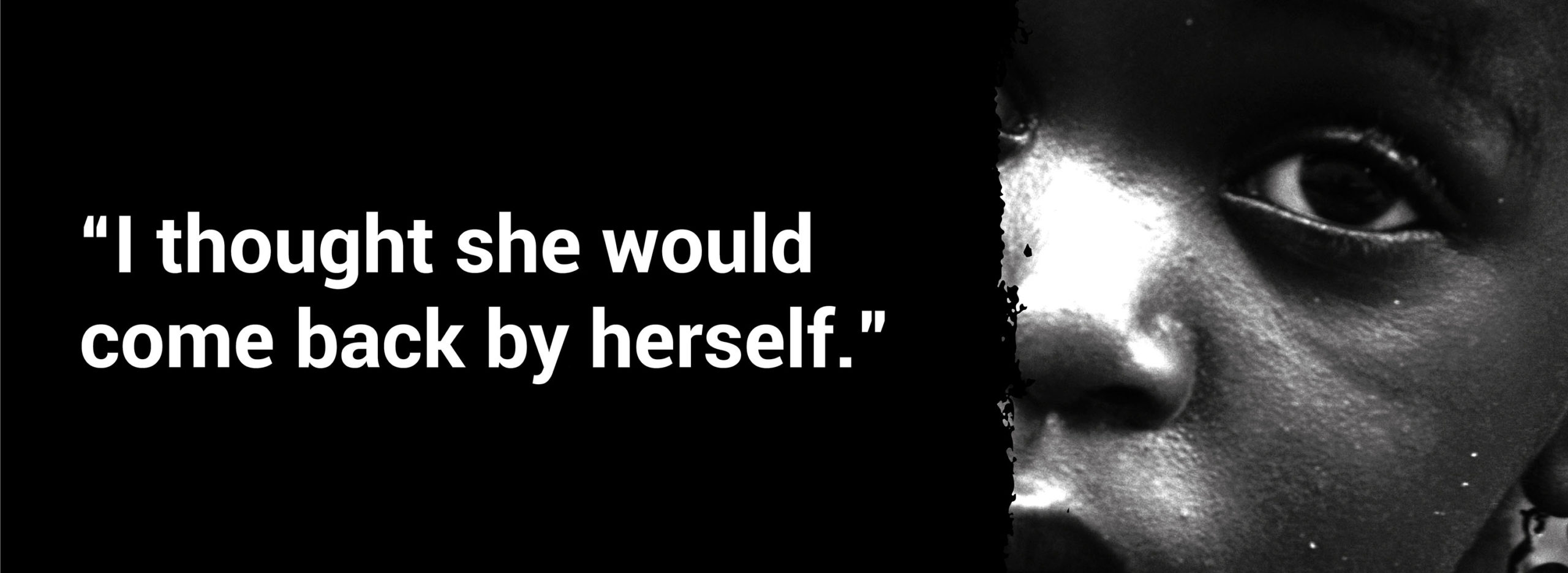
The father confessed that they had never reported it to the police. When she asked why, he couldn’t answer, finally saying, “I thought she would come back by herself”.
Motaung reveals that some parents have too much else to worry about to report missing children, in particular those in their teens: “they will panic and run door to door when the child is young, but if they are teenagers and the parents feel they can care for themselves, they let it go.”
According to Van Aswegan, other parents choose to look for the child themselves with the help of their community and even on social media, a practice she cautions against because personal missing children posts often attract criminals, who lie about the child’s whereabouts to exploit the family or obtain money from them.
Others choose to go to the sangoma instead of reporting to the police.
Nor is the fear always unfounded. Tsepiso* was finally persuaded to report her son Tumelo* missing in September 2021 after he disappeared in March 2020. He was just 18 months old when his father, a local gangster in a Gauteng squatter camp, allegedly trafficked him to Mozambique, without a passport or his mother’s permission, after organising for the relative caring for Tumelo’s children to be wrongfully arrested.
By the time she was released from prison, little Tumelo, who is HIV+ and has been on antiretrovirals from birth, was gone.
Terrified of her boyfriend’s retribution and seeming police complicity in her relative’s wrongful arrest, Tsepiso chose not to report Tumelo missing. But when she did, 18 months after her son’s disappearance, the station commander’s first response was to tell her she could be arrested for child abandonment.
Older children are also seldom reported missing when parents or caregivers are complicit in a child’s disappearance. This is particularly true with runaways. While authorities tend to only focus on “pull factors” with runaways, children running away for relationships or drugs, children often leave because of “push factors”, like abuse at home.
Troublingly, abuse numbers have increased during lockdown. Childline shows a 47% increase in abuse cases reported between April 1st 2020 and 31st March 2021. In the same period, the Western Cape Missing Person’s Unit showed a fivefold increase in reported cases of abuse in foster care. Founder, Candice van der Rheede says that large numbers of children go missing when: “parents are on drugs, the father is being abusive, either hitting them or sexually abusing them.”
But children who have run away from home or institutions, especially more than once, are often not reported missing, even though being a runaway makes children particularly vulnerable to trafficking. It can also act as a cover for kidnapping.
Tertia* was removed from home at six months after she was raped by her father. On her 13th birthday, she was separated from her siblings and moved to a new Child and Youth Care Centre. She didn’t settle well, bullied and mocked, she fell in with the wrong friends and then ran away.
She and some friends, all aged 12 and 13, stayed at a pub for three months, drinking and taking drugs. Tertia says that when they returned, they were in trouble.
Just months later, she was kidnapped from school. In court transcripts, she describes how she “felt hands around” her, she “could not speak” and “did not see a face”.
She explains that her kidnappers were Nigerians. They gave her drugs. She was beaten. “They sold me”, she continued, “they did so with many girls.” After she had been sold for the first time, she said, “I met all the girls who were there, and then we all had to smoke and go out and work”.
Testimony indicates that she was sold multiple times between Nigerian traffickers, in one instance for R5,000.
Tertia, who was visibly distressed while telling her story, explained that she knew that “girls who run away and talk to the police, would be killed.” She lost three friends as a result.
At 15, after being beaten, she and a friend ran away and went to the police. They opened a docket, but Tertia said it disappeared because one of the policemen worked for the Nigerians.
The policeman picked up Tertia and her friend, Tammy* and took them back to the man they were fleeing.
Both girls were taken to a bush and asked whose idea it was to open the case. The friends argued, but Tammy insisted on taking the blame, telling Tertia that she was trying to keep her safe.
Three Nigerians made Tertia watch while they killed Tammy, cutting off her breasts, her arms, her legs and her head.
Two other friends were killed in different ways.
According to van der Watt, who testified during sentencing in 2018, despite Tertia’s testimony, which named up to 20 individuals, and the case being described in the court judgement as having, “unmasked the sordid and sleazy world of drug abuse, prostitution and exploitation”, only one trafficker was prosecuted, and numerous child and adult victims mentioned in court testimony are still unaccounted for.
There is no evidence that Tertia was ever reported missing after she was kidnapped.
Although families are often complicit or negligent, there are times when no one knows that a child is missing, or another child has to report them missing, and they are either too fearful to do so or aren’t taken seriously by the police.
An informal survey of media reports involving child testimony indicates that children are often not believed, or their testimony disregarded by police. This is particularly true of unaccompanied migrant children and children from child-headed households. Many of these children are already made invisible through their undocumented status, making their disappearance even less noticeable to those in authority.
Parents who are undocumented or illegal immigrants are often especially fearful about reporting their children missing for fear of being targeted or deported.
Poverty may also be a factor in many children going unreported. Tragically, some experts note that the South African economic circumstances are so dire, that sometimes families don’t report a child missing because it is “one less mouth to feed”.
Anthropologist and child protection activist, Dr Dee Blackie concurs. She tells a story about Thandi*, a young woman she met during her master’s research. One of 12 children being raised by her granny, she told Blackie that she was fearful about how her gran would react when she discovered she was pregnant. So, she ran away.
Thandi says that to her knowledge, she has never been reported missing. Abandoned by the child’s father, she would have abandoned her baby after it was born had a social worker not intervened and helped her place the baby into the child protection system.
Abandonment, especially unsafe abandonment, is another way that parents can be complicit in their children going missing. Abandonment is currently unregulated, so there is no certainty that foundlings (abandoned babies who are found alive) will enter the child protection system.
During Blackie’s studies, she encountered multiple stories of abandoned babies who were found alive and then “given” to a childless woman in the community, rather than taken to a Place of Safety or put into foster care. According to Blackie, even the SAPS are sometimes complicit, asking the people who report the abandoned child if they would like to “keep it”, and to sign an affidavit if they do.
Unless the abandoning mother changes her mind and risks arrest to find the child, no one would know that the child isn’t in the child protection system.
Baby Savers South Africa, which advocates for the legalisation of safe relinquishment to protect children from both unsafe abandonment and resultant death, or this type of illicit activity, have also identified several Facebook pages where pregnant women are “offering” their babies to families looking for children.
While many of these families are ignorant of the legislated adoption process, illegal adoption removes all the protections given to adopted children, birth mothers and adoptive parents. It also provides opportunities for children to be sold, making its potential to facilitate baby trafficking worrying.
Nor is this the only way that children are sold. In 2015, a 25-year-old KwaZulu-Natal mother was arrested for trying to sell her 19-month-old toddler on Gumtree and in June 2021, a Uitenhage couple and the mother of newborn twins were arrested after their mother sold them for R50 a day to fuel her drug habit. In the Western Cape, Sharne* was just eight when she remembers her mother putting her in a red car after she sold her daughter for sex for just R10.
Experts agree that cases of child trafficking at the hands of the parents is a global problem. It mostly involves sexual exploitation but there are also other forms of exploitation, including exploitative begging, pornography and forced marriage.
Girls in forced marriage are vulnerable to sex trafficking and forced labour by their husbands but because it’s a customary practice, it’s unlikely that these girls are ever reported missing.
The UNODC report highlights child labour as another form of hidden trafficking. Statistics provided by the Department of Labour for this article revealed that in 2019, 571,000 children were involved in child labour in South Africa, 191,500 (34%) of whom were exposed to at least one hazardous working condition.
While some have been sold by impoverished parents and many others are being exploited, child labour and sex trafficking victims often don’t know they are victims of a crime.
Tragically, not all children survive their exploitation. Van Aswegan describes how Andile*, a seven-year-old mentally challenged boy, was sold to a sangoma for muti by his granny following his mother’s death. Andile’s granny used the money she received for the child to pay for her daughter’s funeral. Had she not confessed, no one would have known that he was missing.
Although it seems unlikely, some children aren’t reported missing because they are already believed to be dead.
Cheryl Allen, pastor and former head of Door of Hope, describes how in 2000, she was approached by Lindy* a single mom, pregnant with twins. A foreign national, who had been abandoned by the baby’s father, she asked for assistance to place her babies into the child protection system. Allen made the arrangements and asked Lindy to call her when she went into labour. So, it was unexpected when she got an 11pm call from a nurse to say that Lindy had gone into labour prematurely, and had her baby.
When Allen asked about the second twin, there was a moment’s silence before the nurse replied, “the other one died”.
Arriving at the hospital, Allen found the distraught Lindy who told her that she had been given an injection and papers to sign and had awoken to the news that her baby daughter was dead. But signatures on the death certificate were irregular, and when Allen took her to find the dead twin, the mortuary wasn’t able to show her the body.
Years later, after Lindy’s surviving twin boy had been adopted, one of her friends, Angelique* (also a foreigner) went into labour at the same hospital. She awoke after the birth to be told that her son was dead. Her husband, Betrand*, was incensed and disbelieving. He said that the baby had been healthy in all their scans so he couldn’t be dead. He demanded to see his son’s body.
When the hospital couldn’t produce it, Betrand hired a private detective who uncovered a ring of traffickers working across three Gauteng hospitals.
Three nursing sisters in the three different maternity wards were targeting vulnerable women, usually single, foreign and where possible, those experiencing a crisis pregnancy. They drugged the mother to obtain her signature on a death certificate after she gave birth.
The baby was then passed to a runner who took the child to KwaZulu-Natal. On arrival, the babies’ body parts, in particular their genitals, were taken for muti while the child was still alive because body parts from children are believed to be especially strong, and their screams are said to awaken spiritual powers.
Bertrand’s quick action saved his son’s life. The child was found safe and returned to his parents. But it was too late for Lindy’s daughter. The runner committed suicide when the operation was uncovered and although Lindy told Allen that they had found the sangoma leading the syndicate, she has no knowledge if anyone was prosecuted for the crimes.
While some children aren’t reported missing because they were recovered quickly, it doesn’t lessen the trauma experienced. As with other violent crimes, children often don’t disclose until years later.
It’s been 40 years since Belinda was kidnapped, but she still vividly remembers the day. It was the 1980s, when Gert van Rooyen was preying on girls who looked just like her. A petite blond child and a loner, with a history of sexual abuse, she was nine on the day when a man lured her into his car when she was walking home from school on her own.
When asked what she remembered about the event, her strongest recollection was the gut feel that the man who had stopped to ask for directions was not to be trusted.
Belinda describes how her instinct was to run, but she had been taught to listen to adults and be polite, so instead she engaged, giving him directions, and finally accepting his plea for her to get into the car to show him where to go so he didn’t “get lost”.
Even before she climbed in, she knew she was in trouble. When he parked in a secluded place and asked if she had ever seen a man’s private parts, she was guileless enough to tell him that she had a dad and brother. But when he showed her his penis, she told him that she wouldn’t touch it and that her sister’s high school was close, and that she was going to tell on him.
Instantly his story changed. He was an undercover policeman, punishing naughty girls for getting into stranger’s cars. Although he let her go and she ran home, she was sufficiently shamed to not tell her parents until much later.
Sizwe* couldn’t tell anyone about his kidnapping because at five, he is non-verbal. He also had no way of crying for help on the day that he was taken from outside a local tuck shop in a squatter camp in Johannesburg. His aunt describes how while he was playing, a man took him by the hand and walked off with him.
His disappearance may have gone unnoticed if the owner of the tuckshop, who knew Sizwe and saw that he was uncomfortable, had not reacted quickly, asking a friend to follow the man. When confronted, the kidnapper let go of Sizwe and he ran home. But moments later, there was a scream as the man tried to take another child.
Sizwe’s aunt describes how the community confronted the man and beat him up before the police came and arrested him, “for his own protection”. When Sarah*, his mother, told the police that the man had tried to take her child, and asked what would happen to him, she said that the police ignored her and drove off.
Although unknown in the area, the community believed that Sizwe’s kidnapper was a bereaved father looking for a son to replace his own, but his motives may have been even more sinister. His aunt says that Sizwe took a long time to recover. He was crying and shaking when he returned home, and didn’t go outside for more than a week.
Despite the impact on this vulnerable child, to date, no one in the family has had any feedback from the SAPS or been asked to provide a statement about the kidnapping. It’s probable that a case was never opened.
South Africa’s ghost children include those who are sold, exploited by parents or communities, considered dead, or never reported either because the parents won’t do so or because the police won’t open a case. They are well-hidden. According to Child Welfare, an estimated 40-50% of the people forced into commercial sex work in South Africa are children. But, how many of these children were reported missing?
Figures aren’t likely to improve. By May 2021, 750,000 children had not returned to school post-lockdown. These children are particularly vulnerable to exploitation through child labour, child marriage and sexual exploitation. For their sake, and that of many others, the country must find solutions to the missing child problem. This is the focus of the final article in this four-part series. DM
These articles focus on children who have gone missing, on survivors and those not found or found deceased. While the names of survivors and their parents have been changed to protect their identities, the names of children still missing are included, along with photos and missing person’s posters in the hopes someone knows where they are. If you have any information, please contact Bianca van Aswegan from Missing Children SA on 072 647 7464 or contact Crime Stop on 086 000 10111.
This story was published with the support of Media Monitoring Africa and UNICEF as part of the Isu Elihle Awards Initiative.
Statistics from Missing Children SA show that 23% of missing children are not found, or are found deceased. Until they are located, we cannot know for certain why they went missing, but experts propose that some are kidnapped for childless women, others taken for their body parts, some are runaways and others have been trafficked for child labour or sexual exploitation. These are their stories.
Accessing missing children statistics in South Africa is notoriously difficult. The last officially published figures were released by the South African Police Services (SAPS) in 2013 and showed that 1,697 children go missing every year. In other words, in 2013, a child went missing every five hours in South Africa. Unaudited SAPS figures from 2016 revealed a decrease in these numbers to 866, but despite requests, the SAPS did not provide updated figures for this article.
Given that missing children cases are almost certainly under-reported though, the more significant figure is how many of these children remain missing.
Missing Children SA explain that in 77% of their missing children cases, the child is found or returns home. The remaining 23% are either found deceased or fall into the category, “still not found”.
SAPS Missing Persons Bureau’s 2014 statistics show that of the cases reported between 2011 and 2013, 754 children were still missing. Dr Marcel van der Watt, a former member of the Hawks with almost 20 years’ experience in human trafficking and organised crime, now from the National Center on Sexual Exploitation, says the number is significant. In a 2018 study, he found that 3,957 children were unaccounted for, or still missing for the period 2000 to 2015.
Police stats from 2000 to 2020 provided for his ongoing research revealed that 94,252 people were reported missing in South Africa, of whom 16,151 are children. Van der Watt confirmed that 62,707 of these cases were cancelled, leaving 31,545 (33%) active.
Although the SAPS did not disaggregate the open cases, van der Watt maintains that the number of children that are unaccounted for or still missing, has probably exceeded 4,000.
Stated differently, 25% of the children who have been reported missing over the last twenty years have not been found.
It’s a staggering number, and behind it are thousands of families whose lives were forever changed by a moment. But, in a country where children’s stories often go unheard, even around issues that directly affect them, the voices of children “still not found” or found deceased are particularly silent.
They cannot narrate where they are or what has happened to them. In their absence, their stories have been pieced together from eye-witness accounts.
According to Missing Children SA, 23% of its missing children cases the child is either found deceased or falls into the ‘still not found’ category.
In part one of this four-part series on South Africa’s missing children, we met Clara Masuluke six months after her daughter Akani disappeared. Described by her mother Clara as a nice girl and a fast learner, Akani was just six when she went missing from Protea South squatter camp on a Saturday evening in early 2017.
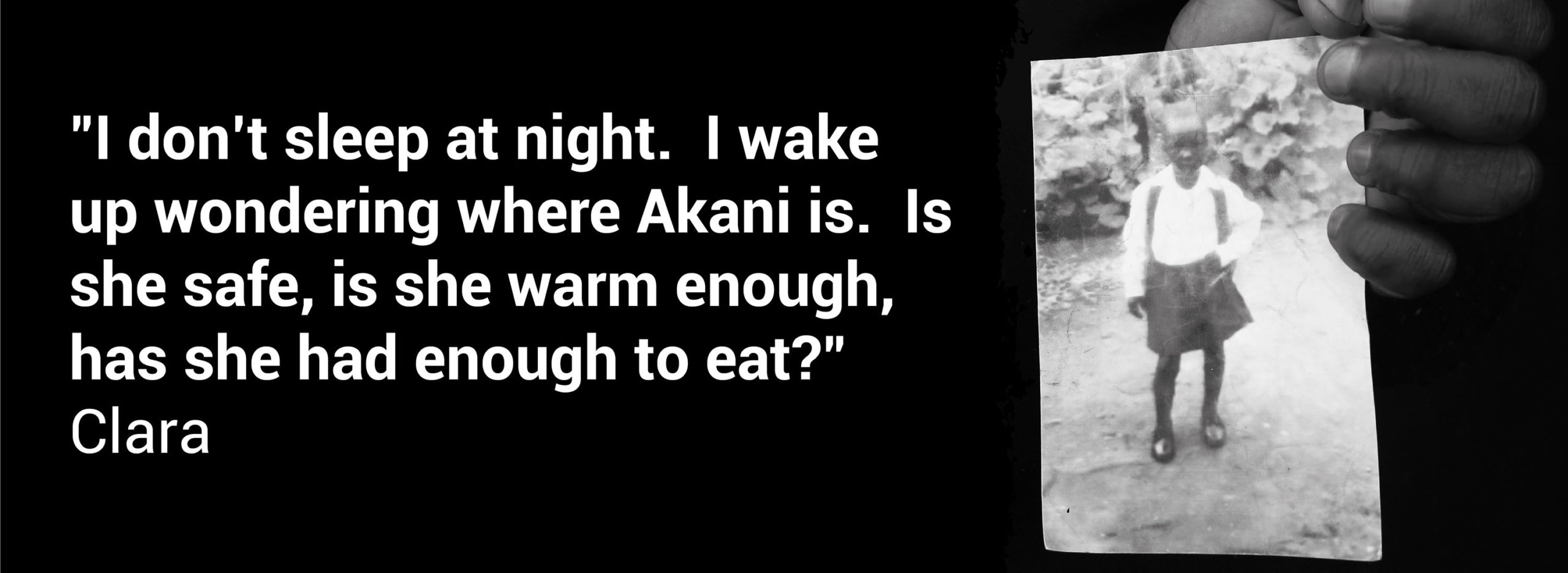
As Clara recalls the last time she saw her daughter, she clutches a faded and damaged photograph of the petit Grade 1 pupil dressed in her oversized school dress. The photo, which was taken the day before Akani disappeared, is the only one Clara has left of her daughter. The other is somewhere in the police station where she was reported missing.
An emotional Clara describes how on that Saturday afternoon, 4 February 2017, Akani was playing in the local circle, an open space enclosed by shacks, with friends and her older sister, Minkeso who was ten at the time. Clara was busy with her washing, so the children popped back home periodically so she could see they were okay. Akani made her last stop at home at 4pm.
It was a while before Clara realised that she hadn’t seen Akani recently and went looking for her. Akani’s older sister and other local children playing at the circle confirmed that she was “around”. “She was here,” they said, but Clara couldn’t find her at the circle or with any of the neighbours.
Eventually, a retired local Community Policing Forum (CPF) member phoned the police, and other CPF members took a frantic Clara to the local police station to report Akani missing. But when she got there, she was told that the people who work with missing person’s cases were not available.
Although the community spent the weekend searching for the child, the police didn’t come to look for Akani or provide a reference number until Monday 6 February, more than 36 hours after she first went missing.
The delay was crucial. Not only did police miss most of the golden window for finding Akani, but all information communicated to the public about the case, including the Pink Ladies missing poster and media reports incorrectly stated that she had gone missing on Monday the 6th.
Unsatisfied, community members marched to the police station to ask police to bring sniffer dogs. They also picked out a suspect because Akani was seen playing around his house. Days later, the dogs came, but searches, which were cursory, proved futile.
It fell to the CPF to drive the investigation, and after rumours that the community had seen children playing in Zuurbekom (an area 5km south of Clara’s house), Clara, her sister and the chairperson of the CPF went to search there one night. Despite requests, they went without most of their search party, who were not allowed to accompany them because the police said they “would be noisy”.
Clara says that the police investigated one house and then left.
Although the community continued the search, Akani has never been found. When asked if the police kept her updated on the case, Clara said no, she was told that if she “had any suspects or heard anything”, she must come and tell them.
In 2021, when Clara returned to the police station to get information for a Missing Children SA poster, she was told by police that they had a reference number for her but, they would only “give her a case number or open a file when Akani’s body was found”.
Like Akani, Siphesihle Dlamini went missing in 2017. She disappeared from a church in Amandawe on the South Coast of KwaZulu-Natal on New Year’s Eve, a month after she celebrated her third birthday.
In an interview, her father Mxolisi and mother, Thabisile described her as a talkative, funny and bubbly child who had a gift for cheering people up when they were sad. Touchingly, she began composing songs about her parents and singing as soon as she could speak. Nicknamed the Tina Turner of the house, she adored her daddy, and her mom jokes that she had him wrapped around her little finger.
On 31 December 2017, Thabisile made the fateful decision to attend a church service before leaving to spend New Year’s Eve with Mxolisi, who hadn’t seen his family since 12 December. At the end of the service, the pastor invited visitors to the front. Leaving her daughter and her handbag on her chair surrounded by congregants, Thabisile and her aunt spent about ten minutes greeting and praying with the pastor. When she returned, her handbag was still on her chair, but there was no sign of Siphesihle.
Frantic to find her, Thabisile ran outside of the church to search, but without success. While she was standing there, a young girl asked her why she was crying. When she explained, the girl told her not to cry and that her older sisters had taken Siphesihle to buy chips at the local tuck shop.
Relieved, Thabisile confirmed the story with the two older girls who said that they had left the toddler at the tuck shop to walk back to the church. But there was no sign of Siphesihle outside the gates, and efforts from the congregants and community members to find her were unsuccessful.
The police were called, and together with sniffer dogs, they combed the church premises and car park. Thabisile looked for her daughter well into the night while an increasingly anxious Mxolisi waited hundreds of kilometres away for news of their daughter.
Although police were on the scene fairly soon after Siphesihle went missing, some of their decisions were bewildering. Mxolisi says that the investigating officer was certain that he and Thabisile were to blame for the child’s disappearance and not only were they subjected to a polygraph, but while efforts were concentrated on them, police seemingly disregarded some vital evidence.
The couple understood the scrutiny, local police had recently dealt with a similar case where the parents were complicit. Police also told Siphesihle’s parents that kidnappings were never opportunistic which, given that no one knew that Thabisile was going to church that morning, narrowed the pool of suspects dramatically.
But regardless of the reasons, the police’s myopic perspective may have resulted in them missing the real perpetrator. When questioned, all three girls swore that they had never seen the child, and their statements were taken at face value.
Eventually, the investigating officer, who the family say was also rude and abusive to Siphesihle’s desperate mother, was removed from the case.
There are other odd things about the story. When the couple returned to the area weeks later to put up missing child posters, the community was bemused, telling them that the pastor’s wife had told everyone that the child had been found.
Angry community members shut the church down as a result.
Siphesihle’s disappearance provoked a wave of sympathy across the country. Within weeks, a Facebook group dedicated to finding the child had thousands of members, “wear pink for Siphesihle” days were organised, posters made and distributed, money was provided for a private detective and a R40,000 reward offered for her safe return. But to no avail, there is no trace of her.
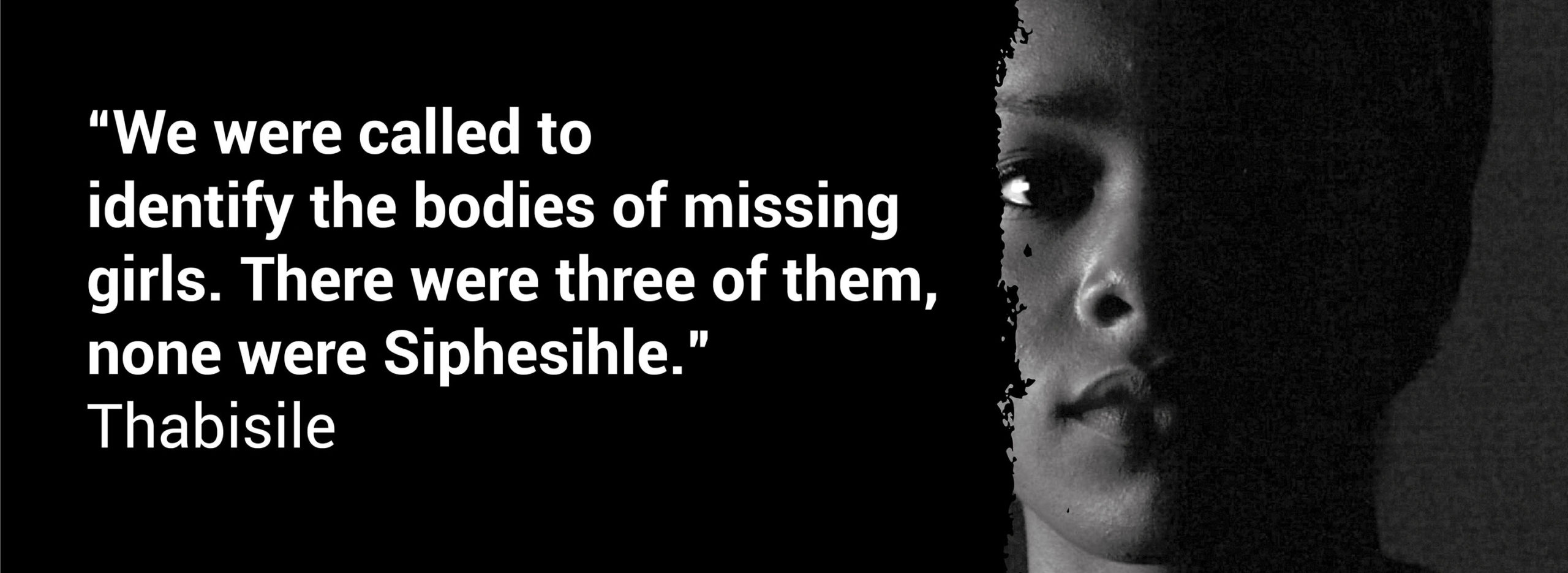
Over the years, the couple has had to deal with the compounded trauma of being called to identify the bodies of missing children that could have been their daughter. “There were three of them. None were Siphesihle”, the parents said. Pictures sent to them of living children were also not a match.
Neither Mxolisi nor Thabisile have any idea what happened to her. They are only certain of two things, Siphesihle wouldn’t have gone anywhere without her parents, so the theory that she “wandered off” is unlikely, and she couldn’t wait to see her daddy.
Almost four years later, he and Thabisile face the prospect of never seeing her again.
It isn’t just parents who are affected by the loss of a child, siblings are too. Caroline Selepe has spent her whole life believing that she would be the one to find her brother Tebogo, who was kidnapped about 35 years ago when he was just three months old.
Caroline says that on the day he went missing, Tebogo was on his mother’s back while she did the family washing at their home in Diepkloof, Soweto. He was crying uncontrollably when the girlfriend of their neighbour said that she was going to the local tuckshop to buy chips and offered to take him with her so Caroline’s mother could finish her washing.
Although she was one of many females who visited her neighbour’s house, and Caroline’s mother didn’t know her, she was a familiar and friendly face and her kindness at a time when the baby was inconsolable was compelling.
The family never saw Tebogo or the neighbour’s girlfriend again.
Caroline, who is estranged from her older siblings knows very little about the story. Her mom fell ill when she was 11, and she nursed her until she died a year later. What she does know is that her mother never recovered from the loss.
Caroline said that after Tebogo went missing, they moved to Alexandra township and she would occasionally slip out to play with her friends in the street. If her mother caught her, she would become hysterical and beat her. She also remembers the trips to the sangomas who all said the same thing, Tebogo was in a house, but they couldn’t see the number, and Caroline would be the one to find him.
It’s a pressure that Caroline experiences tangibly, and she hopes that one day she will have enough money to hire a detective to find her brother. But in the interim, even though she never met him, Tebogo’s loss weighs heavily.
Now that she is a mother, it has made her fearful that something will happen to her children.
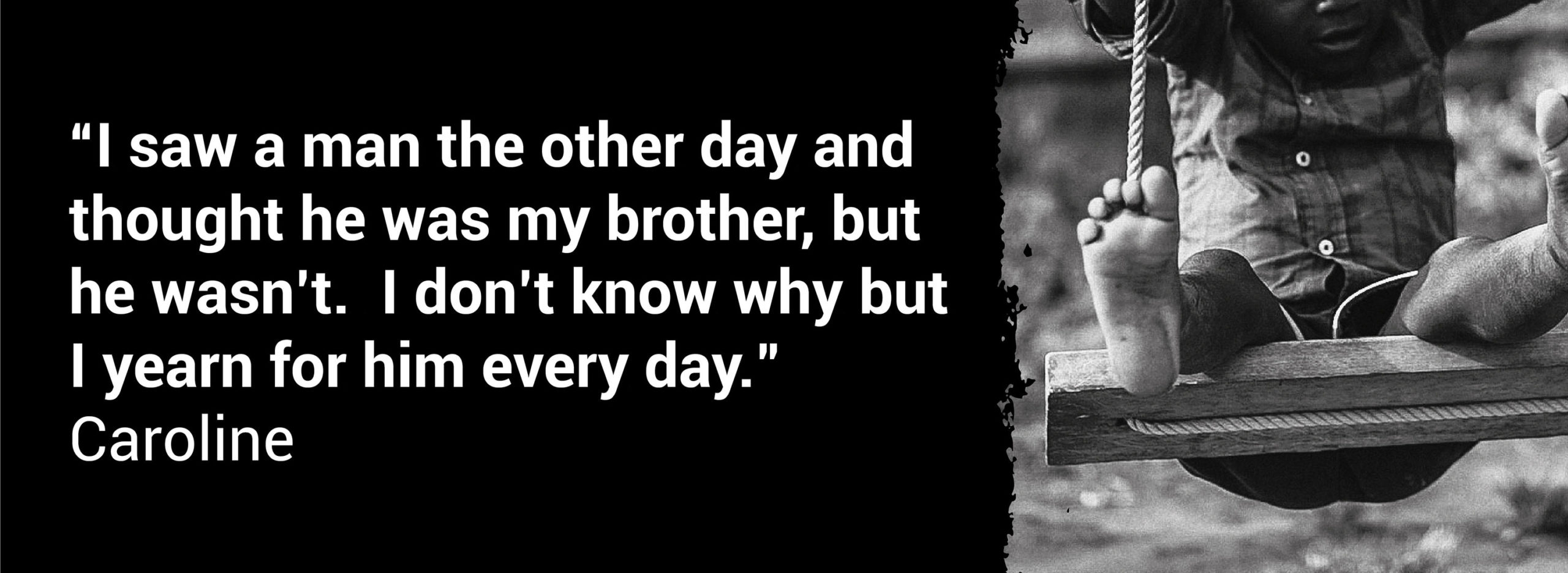
Caroline says that she and Tebogo were the only siblings who shared a father, and she speculates that they may even have been twins. His absence has left a lifelong hole in her heart. “I saw a man the other day and thought he was my brother, but he wasn’t. I don’t know why, but I yearn for him every day”.
Unbeknownst to Caroline, the kidnapping of one twin is a common theme in stories about missing children. Veronisha, whose identical twin Veronique was kidnapped by the family’s nanny 32 years ago when she was 11 months old, has had her life defined by the loss of her twin.
Veronisha describes the day that their nanny, “Beauty”, newly hired on the recommendation of a family friend, but whose identity was never established (she told the family that her ID book was at home in KwaZulu-Natal) left the family home in Eldorado Park with Veronique on her back, and never returned.
At the time when the kidnapping occurred, there was still a waiting period for reporting missing children. Police sent the family away, despite multiple eyewitness accounts of Beauty carrying the baby on her back. Not realising that Veronique was a twin, neighbourhood school children assumed that the child had been returned safely when they saw Veronisha.
Although the family did their best to look for Veronique, by the time the police were persuaded to waive the waiting period and open a case, there was no sign of the baby or her nanny.
Veronisha explains how the loss of her sister, who was older by a few minutes and described as the serious twin, dominated her childhood: “I didn’t want to move her bed out of my room in case Veronique came back, so every night of my childhood, I slept with an empty bed in my room. My mother won’t sell the house either. She stays in case someone finds Veronique and brings her back. She’s even kept her landline because the number was included in so many news articles. I guess she hopes that one day she will get a call to say that Veronique is okay”.
Now a mom of a little girl the same age as Veronique was when she went missing, Veronisha describes how her sister’s loss is a reality that she lives with daily. Birthdays are particularly difficult, not just because she should be sharing the day with her sister, but because Veronique went missing at the beginning of March, their birthday month. It’s the reason why Veronisha went 21 years without celebrating.
But she remains hopeful that her sister is alive. Now her greatest worry is that her mom is getting older and may die without any closure. It’s what happened to her father, and for Veronisha, the thought of losing her mom before her twin is found is devastating.
When asked what she would say to Beauty if she could talk to her, she explains that although she hated her for years, now she would forgive her because “only she knows why she did what she did, and why she destroyed our family”.
Given that Siphesihle, Akani, Veronique and Tebogo have never been found, it’s impossible to know what happened to them. But their families still hold onto the possibility that they are alive.
Not all children survive their ordeal though.
Mlando Zuma was described by his mother Sonto as a child that liked playing at home. “He would sometimes take his bicycle out for a ride around the house or nearby, but he would not disappear for more than 30 minutes without us knowing his whereabouts,” she said.
He was last seen on 18 June 2021, playing outside the house of the local sangoma in Dambuza, KwaZulu-Natal. Sonto said that she had left her son at the sangoma’s house while she went to the hospital. When she returned, she was told that her son had gone missing.
According to his mother, Mlando had been playing with his older brother and a toy car when he vanished.
A week later, his lifeless body was found in a septic tank at the sangoma’s house. Although there are no further details about the case at present, community members torched the house where his body was found.
Mlando was four years old when he died.
Keleabetse Seleka, a Centurion teenager, was last seen on 28 November 2017 on her way to Atteridgeville after she told her friends that she had gone to meet a “blesser” who had befriended her on Facebook, after he posted that he wanted a curvy and chubby woman to bless. According to her friends, the 15-year-old responded, hoping for Peruvian hair, gadgets, free data and an exotic holiday or “baecation”.
Instead, she was poisoned after eating a local bunny chow, known as spathlo, and then, when she didn’t die quickly enough, was strangled for her cell phone and other valuables. Her body, which was dumped in a pit toilet at Mshongoville informal settlement in Atteridgeville, was found on 28 December, a month after she went missing.
The agony of finding a missing child dead is demonstrable in Mlando and Keleabetse’s stories. But the ongoing pain of wondering what has happened to a child “still not found” is equally unbearable for some families.
Noluthando’s daughter Amathi, went missing from Gqberha, Eastern Cape, 14 years ago. It was 6 November 2007 and Amathi, aged three and a half at the time, was in the care of a family member who was “watching her” while her mother worked the evening shift at a local restaurant. Describing the day when Amathi went missing, Noluthando broke down. She wasn’t able to complete the interview.
The pain of Akani’s loss has left Clara wishing that she had never been born.
“I don’t sleep at night”, Clara says, “I wake up wondering if Akani is okay. Is she safe? Is she warm enough? Has she had enough to eat? Some days, it feels too much.” Her photo of Akani is damaged and scuffed from frequent handling. That, her birth certificate and a scrap of paper with a police reference number and an official stamp is all she has left of her daughter. And somewhere in a police station, her only other photo is gathering dust.
Desperate as these stories are, all of the children in this article are loved and looked for. It isn’t always the case. Part 3 of the four-part series focuses on children who are gone, but no one has even reported them missing. These are South Africa’s ghost children. DM
Most questions put to the SAPS about the scope and specifics of the country’s missing children problem went unanswered at the time of going to print. However, no questions were posed about the historical handling of specific missing children cases to avoid compromising ongoing investigations now being handled by different investigating officers.
These articles focus on children who have gone missing, on survivors and those not found or found deceased. While the names of survivors and their parents have been changed to protect their identities, the names of children still missing are included, along with photos and missing person’s posters, in the hopes someone knows where they are. If you have any information, please contact Bianca van Aswegan from Missing Children SA on 072 647 7464 or SAPS Crime Stop on 086 000 10111.
This story was published with the support of Media Monitoring Africa and UNICEF as part of the Isu Elihle Awards Initiative.
Design by Kerry Nash. Portrait of Siphesihle: Simmone Livingston Laubenheimer.
Stories of children who go missing, seemingly without a trace, are emotive and fear-provoking. But in a country notoriously poor at child protection, trying to understand a problem often weaponised for political ends seems almost impossible. So just how big is the country’s missing children problem, and how do we unravel the myths and misconceptions that prevent us from understanding it better?
In August 2017, Marilyn Bassin, a physiotherapist working in Protea South squatter camp in Soweto, was confronted by a distraught young mother holding a photo of her six-year-old daughter Akani, who had gone missing in February that year. Promising to follow up, Bassin met with the station commander at the police station where Akani’s disappearance had been reported.
“He admitted that there was no news about Akani’s case”, she explains. “Then he showed me a 25cm high pile of files sitting on a desk. He said that each one needed following up. They were all missing children. He told me that the babies had probably been taken by childless mothers, the teens were considered runaways, and those in between may have been taken for muti”.
Four years later, Bassin returned to find that Akani was still missing. This time, her visit to the police station was starkly different. “Although investigating officers stated that they received about two missing children cases per month,” Bassin said, “in the commander’s absence, the acting head told me that there were no missing children cases at the unit, and that most missing children were runaways, who come back.”
Bassin’s experience at one police station highlights the complexity of missing children in South Africa, and the lack of clarity about how big the problem is, a challenge that makes it even more difficult to solve. It also mirrors a larger debate around the link between missing children and trafficking, and if South Africa has a problem with child trafficking.
During September 2020, South Africa was subjected to an unprecedented barrage of reports about child kidnappings and trafficking after an incident at a Johannesburg restaurant where a perpetrator tried to snatch a four-year-old girl while she ate lunch with her mother. Although he was found to be mentally unstable and acting on his own, social media was soon flooded by stories of children narrowly avoiding kidnapping after being dragged out of cars, or targeted on the street.
Design by Kerry Nash
Whatsapp, Facebook and Telegraph messages, always issued by unnamed but seemingly credible sources, warn parents of imminent danger to their children, the importance of being vigilant, and the terror of organised child trafficking syndicates allegedly run by Nigerian or Chinese foreign nationals.
The figures were widelydebunked, but when the panic didn’t abate, police spokesperson Brigadier Vishnu Naidoo issued a statement emphasising that while cases of kidnappings, abductions and missing persons are of serious concern to the police, “human trafficking is not prevalent in South Africa, as it is in other parts of the world.”
Naidoo’s messaging is contradicted by other parts of government, however. In 2016, the Department of Home Affairs (DHA) issued a controversial directive requiring children to carry their unabridged birth certificate with them for all cross-border travel to combat the 30,000 children it claimed were trafficked through the country every year.
The DHA wasn’t able to validate its numbers, but it isn’t the only government department to use trafficking to justify changes in policy. In 2020, the Department of Social Development (DSD) stated that “there is a fine line between adoption and the sale of a child” to justify anti-adoption policy. The department’s legal advisor then went on to use global missing children statistics to link trafficking and missing children, and justify children staying in South Africa, because they are safer here.
What’s evident is that the issue of missing and trafficked children is complex and hidden and that myths and misconceptions abound. The biggest are:
One million South African children are trafficked every year
South Africa doesn’t have a problem with trafficking
However, the complexity of the problem is clear in the same Unesco report which names South Africa as “a source, transit, and destination country for men, women, and children trafficked for forced labour, sexual exploitation and organ harvesting”. In other words, trafficking, including trafficking of children, happens into, within, and out of the country.
In 2007, it was estimated that 247,000 children were working in exploitative labour in the country, including 30,000 child prostitutes.
A21 also reports that 64% of trafficking victims in Africa are children. According to child welfare, South Africa’s social and economic challenges including inequality, unemployment, lack of education, and poverty, make it a fertile ground for child sexual exploitation and trafficking.
Design by Kerry Nash
The 2021 Trafficking in Persons Report is even more specific, describing how traffickers in South Africa recruit victims from poor neighbouring countries or locally from deprived or rural areas, and exploit them in sex trafficking in urban areas. Victims include children as young as 10.
In addition, traffickers force adults and children into labour in domestic service, mining, begging, street vending, food services, criminal activities, agriculture, and the fishing sector.
All missing children are trafficked
A21 describes human trafficking “as the exploitation of both the victim’s body and labour amounting to modern-day slavery”, a definition that Senior State Advocate Dawn Coleman-Malinga, Chairperson of the KwaZulu-Natal Human Trafficking, Harmful Traditional Practices, Prostitution, Pornography and Brothels (HHPPB) task team, expands on: “exploitation includes the removal of body parts (for muti purposes), child labour and sexual exploitation. Trafficking in Persons (TiP) also includes forced marriages and illegal adoptions for purposes of exploitation.”
According to Dr Marcel van der Watt, a former member of the Hawks with almost 20 years’ experience in human trafficking and organised crime, now from the National Center on Sexual Exploitation, “not all missing children are trafficked, but many trafficked children are missing”.
Bianca van Aswegan from Missing Children SA concurs, “not all missing children are trafficked. Some are lost, others are mentally challenged children who have wandered off, some are runaways, others family abductions or even kidnappings for ransom.”
Many anti-trafficking NGOs believe that only 1% of trafficking victims are found. This means that while most of the missing children who are found safely or return home after being reported missing were probably not trafficked (77% according to Missing Children SA’s statistics), the 23% who are not found or found deceased, may have been. And a child away from home for any reason can become vulnerable to trafficking.
A child goes missing every 10 hours
Despite requests to the South African Police Service (SAPS) for clarification about how many children are reported missing in South Africa annually, no recent figures were available at the time of publishing. However, unaudited SAPS statistics indicate that in 2016, 866 children were reported missing (down from 1,697 in 2013). This amounts to a child going missing every ten hours.
But, according to the country’s Missing Person’s Bureau, this stat is misleading because some children are found almost immediately.
Equally concerning, though, is the under-reporting of missing children. So, while the SAPS is rightly concerned about statistics creating “fear and pandemonium”, the number of children who are missing is likely far higher than reported.
All missing children are runaways who return
Van Aswegan acknowledges that most Missing Children SA’s cases are runaways. But she urges us to “chase the reason”. While some may be running away to be with a boyfriend or for drug use, others leave because of fear or violence.
In a series of interviews conducted with children by community leaders and social workers across three provinces, the Western and Eastern Cape, and Gauteng, most children identified home as being their safest place. But in sharp contrast, others disclosed how unsafe they feel at home, speaking about parents who drink, take or deal in drugs, and about accompanying abusive behaviour.
Van Aswegan tells the story of a 16-year-old runaway who was found hiding under a bridge because her father raped her.
The typical ‘missing child’
Misinformation has distorted our image of the “missing child” to, on one extreme, the #savethechildren narrative of wealthy children being snatched off the streets, and on the other, that only poor and vulnerable children go missing. Both are problematic.
Figures provided by the SAPS indicates that 58% of missing children are female, 42% male, and that 83% are African, followed by 10% Coloured children and 5% white.
Although figures bear some resemblance to the country’s demographics, the disproportionately high number of black children is likely poverty-related, especially in trafficking cases. However, poverty isn’t the only risk factor for children.
In 2020, the annual GloTiP report produced by UNODC analysed 99 child trafficking court cases and found that economic need was a factor in 40% of cases, that the child came from a dysfunctional or abusive family in 36% of cases, and that in 18% of cases the child was deprived of parental care, this included children in institutions. Immigration status was a factor in 9% of cases.
The report concluded that “a child victim’s vulnerabilities are often connected to the child’s family background. In extremely poor communities, socioeconomic context and cultural norms play an important role in the trafficking of children. However, even in high-income countries, children are vulnerable to traffickers. This is particularly true among children experiencing dysfunctional parenting or with no parental care, as well as those living in poorer communities.”
The violent kidnapping
The indicators of what makes children vulnerable challenge another myth — that of violent kidnapping. While these do occur, they often draw unnecessary attention to the kidnapping. Where syndicates are involved, they commonly move children often to cover their tracks.
Nor is a violent kidnapping always necessary. South Africa is a country where victims are easily targeted, and crimes are often opportunistic rather than orchestrated.
Poor and vulnerable children are particularly accessible. During interviews in a Johannesburg squatter camp about what makes them feel unsafe, children responded that they were most fearful at the local river, a favourite spot for children to play house despite it being hidden from the shacks and notorious for rape and murder. Others, as young as nine years old, expressed how fearful they are when out alone at night, either playing unsupervised after dark or because they had been left at home alone.
Of the children surveyed, only a handful had been given any advice about how to stay safe.
Sihle*, 12, who was born with albinism, is terrified of being kidnapped for muti. Normally confident, she squirms in anguish when describing how a man called her and tried to take her when she was out on the streets playing.
Andile* also 12, who presented as openly homosexual from toddlerhood, is regularly preyed on by adult men in the community. He expresses the fear of having to find his mother at night at the local tavern after she has gone out drinking.
Design by Kerry Nash
It’s also easy to exploit poor people with offers of help, and even food. A review of child kidnapping cases in the media shows some common themes. One is perpetrators using the victim’s need to lure them.
Newborns are often kidnapped by the “kind stranger”. Stories abound of kidnappers appearing to take pity on a new mom and offering to help with lifts, getting her a child support grant, much-needed supplies like nappies or baby clothes, or even, in one case, offering to buy the new mommy a pair of tackies so she didn’t have to wear slip-slops in winter.
All these stories end with the kidnapper holding the baby while the mom buys food or clothing, and then disappearing.
Small children are also enticed using treats. Many of the missing children cases reported in the media involve a child taken to a tuck shop for chips, or children offered sweets.
In the North West province, three little boys were allegedly lured into a Volkswagen Polo with the promise of chips. One told police that he’d escaped, but the other two boys, Onalenna and Gontse, both aged 10, were found drowned in the pool of a local house being rented by foreign nationals two days after they were reported missing.
In rural KwaZulu-Natal in 2020, Nqobile* and Nothando*, aged five and nine, narrowly escaped being killed for muti after they were lured with the offer of sweets. When the children didn’t come home and efforts to find them proved unsuccessful, quick action by their mother led police, with the help of sniffer dogs, to find them in the home of a local sangoma at 10pm on the night they went missing. They were tied up, locked in a room and heavily sedated.
It was days before the dazed children were able to tell their story. They said that they remembered being called across to the man who said he wanted to buy them something. They went to him and then everything went pitch black. They couldn’t remember anything after that.
According to child welfare, this doesn’t only occur with smaller children. Older children are often lured into sex slavery through promises of a better education and jobs, family protection and economic support for themselves or their families. Others are ensnared through “survival sex”, where sex is exchanged for basic necessities such as food, shelter, education, or to settle a debt owed by a family member.
Even affluent children, targeted online, are usually groomed and lured with currency, often someone willing to listen or give them affection. Van der Watt explained that while gathering criminal intelligence as a police investigator, he spoke to numerous pimps and traffickers who boasted about using social media to “work on” multiple girls at a time for recruitment into the sex trade. One of them boastfully mentioned “more than 70 girls” he was communicating with on platforms such as Facebook and Twitter.
Anecdotal evidence indicates that the “violent kidnapping” story is most prevalent when a specific child is being targeted or when the kidnapping story has been fabricated.
In May 2020, Alexia Nyamadzawo’s mother reported that her daughter had been snatched from the backseat of her car. But after a province-wide search found the six-year-old’s body in a sugar cane field, police discovered that her mom had killed her daughter and covered it up with the story that she was kidnapped.
By contrast, Amy Leigh de Jager, who was snatched from her mother’s car outside her school in 2019 and whose kidnapping for ransom was orchestrated by a Grade RR teacher at her school, was specifically targeted, as was Gabisile Shabane, a child with albinism who was kidnapped for muti from her home in Hlalanikahle in 2018.
But other children may be selected randomly in a more opportunistic way or through relationships. In one tragic story, a little boy was kidnapped because he lived next door to the sangoma who wanted to use a child’s body parts for muti.
Stranger danger
Stories of opportunistic kidnapping and murder of children call into question another myth associated with missing children, that of “stranger danger”. It’s a problem with narratives coming out of QAnon, where the enemy is externalised, namely a shadowy global cabal of paedophiles. But this doesn’t acknowledge that intimate partners, family and community members are frequently identified as abusers, kidnappers or human traffickers. The focus “renders real traffickers and survivors invisible” and means that we’re looking for danger in the wrong place.
When asked what they had been taught about keeping safe, almost 50 children from the Eastern and Western Cape said that parents and teachers had told them to be careful of strangers. But, evidence shows that children are more likely to be taken by someone they know.
This applies to individuals and groups. In Fochville in 2020, 29 children went missing, 15 for an extended period, when their soccer coach, described by one of the children’s parents as “an approachable person”, who had formed the sports team to “keep the children out of trouble”, put them in a bus so they could play a tournament in a nearby town. They didn’t return. Children were separated, some left in the veld, others taken to an informal settlement and others to a hotel. Reports state that some of the children were drugged and others sexually assaulted while in the care of the man. Parents interviewed said they had “no reason to believe he would want to harm their kids”.
Children themselves acknowledge intimate family member and community danger. In a squatter camp in Johannesburg, children as young as three teach others a Sesotho self-help song complete with actions, which roughly translated is: “Uncle, if you touch me inappropriately, I’ll call the police. They will come with their sirens, and handcuff you and you will be arrested.”
The 24-hour waiting period
A number of the missing children stories featured in this series involve families told to wait before reporting their child missing. But there is no waiting period for reporting a missing child. Given that the golden window for finding them is 24-48 hours after their disappearance, the sooner the police are called, the better.
Child trafficking elicits horror and compassion which is why it is often deployed to fuel a political agenda. It’s a tactic effectively applied by QAnon and #savethechildren through its “QAmom” strategy which uses the fear of child trafficking and paedophilia to recruit new adherents to its right-wing agenda, ironically redeploying funds away from vulnerable children and overburdening limited policing and helpline resources with unverifiable incidents.
It’s one of the main reasons why Q and #savethechildren banners have been so prominent during anti-lockdown rallies including in South Africa, as followers have gone so far as to label Covid-19 a hoax designed to cover up child sex trafficking.
It epitomises the problem. Disinformation detracts from very real challenges children are facing through the pandemic, including escalating abuse at home, increased vulnerability as poverty gets worse, ongoing rotational learning leaving children at home alone, more unsupervised online time, and fractured support systems because of lockdown measures.
The same is true when trafficking is weaponised for a political goal.
In South Africa, rhetoric inflating or diminishing the threat of child trafficking has been used for a myriad of objectives: to promote changes to immigration and adoption policies by government, but also to fuel xenophobic violence, to empower lobbies to decriminalise the sex trade and to guide policy around migrant children.
However, while trafficking is a prominent part of public discourse, South Africa was downgraded to a Tier 2 watchlist country in the 2021 US State Department’s trafficking in persons report, indicating that it doesn’t fully meet the minimum standards for the elimination of trafficking, but is making significant efforts to do so. It’s a step backwards for the country and a failure which is more glaring when confronted with the victims.
Behind each statistic — both those recorded and those who will never be listed as missing or trafficked — is a child, like Akani, many of whose voices are muted. This is especially true of those found dead or are still not found.
In the next article in this four-part series on Missing Children: Ðead, or still not found, we tell their stories. DM
These articles focus on children who have gone missing, on survivors and those not found or found deceased. While the names of survivors and their parents have been changed to protect their identities, the names of children still missing are included, along with photos and missing person’s posters in the hopes someone knows where they are. If you have any information, please contact Bianca van Aswegan from Missing Children SA on 072 647 7464 or SAPS Crime Stop on 086 000 10111.
This story was published with the support of Media Monitoring Africa and Unicef as part of the Isu Elihle Awards Initiative.
Five days of national hearings on the Children’s Amendment Bill painted a bleak picture of the state of South Africa’s vulnerable children and the government’s role in the crisis. The bill provides the long-awaited solution to foster care, but if it’s also intended to protect children and fix systemic problems, civil society input suggests the bill is a missed opportunity at best and at worst a cynical exercise in cost cutting and control.
The national hearings on the Children’s Amendment Bill provided a disturbing depiction of systemic problems within the Department of Social Development that are putting vulnerable children at risk, delaying their placement into secure and permanent family care, and resulting in them not being able to access safe, registered and subsidised early childhood development centres.
Moreover, civil society made it clear that the bill fell short of providing solutions to these problems, labelling it a missed opportunity.
Key omissions in the bill are the lack of provision for a simple one-stop registration process for early childhood development centres to keep children safe and ensure those in need receive the early childhood development subsidy. It also fails to streamline the government’s regulation of adoptions, which is slowing them down or stopping them completely, resulting in children languishing in institutions for far too long.
It doesn’t promote positive parenting programmes in keeping with the national plan to stop gender-based violence, or ensure that corporal punishment is not criminalised following the recent Constitutional Court judgment. In addition, it’s a missed opportunity for the government to implement safe-haven laws to curtail unsafe abandonment and minimise abandonment-related deaths.
Serious concerns were also raised about the use of the bill to turn mandatory requirements for the government to fund vulnerable children and the organisations that support them, into optional ones, and the Department of Social Development’s attempts to repurpose the bill to control processes that have traditionally been delegated to NGOs.
While all of this must have been sobering for the Portfolio Committee on Social Development, the most depressing moment in the hearings was probably learning that the 147-clause behemoth — the sole and stated goal of which should be to provide a comprehensive legal solution to the 10-year foster care crisis, and comply with the 2011 North Gauteng High Court order — could have been a one-clause amendment.
In its submission, the Children’s Institute explained that the key to providing the legal solution is the change to Section 150(1)(a) of the act, defining which children are in need of care and protection, to exclude orphaned or abandoned children in the safe care of relatives. This change would eliminate the need for these children to be in the foster care system.
When read with the Social Assistance Amendment Act, which was signed into law in December 2020, such children would be entitled to financial support in the form of a larger Child Support Grant (the Child Support Grant top-up) without the need for ongoing monitoring by social workers, oversight by the Children’s Court or the two-yearly renewal of their court order.
It’s a neat solution, which bewilderingly wasn’t identified by the Department of Social Development as the key to fixing the crisis. Instead, the department favours more problematic solutions, including an amendment to Clause 159 (2A). This would allow social workers a six-month grace period once a foster care order expires to get it renewed. It would not, however, as the Children’s Institute also pointed out, stop the child losing their foster care grant during the lag because the South African Social Security Agency cannot pay the grant if the court order has expired. Nor would it stop the mounting backlog of expired foster care orders, but merely delay the problem. It’s therefore not a change that civil society supports.
By contrast, the amendment to Clause 150 provides the fulcrum for solving the foster care crisis. Yet, the department’s proposed wording to Clause 150 is still problematic. As many presentations during the hearings noted, the current draft states that an abandoned or orphaned child is in need of care and protection if she or he “has no parent, guardian, family member or caregiver who is able and suitable to care for that child”. The department opted for it rather than the favoured “is not inthe care of a… ”
Experts fear that unless amended, this clause will force social workers to find and place children with distant extended family to whom the child is not attached, without adequate supervision or support. This may not be in the child’s best interests, and could potentially delay children’s safe placement for months while overstretched social workers search for extended family.
Nevertheless, what is promising is that with a small amendment to the wording of Clause 150, the comprehensive legal solution for foster care could (after 10 years) be actionable. That is, if it weren’t for the plethora of other clauses, many of them disputed, that still need resolution before the bill can be passed.
The bill is crammed with complex and highly contested changes to adoption, early childhood development, privacy and unmarried fathers, clauses which have probably extended its approval process by two years. Further, the national hearings highlighted urgent omissions which will also need to be addressed, including preventing the criminalisation of parents who use corporal punishment, and stopping the death of abandoned babies by creating safe-haven laws.
So why did the department choose to ignore the direction of the state law advisers and the input of civil society, and make this targeted bill so broad? The department’s reply to this question from the portfolio committee was that it didn’t want to produce another amendment to the act at a later stage.
However, just three days before the national hearings began, the portfolio committee was forced to split the bill anyway when it became evident, following protests from the South African Local Government Association and the Department of Basic Education, that the Department of Social Development had failed to consult adequately about the early childhood development portion of the bill.
This is despite local government being responsible for many aspects of early childhood development, and early childhood development’s wholesale transition to the Basic Education Department in April 2022, a transition which also made state legal advisers question the efficacy of the early childhood development portion of the bill if the portfolio committee on social development vets and approves legislation that will be implemented by another department.
Had the Department of Social Development listened to advice, this could have been a two-bill process from the outset and the comprehensive legal solution for foster care could already be in place.
Moreover, the Children’s Institute had one more bombshell to deliver during its presentation, which was that even if the bill provides the promised comprehensive legal solution, it won’t fix the foster care crisis.
The problem is money.
Solving foster care is contingent on orphaned and abandoned children in safe family care getting the requisite financial support. But after budgeting for the Child Support Grant top-up, funds were inexplicably withdrawn from the Budget presented in February 2021. The government may argue that this is just part of an overall belt-tightening exercise (what most, except the finance minister, see as an austerity budget). However, there are some key reasons that argument is debatable.
First, in the February 2021 Budget, Treasury reduced the allocation of funds for the Foster Care Grant in anticipation of there being 50,000 fewer beneficiaries in this and the 2022/23 financial years. Troublingly, the Children’s Institute reports that even before the Children’s Act has been amended so that orphaned and abandoned children in the safe care of relatives can no longer apply for foster care, the number of children in the system is shrinking rapidly. It appears the government has not waited for the law to change, but is already constricting entry into the system.
The impact of this action is that the allocated budget for foster care has dropped from R4.8-billion to R4.3-billion in this year alone. Yet, although this budgetary “saving” of R500-million should have been allocated to the Child Support Grant top-up, it has disappeared from the social grant budget and been repurposed elsewhere.
Further, according to the Catholic Institute of Education and many presenters on early childhood development, the Children’s Amendment Bill is peppered with regressive measures which remove “rights that have been progressively realised”, including the government’s imperative to fund programmes supporting vulnerable children.
Proposed changes to sections 215(3A), 78(c)(4), 93(3A), 93(4)(a) and (4A) relating to the funding of drop-in centres, partial care programmes, early childhood development centres and early childhood development programmes, eliminate the legal requirement for MECs to finance and prioritise these projects in poverty-declared wards. Instead, they are made optional (the wording changes from must to may).
Explaining these proposed changes, Luyanda Mtshotshisa, the department’s legal adviser, argued that this change was simply precautionary, and that the government would fund and prioritise these programmes “wherever possible”. But given the government’s recent history with financial support, especially related to early childhood development, the absence of a legal imperative seems to be a way of avoiding liability for failing to fund South Africa’s most vulnerable children.
Moreover, this sleight of hand regarding money for our poorest children is evident elsewhere. The Centre for Child Law and the Children’s Institute contend that South Africa has persistently high levels of stunting and increasing malnutrition, where hunger levels are the highest in more than a decade. So, it is telling that the Child Support Grant of R460 per month remains persistently below the food poverty line (R585 in 2020), and that it has only increased by R10 this financial year (R10 less than projected in the 2020 Budget) with no further increase projected for October.
Read together, these three actions seem to be a move away from prioritising the funding of vulnerable children. This is despite President Cyril Ramaphosa declaring that childhood nutrition is central to the national project, and the social development minister committing to approach Treasury about the Child Support Grant more than a year ago, after she declared that the grant needed to be permanently increased.
We might hope that ethical and moral imperatives or even strategic commitments would guide the government’s allocation of funds to children. But if not, litigation and accountability may force it to rethink its approach.
The government’s most significant concern should be the impact of not achieving the comprehensive legal solution for foster care ordered by the North Gauteng High Court in 2011, on which the department will have to report to the court at the end of 2021. Quite apart from the effect of 10 years of failure on children, there could also be negative consequences for the minister of social development. The court-ordered solution not only requires the Children’s Amendment Bill to be passed (which in itself is quite a challenge), but for it to be actionable, which requires funds for the Child Support Grant top-up.
In the absence of a budget for the top-up, the court order will not have been met and the order of unconstitutionality against the minister of social development (made in 2017 and suspended until 27 November 2022 to allow the minister to solve the problem) could be invoked, something the minister should be doing everything in her power to avoid.
Nor is that the only legal action potentially in the offing. If, as it appears, the government is inhibiting access to the foster care system prior to the Children’s Amendment Bill being passed, but not providing eligible children with the Child Support Grant top-up instead, it could be a matter of time before affected families take the Department of Social Development to court to challenge the situation. This could put the entire legal solution in jeopardy.
There are other pressing concerns related to the lack of finance, too. According to the Centre for Child Law and the Children’s institute, in their May presentation to the Standing Committee on Appropriations, “South Africa is signatory to the United Nations Convention on the Rights of the Child (CRC). The UN Committee’s General Comment 19 on budgeting makes it clear that states should not take regressive measures in relation to children’s socioeconomic rights.”
Moreover, they cite the case of Equal Education and others v Minister of Basic Education and others where the high court concluded that even “in times of economic crisis, regressive measures may only be considered after assessing all other options, and ensuring that children are the last to be affected, especially those in vulnerable situations”.
The government would be hard pressed to argue that cutting funds to vulnerable children was its last available financial option, so if it does not remedy the situation, this could also open it up to litigation.
And that isn’t its only woe. The submission to the appropriations committee notes that the UN Committee on the Rights of the Child has specifically required the South African government to “provide information on the measures taken ‘to increase the Child Support Grant in view of growing unemployment and poverty and ensure that children without birth certificates can access it’”.
The state’s next report to the UN Committee on the Rights of the Child, which is due by February 2022, must therefore include feedback on the government’s progress, and “given the pressure to increase the value of the Child Support Grant” it will be difficult for the state to “justify to the [UN committee] a failure to do so, let alone a real decline in its value”.
It’s a disturbing picture, but critically, it isn’t too late to make substantive changes to the bill and the allocation of funds. The Portfolio Committee on Social Development has confirmed that it has the power to amend and redraft the bill, and it now has a significant opportunity to remove its regressive aspects, especially related to funding, and motivate for inclusion of those positive elements that the department neglected during drafting, such as fixing the adoption process, reforming early childhood development, including positive parenting, and facilitating safe abandonment.
Moreover, through lobbying Treasury and the department to ensure that the funds are available for the Child Support Grant top-up, the portfolio committee, in concert with the Standing Committee on Appropriations, can help rescue the comprehensive legal solution and guarantee that it is implementable.
Finally, the government needs to recognise the role of the Child Support Grant in staving off stunting and malnutrition and breaking the intergenerational cycle of poverty and inequality, include a further R10 increase in quantum in the October Budget and actively plan to close the gap between the grant and the food poverty line.
As evidenced through the hearings, the bill represents a threat to child rights, but also, with appropriate changes, an opportunity to protect and promote the rights of South Africa’s poorest and most vulnerable children. How it plays out is still to be seen, but the ball is now firmly in the social development portfolio committee’s court. DM