



An open dialogue: legislation around legal and safe baby relinquishment
The Talking Point
Listen Here
Are Our Children Suffering Due to The Covid Pandemic?
Radio Islam
Read More

Almost two years later, it’s our children suffering the most collateral damage of the Covid-19 pandemic
It’s 21 months into the Covid-19 pandemic in South Africa, and time for some Christmas soul-searching. Why have children been so absent from our decision-making regarding the management and mitigation of the pandemic, and how has this affected them? Above all, why has no one asked children what they need?
Listen to this article: BeyondWords
Children across the globe have been negatively affected by the Covid-19 pandemic. In September 2020, the World Economic Forum indicated that an additional 6.7 million children could suffer from wasting due to the socioeconomic impacts of Covid-19 – 1.5 billion children have been out of school, creating an education crisis; 370 million children have missed out on free school meals and 80 million children under the age of 1 could be at risk of other diseases due to disruption in immunisation programmes.
According to the Organisation for Economic Co-operation and Development (OECD) August 2021 report, “the Covid‑19 pandemic is harming the health, social and material wellbeing of children worldwide, with the poorest children hit hardest. School closures, social distancing and confinement increase the risk of poor nutrition among children, their exposure to domestic violence, increase their anxiety and stress, and reduce access to vital family and care services”.
In her October 2021 report on the pandemic and the impact of lockdown measures, Dr Fouzia Munir analysed children’s experiences of lockdown in the context of the UN Convention on the Rights of the Child.
Her findings reveal that because of “the mitigating measures implemented to control the spread of Covid-19, many children’s rights are being neglected. The lockdowns and school closures have disproportionately affected children’s wellbeing and have heightened huge disparities that exist between the advantaged and the disadvantaged”.
Munir reports that, globally, children have been affected in three key areas: physically, mentally and in the impact on education.
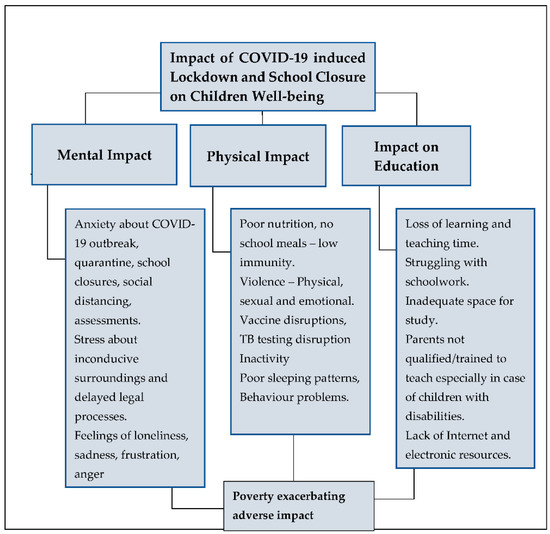
The physical impact has included poor nutrition, no school meals, physical, sexual and emotional violence, disruption of health services including routine vaccinations, behavioural problems, poor sleeping patterns and inactivity.
Mental impact includes anxiety about the pandemic, the lockdown, school closures, social distancing and loss of learning, grief, fear, stress, depression, loneliness, sadness and anger.
Education has been affected through limitations on learning and teaching time, children struggling with schoolwork, inadequate space and resources to study, and parents battling to fill the gap, especially for children with disabilities.
The author further argues that “there’s a need to understand how children are being impacted by the ongoing restrictions and to safeguard the rights of all children”.
What’s evident is that many countries have made pandemic-related policy decisions without regard for children’s needs. However, the commonness of the problem is probably cold comfort to South Africa’s children.
While other governments have since implemented measures to lessen the effects of the pandemic and lockdown measures on children, the South African government’s response has been largely characterised by the defence of poor policies, slow and reactive changes (often driven by litigation or external pressure from civil society), an inability to move with the science and self-defeating decision-making.
It indicates that authorities are at best out of touch with South Africa’s children, especially the most vulnerable, or at worst, cynically indifferent to their needs.
This is well-illustrated by challenges around nutrition. While governments in 68 countries used advice from the World Food Programme and Unicef to reduce the effect of the loss of children’s daily school meal by “providing take-home rations, vouchers or cash transfers to children – and working on health and nutrition incentives to encourage children to return to school once they reopen”, the Department of Basic Education (DBE) in South Africa went to court to deny that it had a constitutional duty to feed children while they were away from school, and defend its right not to continue the National School Nutrition Programme (NSNP) while schools were closed.
This, despite the government undoubtedly being aware that it was supplementing the nutrition of “half of all children in the country, three quarters of all learners and a fifth of the total population”.
It’s now common knowledge that Judge Sulet Potterill ruled that the department’s failure to feed nine million eligible children was a breach of its constitutional and statutory duties. But, despite this judgment, the matter went back to court in July 2021 to make the DBE’s commitments for the delivery of the NSNP, and reasonable time frames for implementation, an order of the court.
It was all avoidable, though. If the DBE had acknowledged the vulnerability of these children and recognised the risk to them, it could have provided the department of social development with details of eligible children in the NSNP and made them the focus of food parcel or voucher distribution. It was a strategy employed not only by 68 other countries, but also by many local NGOs who ensured targeted provision of sustenance for children in need.
The social development department (DSD), however, seemed no more aware of children’s needs. It failed to recognise the extreme risk to children of loss of food provision in Early Childhood Development centres (ECDs), and the possibility of exacerbated malnutrition and stunting while ECDs were closed (this, in a country where one in four children under five experienced stunting before the pandemic).
Instead, the DSD used the pandemic and the call for ECD centres to reopen, as an opportunity to audit ECD centres, update databases and attempt to force ECD registration.
Again, it took a court case to reopen the ECDs and a second one to get the department to pay subsidies it was withholding in some provinces, either in their entirety or sometimes (ironically) the nutrition portion, despite ECD providers continuing to feed children while they were not in attendance.
Nutrition is not the only area where government’s lack of agility and reluctance to follow science has had a negative impact. Experts, including Spaull and van der Berg, have argued against school closures and the disruption and loss of learning that they bring relative to the impact that Covid-19 has on children’s health.
The 2020 General Household Survey reported that only 6,4% of learners could access remote or homeschool alternatives nationally. Remote learning has also been particularly difficult for children with disabilities.
In addition, the survey showed a large decline in the number of children attending ECD programmes. Compared to 2019, a large percentage of children aged five (37.7% compared to 10,9%) and six (11.8% compared to 3.5%) did not attend an education institution.
This represents a massive setback in early learning, but also contributes to child hunger and child vulnerability, with many of these children left at home alone or in unsafe or abusive environments. Overall, “the percentage of children that attended grade R, pre-school, nursery school, crèche, and educare centres decreased from 36,8% in 2019 to 24,2% in 2020”.
The picture is equally bleak for school children. In its final wave, the NIDS-CRAM survey showed that 750,000 learners aged 7-17 had not returned to school following lockdown, making these children vulnerable to exploitation, including through child labour and forced marriage. The same data indicates that with lockdowns and rotational learning, by March 2021, most learners could have lost up to a year of learning.
Given that as Spaull points out, 78% of Grade 4 children could not read for meaning in any language prior to Covid, the magnitude of this loss is immense.
A further effect is massive anxiety for learners.
Munir cites an international study on the impact of Covid-19 and lockdown on the mental health of children and adolescents, which found “that school closures have adverse educational, psychological and developmental effects on children. Stress, clinginess, disturbed sleep, poor appetite and inattentiveness can also be observed among young children”.
An additional study identified “stress, sadness, boredom, depressive symptoms, sleep disturbance and fear for the situation” as the predominant behavioural and emotional problems in children.
Concerns about children’s mental health were reinforced in an Oxford University survey of 10,000 parents in June 2020. Parents and carers of primary school-aged children reported an increase in their child’s emotional and behavioural challenges, and restlessness or attention difficulties. Researchers suggested that “many younger children have found it increasingly hard to cope as the lockdown period has gone on, which may be because of loneliness, fears about the coronavirus or a loss of the routines and support that come with school”.
Anxiety has not been eradicated with the return to school. In a symposium for children from 11 SADC countries held by the Child Rights Network for South Africa (CRNSA) in August 2021, South African children explained: “When we went back to school, we were months behind schedule. Teachers overloaded us with homework, assignments and exams to catch up, but that has been emotionally draining and many children are struggling with their mental health.”
Significantly, none of the learners at the symposium reported receiving psycho-social support or counselling at their schools.
Rotational learning (where children attend school every second day or every second week, or in some schools as little as one day per week) has been one of the biggest causes of loss of learning and emotional challenges for children.
Disturbingly, although the DBE issued a directive instructing primary schools and schools for children with special educational needs to return to traditional and daily school attendance from 2 August 2021, the caveat is that this is only possible if the risk-adjusted procedures and regulations are adhered to, which currently includes children staying one metre apart.
Given historical problems with overcrowding in schools, this is not an option for many. In the Western Cape alone, 86% of schools have applied for rotational timetabling in 2022.
Even more frustrating, this is a problem of government’s own making. Infrastructural development in schools is an ongoing need. Had it been prioritised, overcrowded classrooms, lack of sanitary facilities and unsafe conditions could have been eliminated as a factor in government decision-making.
But successive budgets have cut the infrastructure budget for education, affecting a total of 1,938 projects. Some provinces have also “reprioritised” their infrastructure budget to provide PPE for schools. In the case of KwaZulu-Natal, reallocated funds in 2020 amounted to what’s estimated to be almost half a billion rand.
Speaking at the CRNSA symposium about her experience of learning in one of the provinces that reprioritised its infrastructure budget, a Limpopo learner – whose school has no water and serious infrastructural problems – explained: “My classroom was filled with cracks. I couldn’t focus because the classroom could have collapsed. We were living in fear. There were no improvements in classes or infrastructure. It led to overcrowding.”
For this child, the pandemic has been a disaster. “There are not enough classrooms for children to socially distance. Children are not safe. Some don’t have classes. In Grade 10, children choose subjects. Children are split and some have to be taught under the trees. They don’t have a table or a desk to write on.”
It is the ultimate own goal by government. Rotational learning cannot end without changes to infrastructure, which cannot occur because of budget cuts.
It has led to educational experts and advocacy groups, including the South African Human Rights Commission (SAHRC), calling for an end to the one-metre distancing rule and a return to full-time schooling for all primary school and special needs learners.
The SAHRC has also called for the decision to exclude high school learners to be reviewed, given the roll-out of vaccines to children from 12-17.
This position is affirmed by the South African Paediatrics Association, which notes that children are less likely than adults to become severely ill from Covid, or transmit it, and that in most settings, schools have contributed minimally to community transmission of the virus.
But some authorities are wary about the full return to school for fear of child infections, particularly among under-12s, the only age group yet to be vaccinated.
The solution may be an agile approach where the department focuses on reopening all learning, with ongoing precautions like ventilation, vaccinations, mask-wearing and, where possible, physical distancing, but also responds quickly to surging numbers in hotspots by closing targeted schools for short periods of time.
Closing some Johannesburg schools could, for example, have minimised the number of children who fell ill as the Omicron variant swept through the city at the end of November.
But the approach requires agility and a real-time response to the science, which the DBE seemingly lacks. It’s evidenced by the ongoing use of school protocols developed 18 months ago despite massive developments in our understanding of the virus, and prevention measures, in the interim.
But while government has a duty to protect children when they are at school, rotational learning also shows a lack of empathy about the lived experience of most South African children. Specifically, has anyone asked how safe are our children when they are not at school?
People who have been in a South African squatter camp or township in the last year will attest that most children on rotation can be found playing on the streets, in overcrowded houses or in informal creches with other children. Not only are many minimally cared for or unsupervised and therefore at risk, but there is no mask-wearing or physical distancing. It’s hard to argue that they are more unsafe at school.
This unresponsiveness is also evidenced elsewhere in government. Scientific research has shown an increase in child abuse, abandonment and the loss of primary caregivers during lockdown.
In August 2020 alone, Childline South Africa reported a more than 36.8% increase in the calls received for help, compared to August 2019.
In addition, poverty and violence have led to more child abandonments, with NGOs detailing a massive spike in numbers since the beginning of the pandemic.
Equally troubling are the findings of the 2021 Lancet study on the deaths of primary caregivers due to Covid. Researchers estimated that globally, 1,134,000 children have experienced the death of primary caregivers between 1 March 2020 and 30 April 2021.
South Africa was particularly badly affected, with almost 95,000 losses. This amounted to 5.1 per 1,000 children losing their primary caregiver, a ratio only second to Peru of the 21 countries included in the study.
Yet the department of social development, citing stats from the beginning of lockdown, flatly denied that there had been an increase in abandonment during lockdown. It has yet to share any updated statistics. The department also failed to respond to allegations that it was contributing to the problem of care for vulnerable children by failing to provide necessary documentation which would allow children to pass through child and youth care centres into permanent family care – either through reunification or adoption – thus freeing up spaces for those most in need.
Further, when IFP parliamentarian Mkhuleko Hlengwa asked in the National Assembly if government had conducted similar research to the Lancet research and how it was responding to the study, the answer was: “The Department of Social Development has not conducted any study that is specific to orphanhood and therefore does not have the figures of children orphaned due to Covid-19. The causes of orphanhood have not been tracked as yet; services are rendered to all children who are made vulnerable by different circumstances, including those who are orphaned.”
It’s hard not to conclude that children aren’t being prioritised. Nor are we listening to them.
Loss and fear were the main themes when children spoke about Covid at the children’s symposium. They highlighted loss of education, of healthcare, including childhood vaccinations and access to reproductive support, loss of time and loss of family connection.
They spoke about the agony of losing relationships with relatives and friends, or risking making them sick, and their frustration at family members choosing not to be vaccinated when they have the option.
As one child explained: “We have to push for people to be vaccinated. Although government is persuading people to be vaccinated, our parents don’t want to take them because of superstition. Children are getting sick because vaccines are not available to them. We are trying to get adults vaccinated to protect children, but vaccine hesitancy is putting children at risk.”
Ultimately, many children are afraid: “Covid is scary… My whole family has had it. I’m afraid of losing my parents. What will happen to children if their parents die? Will they end up in a child-headed household or in an orphanage?”
The OECD report sums it up best, “Although not medically in the risk group for severe disease, children have been deeply impacted by the pandemic. The strategies to control the spread of Covid-19 have completely changed children’s daily lives and put a whole generation of children in danger. Financial and social challenges resulting from the spread of, and the control of this spread, will significantly impact on children’s right to survive, learn and be protected.”
Munir points out that “the most deprived and marginalised children are being hit the hardest by the pandemic, exacerbating existing inequalities and pushing the most vulnerable even further behind”.
She counsels that her findings should be considered when “devising policy around children, who are unable to make their voices heard, by those whose decisions impact their wellbeing.”
Immediate government measures are necessary to change this bleak picture. But are authorities listening? DM
First published in the Daily Maverick: 15.12.2021
To cite please use the author’s name, the year of publication, the title of the article, name of publication, date of publication.

South Africa’s missing children (Part Four): The search for solutions
When narratives about missing and trafficked children are used to serve a political agenda, children become incidental. To solve the problem requires a radical change in approach, where children and their needs become the focus of our policies. But to achieve this goal, we need to first listen to them and understand what makes them unsafe, and what can be done to protect them.
Listen to this article: BeyondWords
Read Part One, Part Two and Part Three.
Recognising what makes children vulnerable to going missing or being trafficked is key to addressing it. In this four-part series, experts have uncovered some important contributing factors including poverty, violence, neglect, unsafe environments, dysfunctional families, institutional care, harmful cultural practices, undocumented status, inadequate policing and government policy.
These are defining features of childhood in South Africa.
The Children’s Institute’s Children Count states that 59% of children (12 million) live below the poverty line. Twenty percent of children (almost four million) live with neither parent, and 8.5 million live with their mothers, but not their fathers.
Some 26% of adolescents have reported one or another form of sexual abuse.
As part of her Courage Child Protection programme, anthropologist and child protection activist Dr Dee Blackie reported that in 45% of abuse cases, the abuse occurred at home. Just over 12% of children are being neglected at home, and 45% of children living in institutional care have been neglected or abandoned.
Blackie’s research identifies other at-risk children, including 91,000 girls between 12 and 17 who are married, divorced, separated, widowed or living with a partner as husband and wife.
In addition, she says that 45% of South Africans use traditional medicine, most of which is unregulated, and that mutilations and removal of body parts for the purpose of traditional medicine are not uncommon.
Two reports completed by the Human Rights League in Mozambique and Childline in South Africa confirm that children are most likely to be targeted because they are more vulnerable and because their body parts are thought to hold more power and luck in them.
There is no separate category in crime statistics for muti murders, but although most go unreported, in 2003 a specialist police unit said there were between 150 and 300 muti murders each year.
Moreover, there are 55,000 children living in child-headed households (58% of whom are younger than 15) and 642,000 displaced or migrant children in South Africa.
The Department of Home Affairs was unable to provide the number of undocumented children for this article. But, in 2019, the Department of Basic Education admitted that there were 1,190,434 undocumented learners in the school system, 830,698 of whom were South Africans and 167,734 from other countries. Blackie speculates that when adding kids under five and school drop-outs, this number could be as high as two million children.
These statistics mirror the lived experience of South African children.
Dumisa* watched while a shack fire killed his two older siblings. His mother, an alcoholic, had died of Aids and his father abandoned the family. At the age of seven, he became the head of the household, raising his two younger siblings, aged three and six months, by scavenging on a rubbish dump until an adult smashed a plate over his toddler brother’s head, prompting the police to finally remove the children and place them into care.
Separated from his younger siblings, it was two years before they were reunited in a place of safety where he was finally loved and cared for.
It was too late for the little boy though. Diagnosed with oppositional defiance disorder, and desperate for attention from his new house dad, Dumisa became a serial runaway. For the three years that he lived in the home, his house parents patiently found him and brought him back.
But then his siblings were adopted by a family living overseas and his social worker, deciding that he was unadoptable, chose to move Dumisa to a formal residential institution with high walls so “he can’t run away”.
Brutalised by poverty, violence, the pressure of running a child-headed household and institutional care, Dumisa typifies a child vulnerable to going missing or being trafficked. If he runs away now, it’s doubtful anyone will look for him.
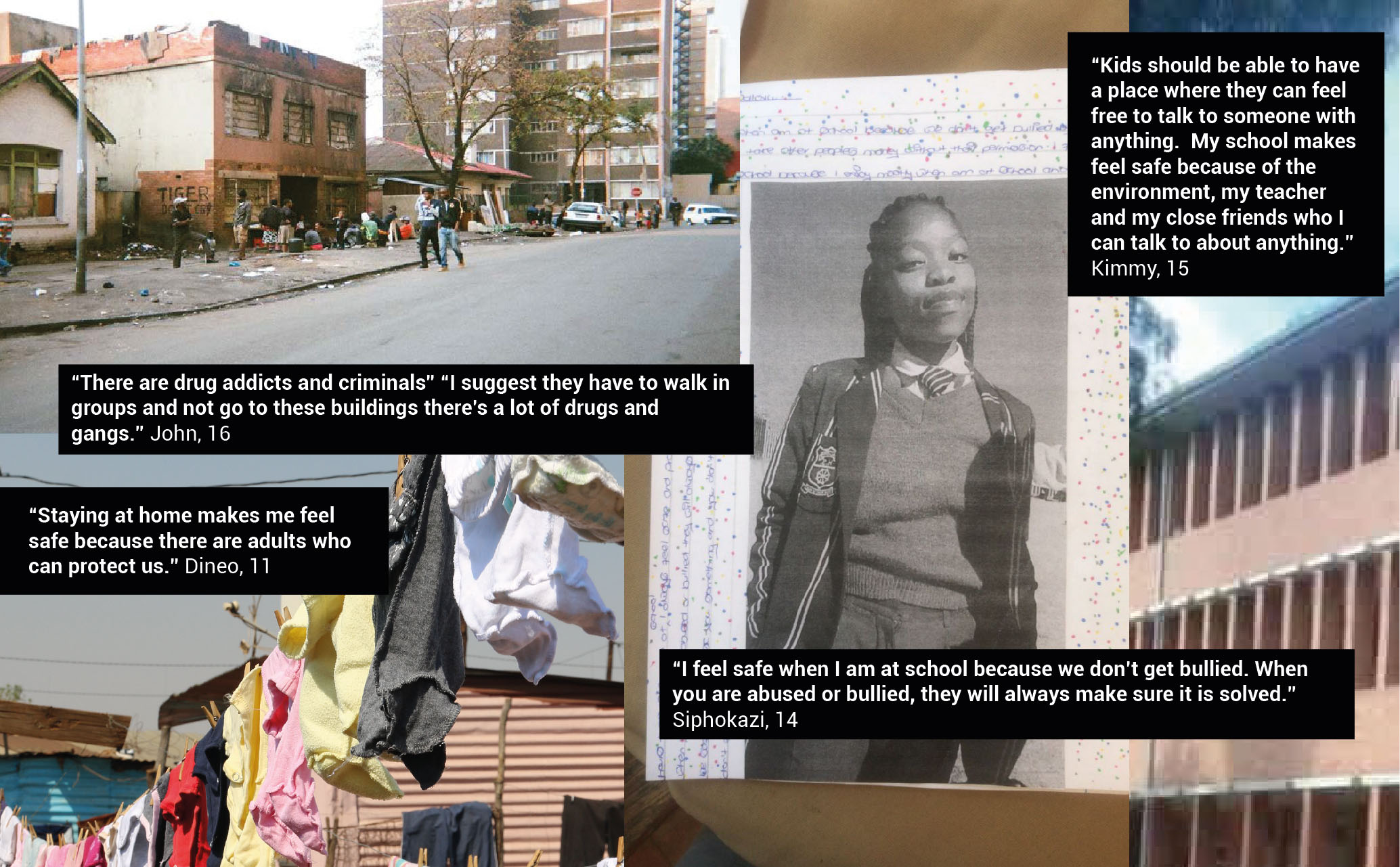
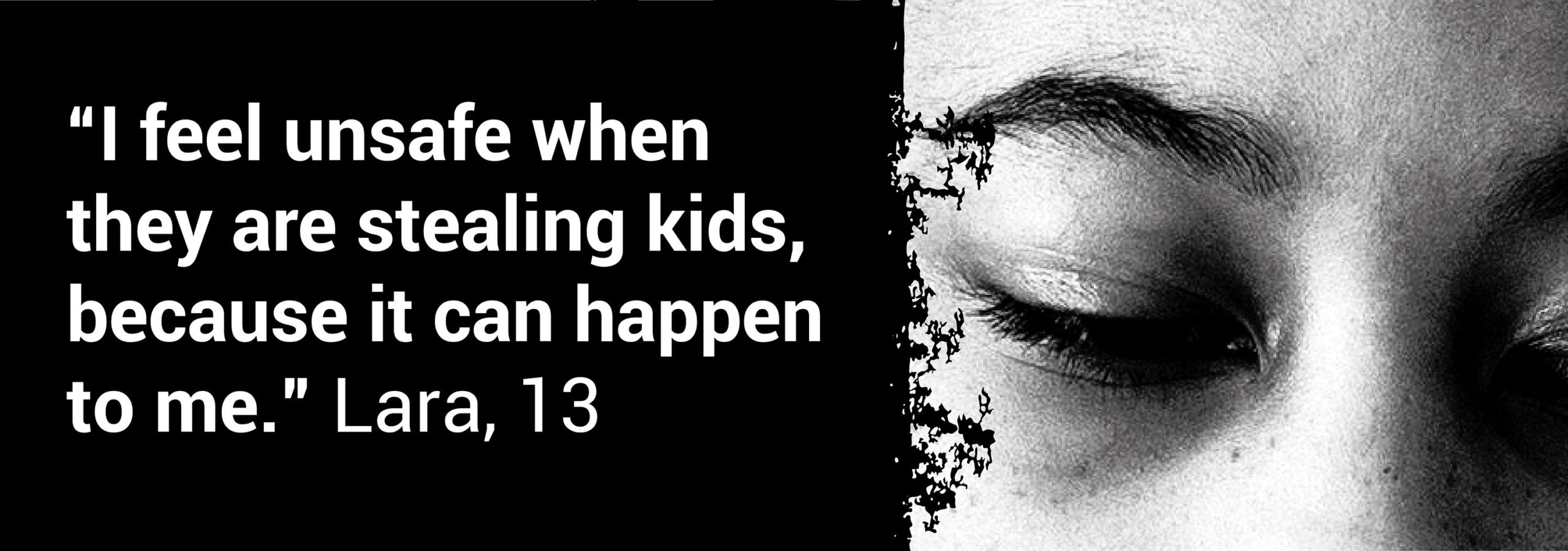
These are problems echoed by children from across the Eastern and Western Cape and Gauteng. In interviews conducted for this series by social workers from welfare organisation ACVV, local community leaders and NGOs, children explained what makes them feel safe and unsafe. In addition, teenagers attending the Fight with Insight weekend programme participated in a “photo-voice” project, taking photos and creating posters to highlight the dangers they face, and how these can be solved.
Some important themes emerged from the interviews.
For most children, their safest place was at home with parents: “It’s where I am loved,” said Keanan (15).
But there were notable exceptions. Candice* (12) said she feels unsafe when her “mommy and daddy fight. They drink a lot of alcohol”. Sandy* (9) is also fearful of her parents when they drink. “I’m scared my siblings and I will get hurt,” she said.
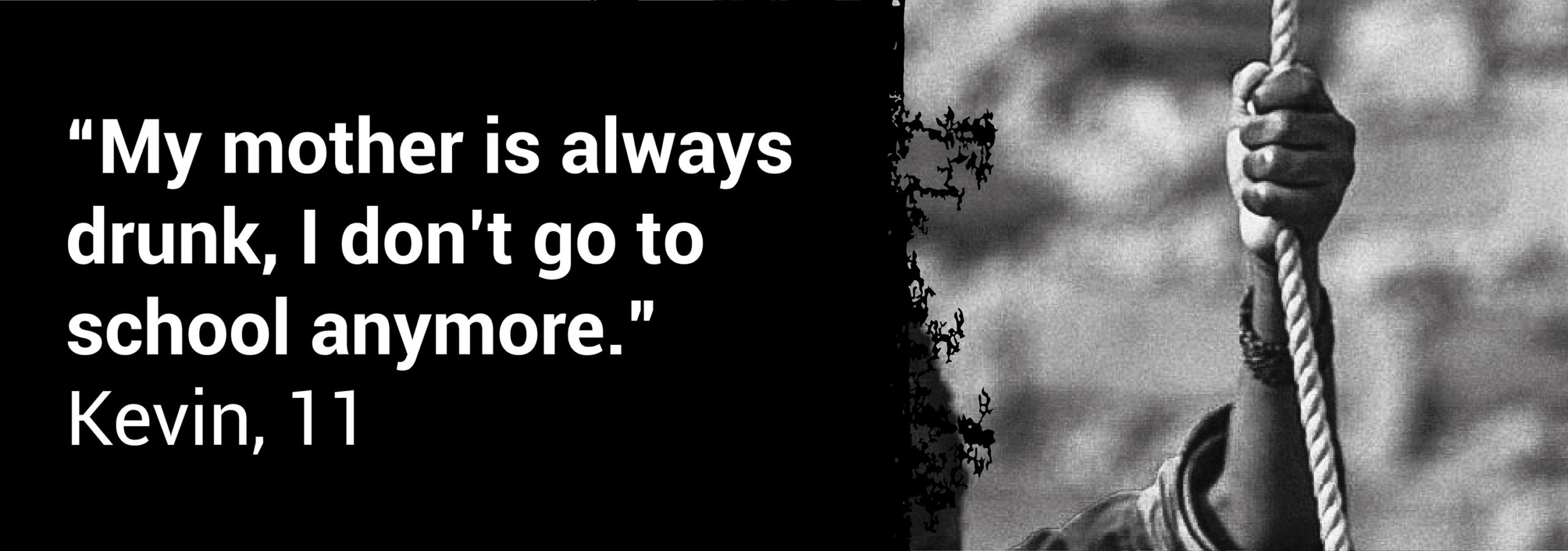
Kevin* (11), whose mother is always drunk, doesn’t go to school anymore. Nor does Adam* (12), who was forced to sleep under a tree with his mom because his aunt and sister chased them out of the house when they were high. Tara* (13) is terrified of her uncle because he is a drug dealer.
At 17, Dillon* said he feels unsafe because both of his parents died and now he “lives in a child-headed household”. Sihle* (12) is afraid of being taken for muti because of her albinism.
For others, home was a haven but not a safe place: Kgomotso* (9) said “I feel unsafe when I am on the streets at night because there is a tavern outside the house”. Ayanda* (12) said: “I am scared of killers. I live in a high flat… I looked down, I saw them. They were killing a man with a knife. They stabbed him three times; they even took his clothes. I just cried.”
Most children identified “the street” – or areas notorious for crime, drug deals and violence including rape and murder – as the place that make them most afraid. Disturbingly, children were also afraid of the places where they went to play.
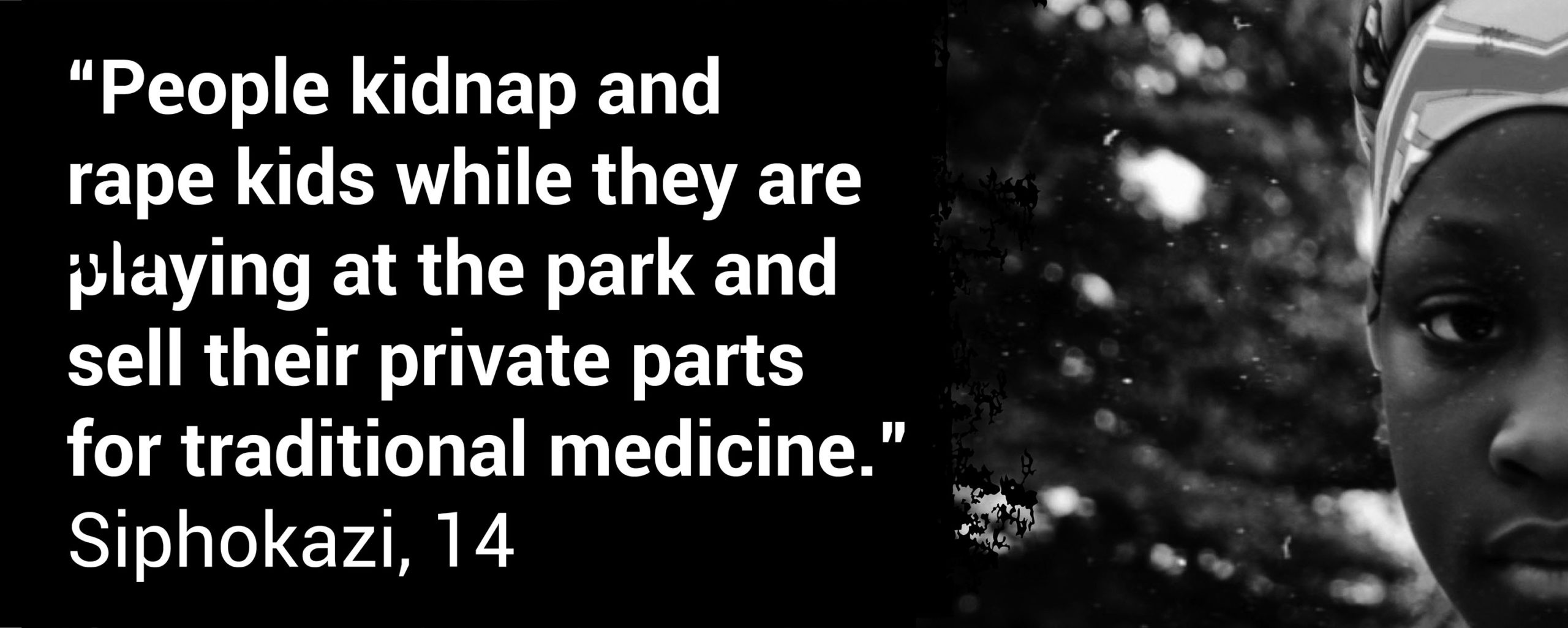
Like many other inner-city children, Siphokhazi* (14) identified a local park as the place she feels most unsafe. She said there were people at the park who “kidnap kids while they are playing, and sell their private parts to people who use them for traditional medicine. Some kidnap kids and rape them. They throw them away or kill them after raping them because they don’t want to rot in jail”.
In response to the danger on the streets, 17-year-old Kylie* said, “I feel safe online.” Sam*, herself a victim of a child kidnapping and now a mom, says that her children also gravitate towards an online world. She acknowledged that her fear of something bad happening makes her controlling of their physical world. “Online is the only place where they are free,” she said.
But others are fearful of the dangers this also brings, and emphasise the importance of parents restricting the use of social media.
Sara* (9) described the instinctive feeling that something was wrong when she was targeted online by someone asking inappropriate questions, including her age, name, where she lived and if she wanted a boyfriend. Following her gut and her parent’s advice not to give out personal information online, she didn’t respond, and her older brother barred the player and turned on safe chat. But she was convinced that he kept coming back.
Not all children know how to protect themselves online. A 2006 report on internet usage showed that 22% of learners had given out their personal information to strangers online, and 10%, a friend’s information.
It reflects a larger problem – many children surveyed had not received any guidance about staying safe.
Others reported that advice from teachers and parents mostly focused on “stranger danger”. And while children are fearful of strangers, they recognise community danger too, and provide very practical, often experience-based advice to peers to manage it, including using a buddy system to keep their friends safe, walking in groups, and avoiding being on the streets at night. Staying close to home was their most frequent recommendation.
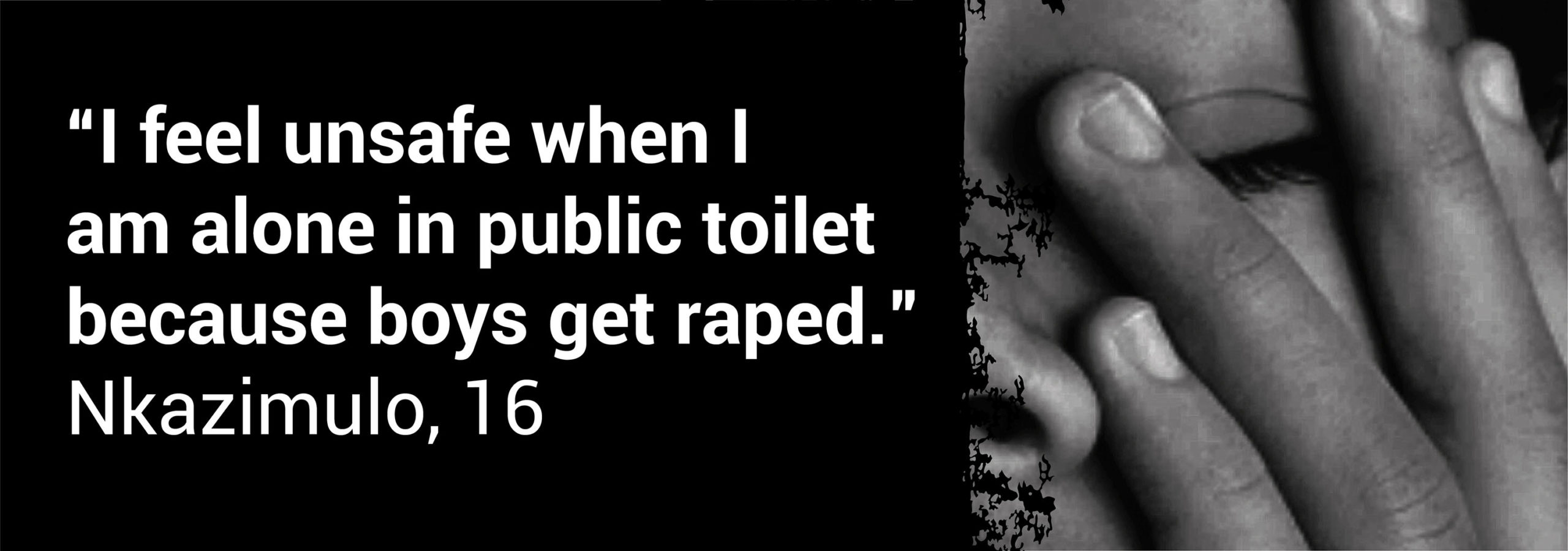
Equally practical were their suggestions about dealing with unsafe environments, including the need for government to fix broken infrastructure in schools, public toilets, playgrounds and parks to create safe spaces for children, along with better policing. To combat children being left alone and to keep them off the streets, they advocated for more afterschool and weekend programmes, education about what to do to stay safe, and parental protection.
During Blackie’s Courage workshops, she observed that “children often lament the lack of adult supervision in their lives. They are regularly left on their own or in the care of strangers, where they are uncomfortable and at risk. Some have had incidents after being left with strangers simply because they happened to live in the same block of flats, or next door in a township”.
Blackie speculates that ubuntu, the notion that the children belong to everyone in a community, may be a factor. But, she says, it doesn’t apply in all communities.
A youngster had asked her to “talk to parents about who they leave their children with. They think because they grew up with ubuntu that this is still the case. But it isn’t, and we children are the ones paying the price”.
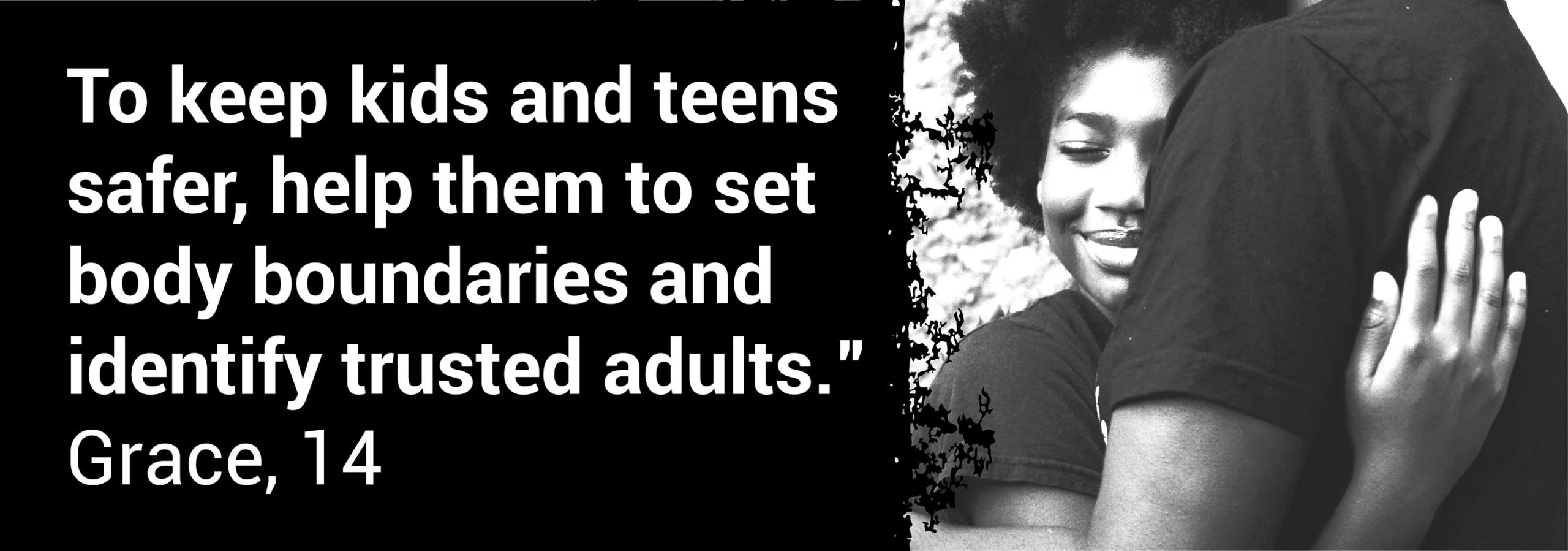
Families and communities play important roles in keeping children safe. Since dysfunctional families are a huge factor in trafficking, it’s critical for parents to provide the safe spaces their children need, and get help with domestic violence and drug and alcohol addictions. Many children just wanted their parents to stay home more.
Parents should also keep their children informed about trafficking and provide them with tips about staying safe physically and online.
While no family wants to prepare for their child to go missing, experts suggest that families develop safety kits so that if children do go missing, they are easier to find.
Critical community roles include providing accessible education, storytelling and support programmes, and addressing harmful cultural practices such as ukuthwala, and the use of body parts for traditional medicine.
It is frequently the community itself that finds missing children, but they also sometimes resort to vigilantism, and stories about community members setting houses alight and assaulting perpetrators abound.
Beyond family and community, many of the factors that make children vulnerable require government intervention. Vigilantism is often a violent response to systemic failures in government policies. This is in sharp contrast to the enabling legislative framework around missing and trafficked children that the government has built, on paper at least.
South Africa ratified the Palermo Protocol in 2000 to combat trafficking, and the United Nations Convention on the Rights of the Child (UNCRC) in 1995, committing it to protect children from all forms of sexual exploitation and abuse, and take all possible measures to ensure children are not abducted, sold or trafficked (Articles 34 and 35).
This is confirmed in the African Charter on the Rights and Welfare of the Child, ratified in 1997, which also includes a commitment to prevent child prostitution and child begging (Article 29).
South Africa is a signatory to the ILO convention 182: Worst forms of child labour, which obligates the country to eliminate the worst forms of child labour including slavery, trafficking, debt bondage and other forms of exploitation.
It has also endorsed the UN Development Goals, including goal 16.9, which requires it to “provide legal identity for all, including birth registration, by 2030”, a key factor in preventing statelessness and child exploitation, and ratified the optional 2003 UN protocol on the sale of children, child prostitution and child pornography.
The Constitution affords children the right to a name and nationality from birth, and to be protected from abuse and exploitative labour practices (chapter 28). The Children’s Act 2005, Sexual Offences Act 2007, Child Justice Act 2008 and the Trafficking in Persons Act of 2013 legislate against illegal adoption, forced marriages, child labour, debt bondage and removal of body parts, and criminalise trafficking and exploitation, prescribing penalties of up to R100-million, life imprisonment or both.
South Africa was also a participant in the 2008 Istanbul summit on organ trafficking which, along with the Human Tissue Act of 1983, provides deterrents for trafficking in human body parts.
Yet, its policies and practices preventing children going missing or being exploited are inadequate.
Patricia Martin, from the South African National Child Rights Coalition, describes this lack of programmes as a “systematic implementation breakdown”.
In response to South Africa’s report on the sale of children protocol, the UNCRC highlighted a commonly voiced problem. It indicated that the country’s reporting is weakened by a lack of reliable data, including on “the sale of children, child prostitution, child pornography, child trafficking and adoption”. It also raised concerns about the lack of data on “children who are at high risk of exposure to such offences”, including “victims of domestic violence, children in street situations, migrant, refugee and asylum-seeking children, children living in institutions and children adopted through informal customary adoption”.
To engage with government on the extent of the country’s child exploitation problem and what can be done to prevent it, written questions were submitted by IFP parliamentarian and member of the home affairs and social development portfolio committees, Liezl van der Merwe.
To date, responses on child labour, undocumented children, biometrics and trafficking through adoption have been received. All written questions will be answered in a prescribed time frame and updates shared.
The following were identified as key contributors to the missing children challenge.
Policing is critical to combat trafficking and find missing children. But this series reveals that SA Police Service (SAPS) personnel range from the dedicated and skilled head of the FCS unit in Protea South, to corrupt officers who accept kickbacks and bribes to “falsify trafficking victims’ travel documents, not report trafficking in brothels” and “not prosecute pimps who facilitate trafficking”.
Others do not pursue child and organ traffickers for fear of reprisal.
Protocols for dealing with missing children have undoubtedly improved. When a missing child is reported, details are sent to the missing person’s bureau. If the child is in danger, an amber alert is issued, and Facebook sends a push message to those within a 160km radius of where the child went missing.
However, these protocols appear to be applied inconsistently and, if the problem with unreported cases is to be addressed, the SAPS needs to be more approachable.
In addition, many officers are hampered by insufficient resources and a lack of training.
Lack of resources is also at the heart of the country’s DNA backlog crisis. Bianca van Aswegan from Missing Children SA says that many of her cold cases involving deceased or kidnapped children have been stalled for years while waiting for DNA results.
Another concern is the disconnect between the morgues and policing. In May 2021, the Gauteng Department of Health disclosed that there were 1,173 unidentified bodies in its morgues. To combat the problem, the department is developing an internet identification system meant to record, track and report demographic data of the deceased person.
However, it’s taken the department 10 years to develop the system and it’s yet to be launched. Van Aswegan believes that some of these unidentified bodies may be missing persons, but no one knows.
Also delayed is the introduction of the Department of Home Affairs (DHA) biometrics system designed to assist with personal identification and combat the lack of identifying information hampering efforts to find missing children, especially in poorer communities.
The automated biometric identification system will replace the current system with at least five biometrics. For children, the DHA is considering foot/palm print, iris, DNA and fingerprint biometrics.
But the policy will only be submitted to Cabinet for approval in March 2022 and thereafter translated into a new Identification Act. It could be years before it’s implemented.
While the biometrics system is promising, the DHA could not answer a question about the number of undocumented minors in the country, or how it plans to address the problem. Equally, the department has yet to respond to questions about the country’s porous borders and the ease with which people and body parts are trafficked between South Africa and neighbouring countries.
Nor is there any reported plan to curb or actively police the trafficking in human organs which fuels child kidnappings. So, while as far back as 1995 government sought to combat muti killings by investigating witchcraft-related violence and running education campaigns, Parliament has yet to enact legislation regulating traditional healers.
In its written response, the Department of Social Development acknowledged that despite the purported link, it “was not aware of any South African children trafficked through adoption”.
Strategies are also needed to combat child marriage, “the worst forms of labour”, illegal adoption and child abandonment.
Baby Savers SA says urgent legislation is required to save the lives of babies from unsafe abandonment, and regulate safe relinquishment to prevent children falling prey to predators of child trafficking.
Notwithstanding the conventions and treaty commitments to eliminate trafficking and sexual exploitation, the government is reported to have decreased efforts to prevent trafficking in the past year.
Yet, despite these failures in policy and practice, there are occasional glimmers of hope.
Bongiwe’s son Luyanda* was stolen in 2011 when he was just six days old. A woman posing as a government official gave Bongiwe R11 to buy cake at a local supermarket, and then left with her child. She searched frantically, but no one had seen Luyanda or his kidnapper.
Bongiwe says that police did their best to find her child after he was reported missing. The family also spent R20,000 on a private detective, but the trail of the woman who snatched Luyanda had gone cold. Then, nine years later, Bongiwe was contacted by a local woman who thought she knew who had taken Luyanda. The informant claimed she had seen the child, and that the kidnapper had often come to KZN and even asked about the boy’s family.
She also told Bongiwe that the kidnapper hadn’t been pregnant, but claimed the child was hers. After a lengthy investigation, police found the boy in Daveyton and the kidnapper confessed to her crime.
Even then, Bongiwe had to wait until DNA tests were done before she could be reunited with her son. The backlog in DNA cases meant long delays, so the family had to do the tests privately.
Bongiwe explained that no one knows why the kidnapper, who was prosecuted, took Luyanda. However, police say that she may have planned to traffic him, but then changed her mind and raised him as her own child.
SABC reporter, Jayed Paulse, who interviewed Luyanda, said “he is a bit confused about what happened to him”, but he’s happy to be home and enjoys playing with his cousins. The family is getting counselling and a social worker monitors his progress. Although they are concerned about his schooling after he repeated Grade 1, they are committed to helping him catch up and achieve his full potential.
While the scars of her child’s kidnapping remain, Bongiwe is elated to have Luyanda home. She says that she prayed for his safe return and never gave up looking for him. Now she can sleep peacefully. Luyanda’s grandmother says she can also now close her eyes knowing he has returned, and her daughter won’t cry herself to sleep anymore.
Stories like that of Luyanda provide hope for Akani’s and Siphesihle’s families, and those of other missing children desperate to find them.
But, given that “the crucial point of trafficking is the abuse of power to exploit another human being, which thrives in conditions of poverty, economic and gender inequality, corruption and instability”, it will take systemic changes, political will and listening to our children to prevent more going missing.
While advocating for countrywide change, children believe that it’s families who provide them with the safest spaces: “Nothing makes me feel unsafe because my dad is there,” said five-year-old Anjabella.
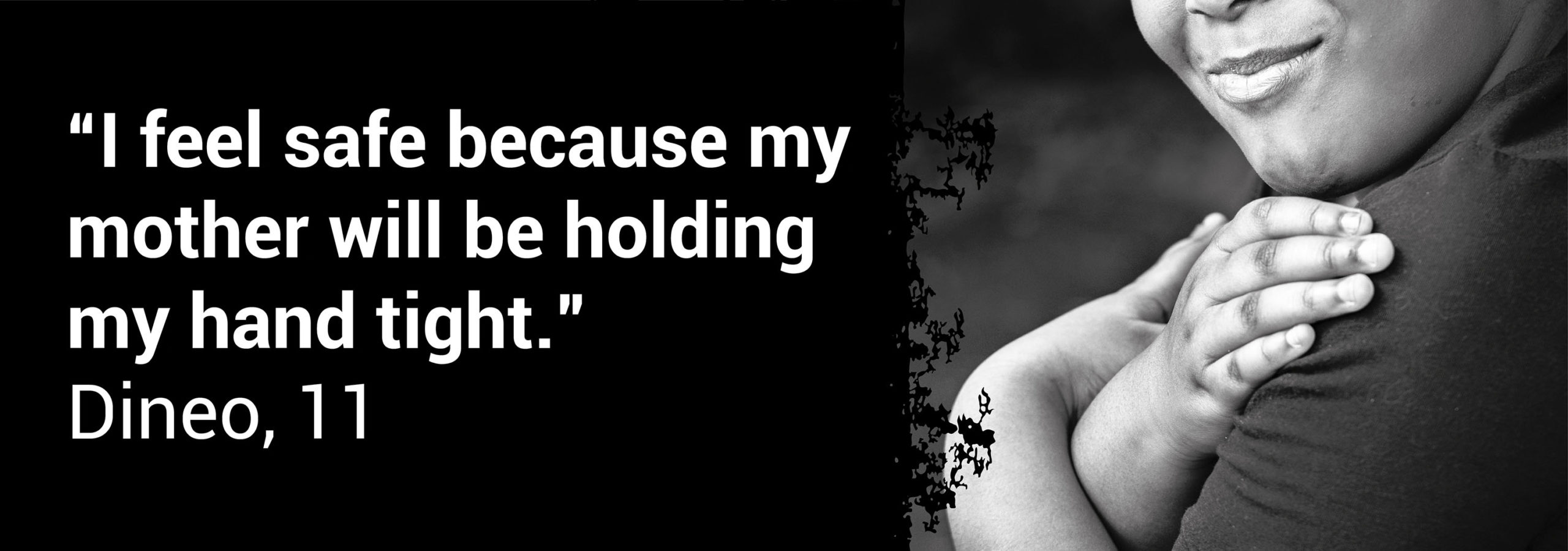
“To make kids safe, they should go places with an adult, because they can’t steal or kidnap them while they are holding their parent’s hand,” said Dineo (11). “I feel safe because my mother will be holding my hand tight.” DM
These articles focus on missing children, on survivors and those not found or found deceased. While the names of vulnerable children, survivors and their parents have been changed to protect their identities, the names of children still missing are included, along with photos and missing person’s posters in the hope that someone knows where they are. If you have any information, please contact Bianca van Aswegan from Missing Children SA on 072 647 7464 or contact Crime Stop on 086 000 10111.
This story was published with the support of Media Monitoring Africa and UNICEF as part of the Isu Elihle Awards Initiative.
Design by Kerry Nash
First published in the Daily Maverick: 29.09.2021
To cite please use the author’s name, the year of publication, the title of the article, name of publication, date of publication.